Confusion and mystery are great motivators.
Read MoreBucket Week - Day Four
Downtown in winter.
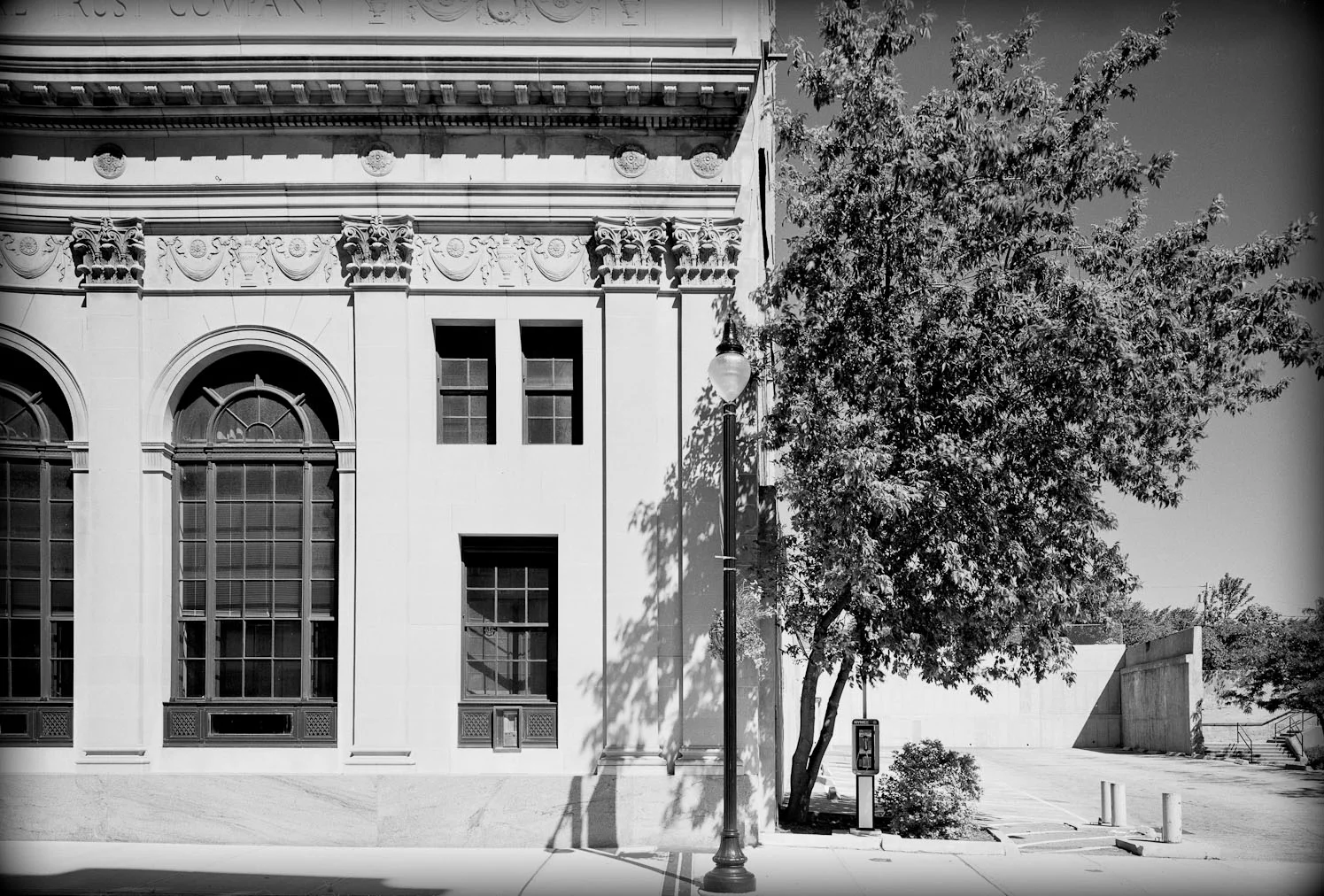
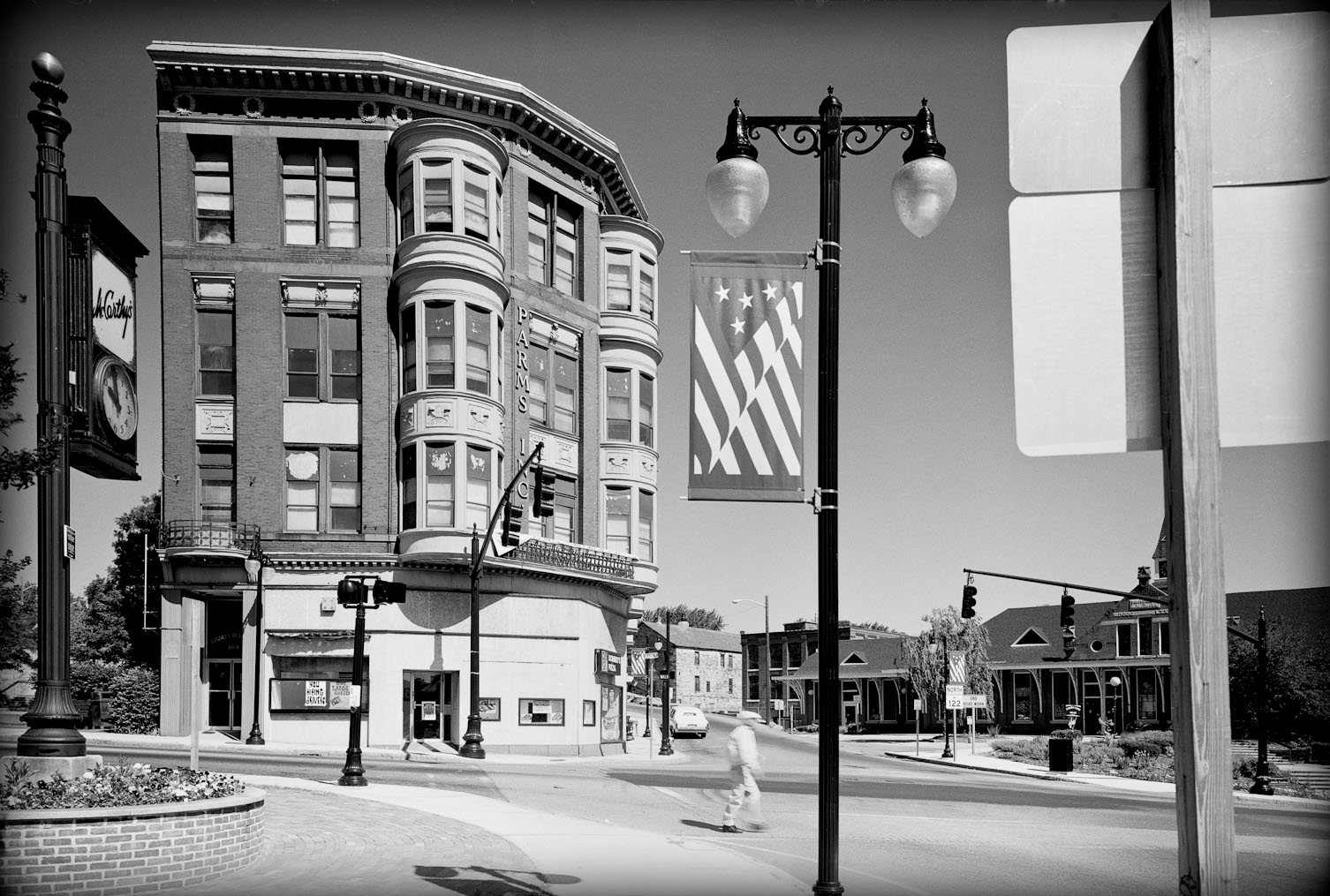
This week in honor of the city of my residence and my daughter's home town, I will be featuring Pawtucket, Rhode Island, aka the 'Bucket'.
At Summer St. and North Union, downtown Pawtucket, 1994
Today's pair represents something that I rarely do, which is to say something that I do all the time. That is take multiple, slightly different views at one location. I do that often, what I usually don't do is promote more than one view as the work goes forward. Normally I will make a choice, or feel the choice has been made for me, one is usually clearly the "best", or the best I could do. With these I've continued to like both variants. Although I don't remember I believe they are shown here in the order I made them. I framed up the first and then moved forward for the second. I think the shadows agree with that. There is one thing here that shows something that I do rarely do: photograph snow. My guess is this is late winter. Made with a 4x5 camera on Tri-X film.
At Summer St. and North Union, downtown Pawtucket, 1994
Bucket Week - Day Three
In Oak Grove.
This week in honor of the city of my residence and my daughter's home town, I will be featuring Pawtucket, Rhode Island, aka the 'Bucket'.
Oak Grove Cemetery, 1994
Gates of the Oak Grove Cemetery, 1994
Some people are put off by pictures of cemeteries. Some people are put off by cemeteries in general. Not me. I find they are great places to explore, full of interesting names and fragments of interesting stories. They are usually relaxing places to photograph in as well. No traffic, often no people at all (above ground anyway) so you can mess about with your gear and not feel stressed. There are exceptions. Swan Point in Providence has a strict policy regarding photography and they will chase you out. Hasn't stopped me though, you just need to be quick(ish). In cemeteries within urban environments I find I'm drawn to the ways that the city of the living relates visually to the city of the dead, how the streets line up or how a row of headstones is echoed by a row of houses. This is very likely something else that Walker Evans has taught us to see. These two photographs are almost back to back from each other. I love the detail of the little lamb (a child's grave) in the lower right of the second image. These were made with a 4x5 camera on Tri-X film.
Bucket Week - Day Two
US Route 1.
This week in honor of the city of my residence and my daughter's home town, I will be featuring Pawtucket, Rhode Island, aka the 'Bucket'.
Broadway, Pawtucket, looking south, 1995
This picture was made in 1995. I had an idea to photograph Route 1 in Rhode Island from north to south. This is almost as far as I got. It did lead to other projects: the intersection set and a walk down RI route 2. This is a 4x5 camera image on HP-5 film.
Bucket Week - Day One
On the W.E. trail.
This week in honor of the city of my residence and my daughter's home town, I will be featuring Pawtucket, Rhode Island. Pawtucket will be kicking off it's campaign for the 2015 Pawtucket Arts Festival on Thursday. A worthy effort.
Wilkinson Park, Pawtucket, 1993
I made this image in 1993, not too long after I arrived in Rhode Island from upstate NY. I was working then exclusively with a 4x5 camera and I had just begun the work that became the Rhode Island Photographs project. This image is an homage of sorts to Walker Evans, and it is fair to say that almost everything I was doing then was an homage to Evans. Evans did a great series on war monuments during his time with the FSA. He was responding to photographs made of monuments during the Civil War, photographs he attributed to Mathew Brady, although we now know them to be made by others in Brady's employ. The Evans photographs inspired Lee Friedlander to make a series on monuments. I was thinking both of Friedlander and Evans when I made this.
Providence Fruit and Produce Warehouse
This post first appeared on the Endangered Places, Emerging Stories blog of the Providence Preservation Society. The post can be found here, along with other interesting pieces on buildings lost, saved and on the bubble in Providence.
Harris Avenue was one of the very first places I would explore in Providence shortly after I arrived in 1992. I can clearly recall the first trip out with the 4x5 camera to that part of town. A spring afternoon, Sunday, the sun clear and warm. Red brick, dusty streets and not a soul around. The area felt ignored and forgotten, as if time had slowed to a crawl. Activity ceased or barely persisting in the evidence of one or two boxcar loads on a siding and a scattering of trucks at a few loading docks. Perfect for me and my slow camera. Plenty of time and none. For if there had been little change over the previous 25 years on Harris Ave. the next 25 would be otherwise.

There were several structures of interest that together made up the fabric of the district, held together by railroad tracks and the river channel. An ivy covered signal tower from the New Haven railroad era, a single story track side warehouse with a curving wooden dock, the hulking Providence Cold Storage warehouse, and the iconic Silver Top diner.
Anchoring the street was the concrete art deco of the Providence Fruit and Produce Warehouse. Long (almost 900 feet) and low it was built in 1929 when rail was king to hold produce unloaded from boxcars for distribution through the city. In 1992 there was some activity but it was hardly a bustling place. One by one these places were pulled from the fabric, torn down or in the case of the Silver Top, moved. The space itself was intruded upon by new highway off ramps.
When the warehouse was finally pulled down in 2008 I wrote this: ...[the warehouse] has great value because it connects us to our past, it is real in a way that buildings like the Providence Place Mall will never be. This is our heritage, built for an honest hard working purpose, not a sham echo of something it is not. This is not a decorated box, which is almost surely what we will get in the place of the warehouse." The rest of this rather angry blog post can be found here.
February 2008
So far all we get in place of what might have been is an empty lot. Perhaps it could have become the year round farmers market that Providence so desperately needs. Perhaps not. Although tons of produce still moves by rail it is not the fruit and veg that the new farm to table trade is built on. Perhaps it could have been arts space. We'll never know. Looking at these pictures reminds me that the only time we have is now, and if we wish to maintain a connection to the past we have to work at it, or all that will remain is a photograph. That said, you can view more photographs here.

Parking Shacks of Downtown Providence
A fresh look at the architecture of the humble parking shack.
Read More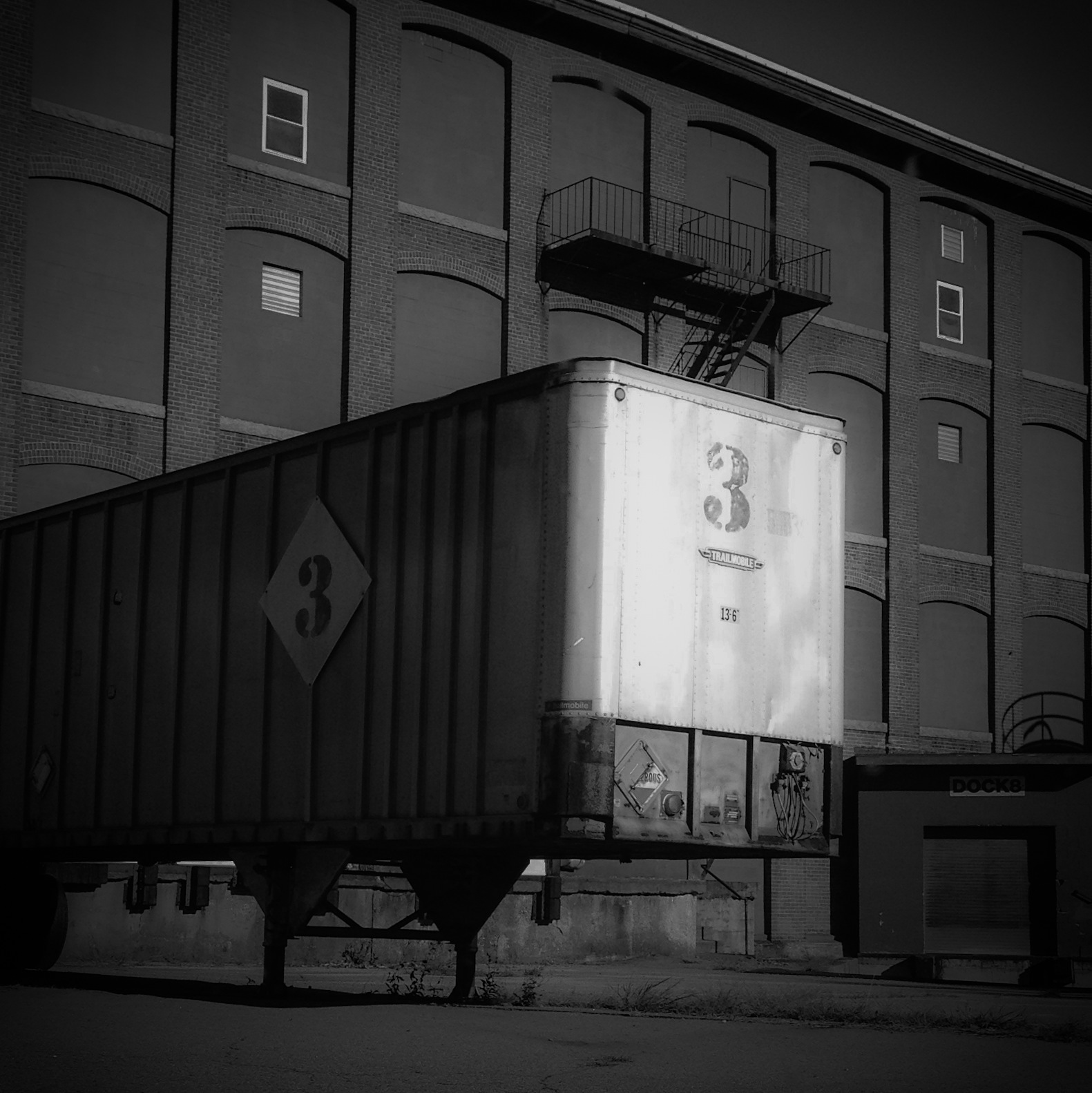
Field notes
Walking the hidden landscape of the Moshassuck river.
Read More
Swing Bridge in the Seekonk River.
My life in half-frame. →
If you are fortunate enough to have a long relationship with photography you may find you have certain recurring obsessions that you can neither explain or fully control.
Read More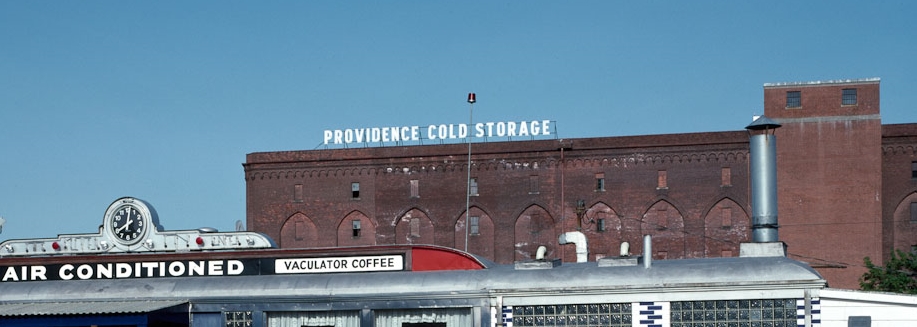
Silver Top Diner and Cold Storage Warehouse (detail)
0:00 on the Clock
As I have been putting this website together I've been going through the archives here at the Rhode Island Photographic Survey office looking for hidden treasure and rescanning old favorites. I've been paying attention recently to places that have been on Providence Preservation Society's Most Endangered list.
One of those sites is one that sadly has been torn down: the Providence Fruit and Produce warehouse that was on Harris Ave. I have scanned a number of images but this one caught my eye. Not because it's such a great image but because of a small detail that I've only just noticed now (or perhaps I had forgotten).
I call your attention to the upper right quadrant:
When this photo was taken in 1998 they had just begun to demolish the Providence Cold Storage building. This was the massive brick building behind the Silver Top diner. See the photo at the top of this post. The sign on the roof that spelled out the words Providence Cold Storage was dismantled letter by letter. Here only the "O" remains. "O". Zero, no time left on the clock for this piece of Providence.
Chimi Trucks on Broad Street

Photographs by Erik Gould, Adrienne Adeyemi and Sothdra Nguon-Devereaux
Audio recordings by Adrienne and Sothdra, audio montage edited by Erik
This photo essay is a collaboration of sorts between myself and two students I worked with while as a mentor at New Urban Arts, an arts based after school program for Providence high school students. Both Sothdra and Adrienne had assisted me on a project I did in partnership with NUA called the Providence Project. This was a neighborhood by neighborhood photo survey of Providence. We talked many times of going to take pictures of the Broad Street food trucks but during the time of the Providence Project we never did it. I so enjoyed doing photography with the two of them that during the summer before they both went on to pursue college careers we did a number of photo outings. Jesse Banks, studio manager at NUA, good friend and NUA alum also joined in. This trip to Broad Street was one of those outings.
On beautiful Providence July evening Jesse, Adrienne, Sothdra and I set out for Broad Street on Providence's South side to visit the Chimi trucks that set up there nightly. These mobile food vendors park along a stretch of Broad Street from Trinity Square to the Cranston line. I have long had an interest in these food trucks, they seem emblematic to me of new Americans making their way in business, working with what they know and what they have, free of corporate franchises. As a photographer I'm always on the look out for the hand-painted sign and the owner-operated business, that's where you the best stuff. We found a lively energy around these trucks and in the various shops up and down the street. People gathered to talk and hang out, guys with flashy cars would come by to show off. Music came from all over.
We talked about the contrast between that energy and the more subdued atmosphere we found in some other city neighborhoods we had photographed, which are really just a few blocks away. That is something else that I notice about Providence: Providence people keep to their own neighborhoods and they often don't know much of what's happening a few streets away. The Chimi truck scene couldn't be more public but I think many people who live in other neighborhoods would have no idea what I mean if I asked "what do you know about La Casa Del Chimi?" Well, I'm no Chimi expert either so that's why we went over to check it out. As for the Chimi sandwich itself, just like the hot dogs at the ballpark, all food tastes better when eaten out of doors on a summer night.
This piece is also an example of another idea: looking at one scene or one event from multiple points of view and with different recording media. Here we have 4 photographers, one with a big 8x10 camera on a tripod, the other's with more mobile cameras and digital audio recordings. These different sources reflect our individual points of view and also explore the ways that different materials produce different renditions of seemingly the same subject. This aspect of documenting the documentation and looking at how the actions of recording can change the event is something I have often examined and is central to much of my recent work. The 8x10 camera always attracts attention and Sothdra and Adrienne quickly became pros and dealing with interested onlookers while I got my pictures. Recording digital audio was originally Adrienne's idea and came out of many such experiences we had with passers by and the humorous, interesting and sometimes crazy remarks we would often get. The audio here captures street noise, conversation, music, and the steady roar of the Chimi truck generators. Inexplicably it also includes me saying the name "Pee Wee Herman." Have a listen.
Almost lifelike
Intimations of Spring

Photos from a can
We replaced the regular camera in this photographer's bike bag with one made from a decaf coffee can. Let's see what happens:

All nestled all snug in it's bag...

It really is a camera.
The camera has my preferred 3 pinhole set up. I drill holes in the can and spray paint the inside flat black. I make pinholes in cinefoil which is just black aluminum foil, and then taped those in on the inside. Black tape for a shutter and all done. It's just that easy.

first test
I use photo paper to make paper negatives. This time out I've been trying different ways to reduce contrast so i can get some better tonality in the images. Photo paper is made to be exposed to lamps in the 3200K range. This is multigrade paper and in normal printing you manipulate the contrast by exposing through colored filters, altering the color of light over a range from magenta to yellow. So I taped some yellow filtration behind the pinholes to cut down on the blue (high contrast) light reaching the paper. I had some success.
I also diluted the paper developer by half to slow the process down and give lighter tones a chance to develop, which is only fair.
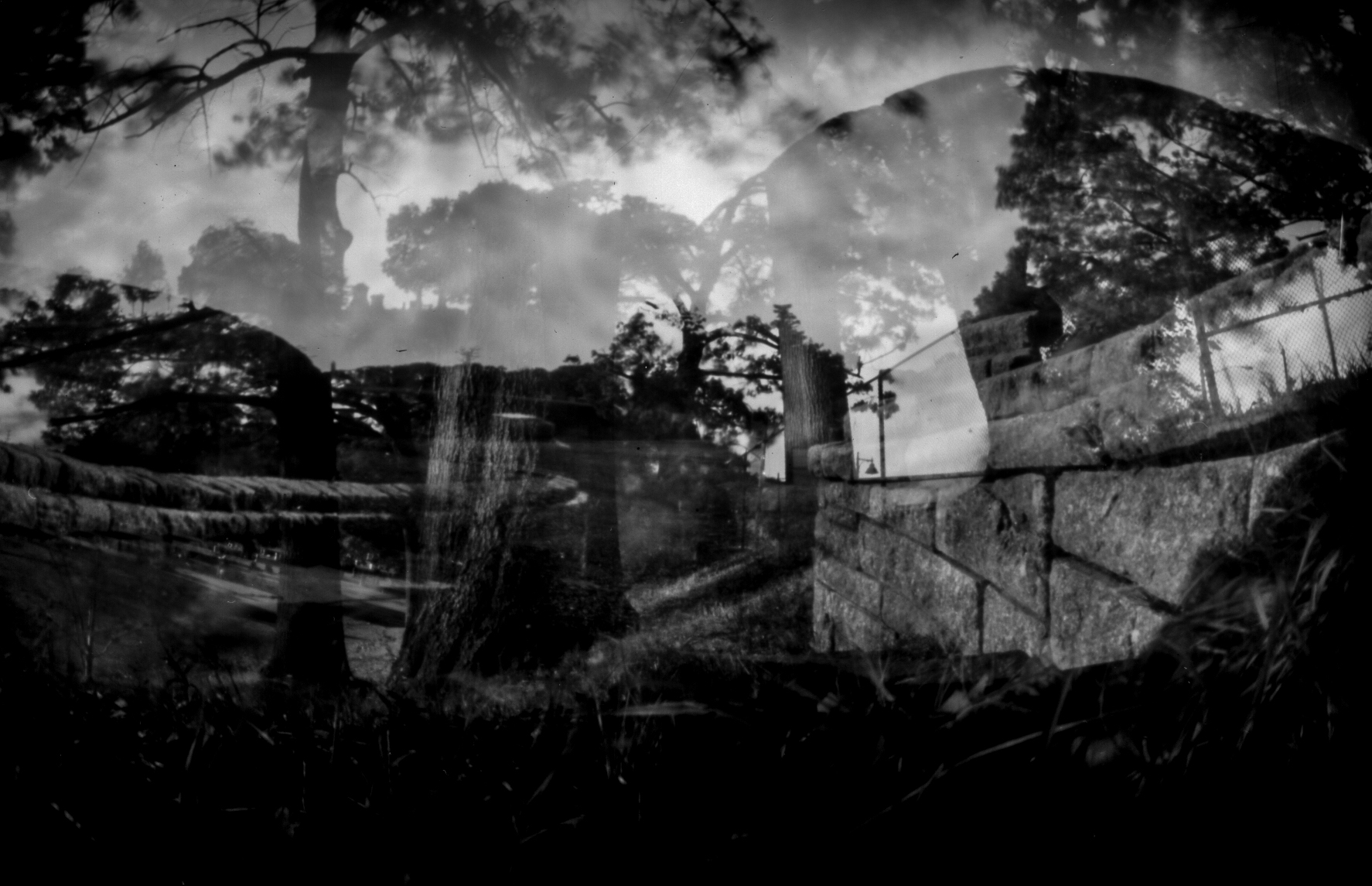
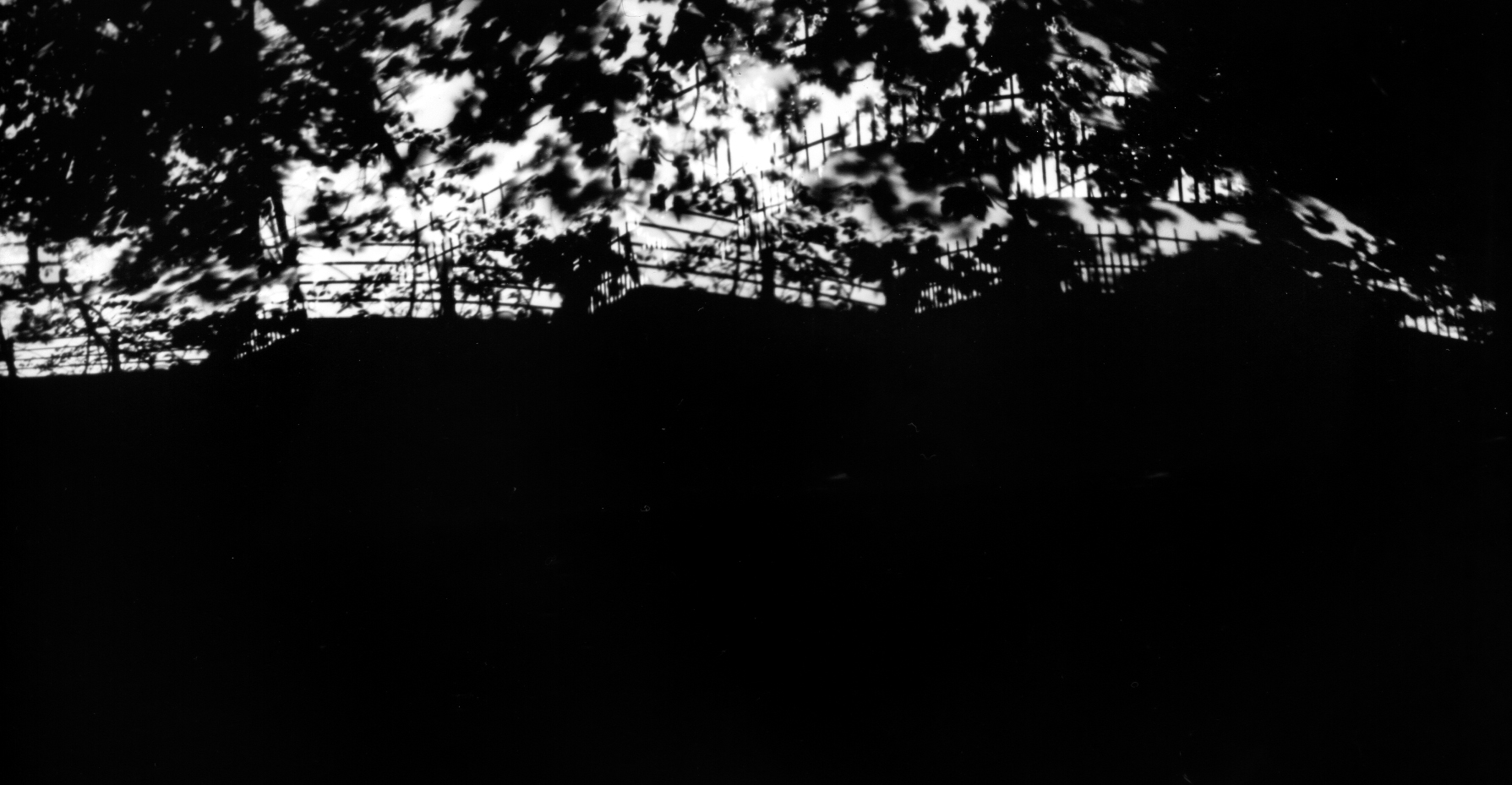
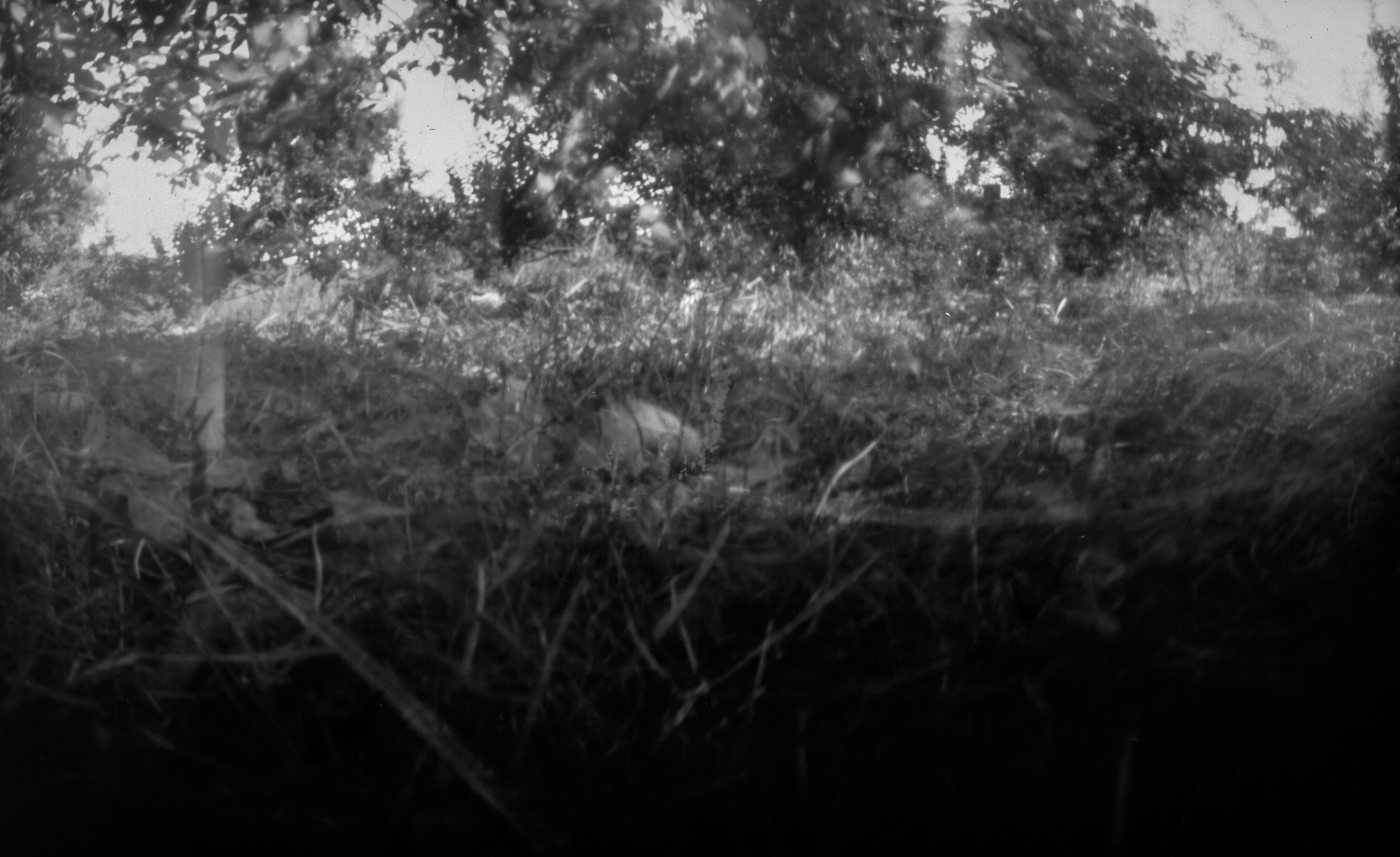

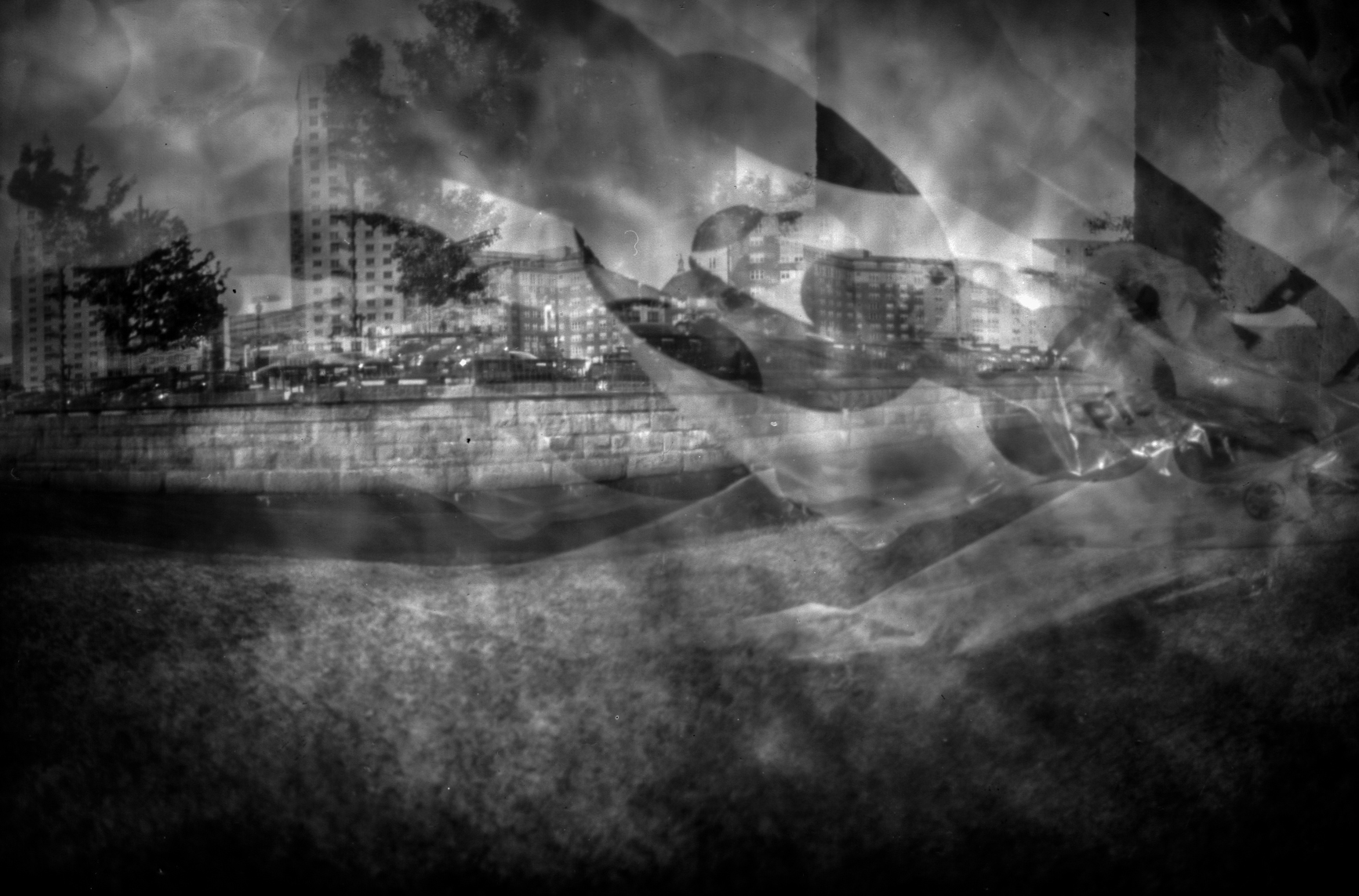
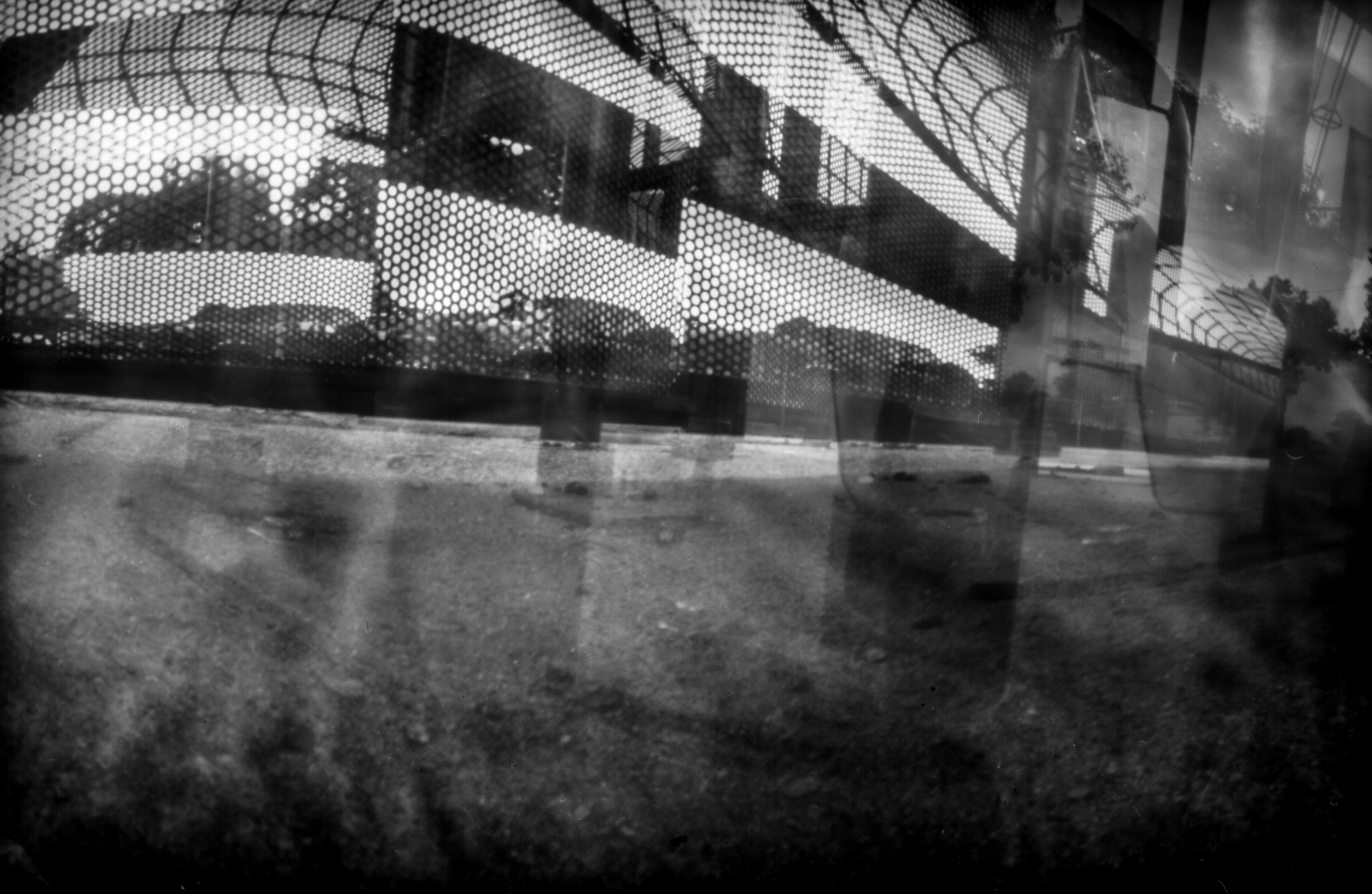
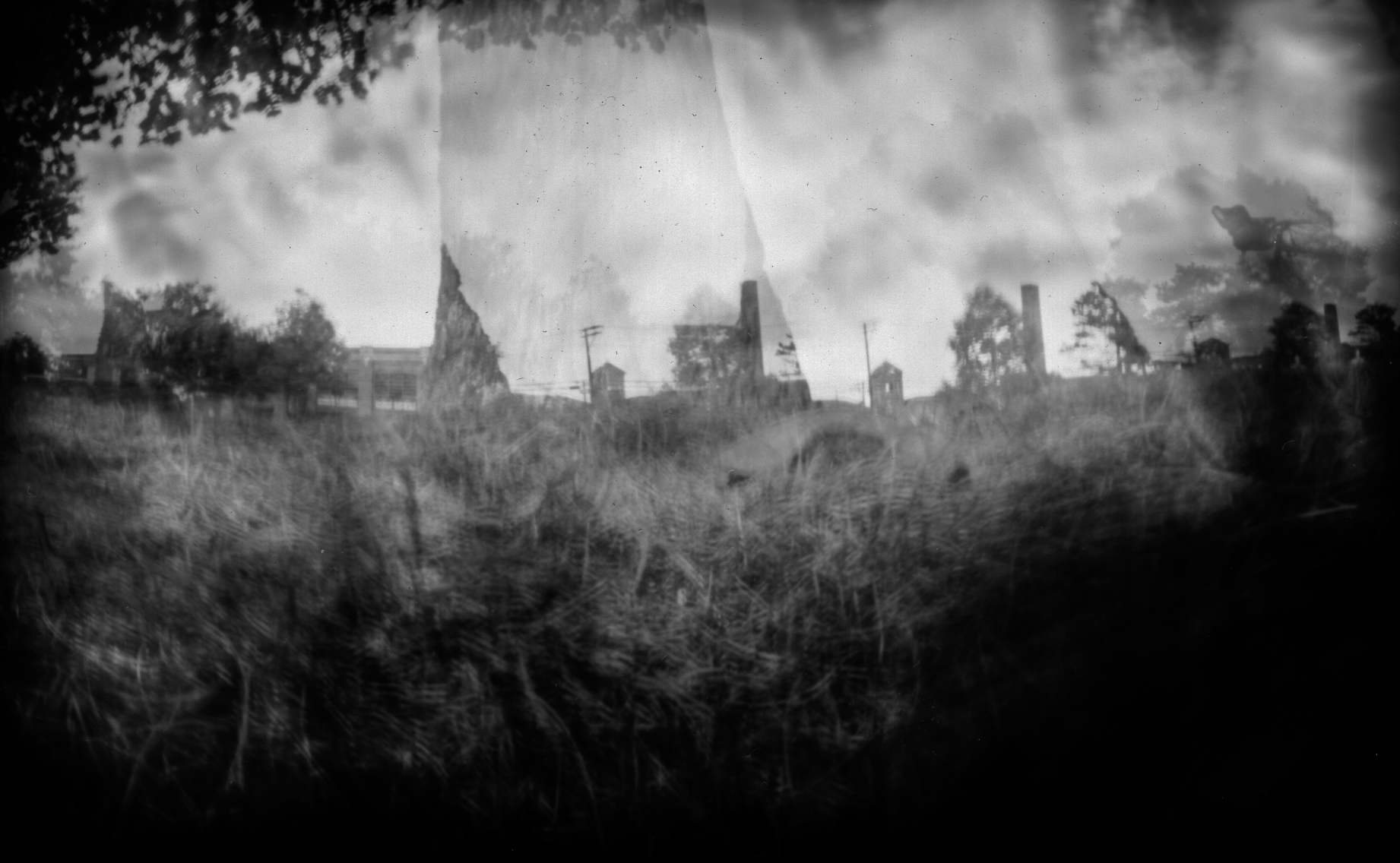
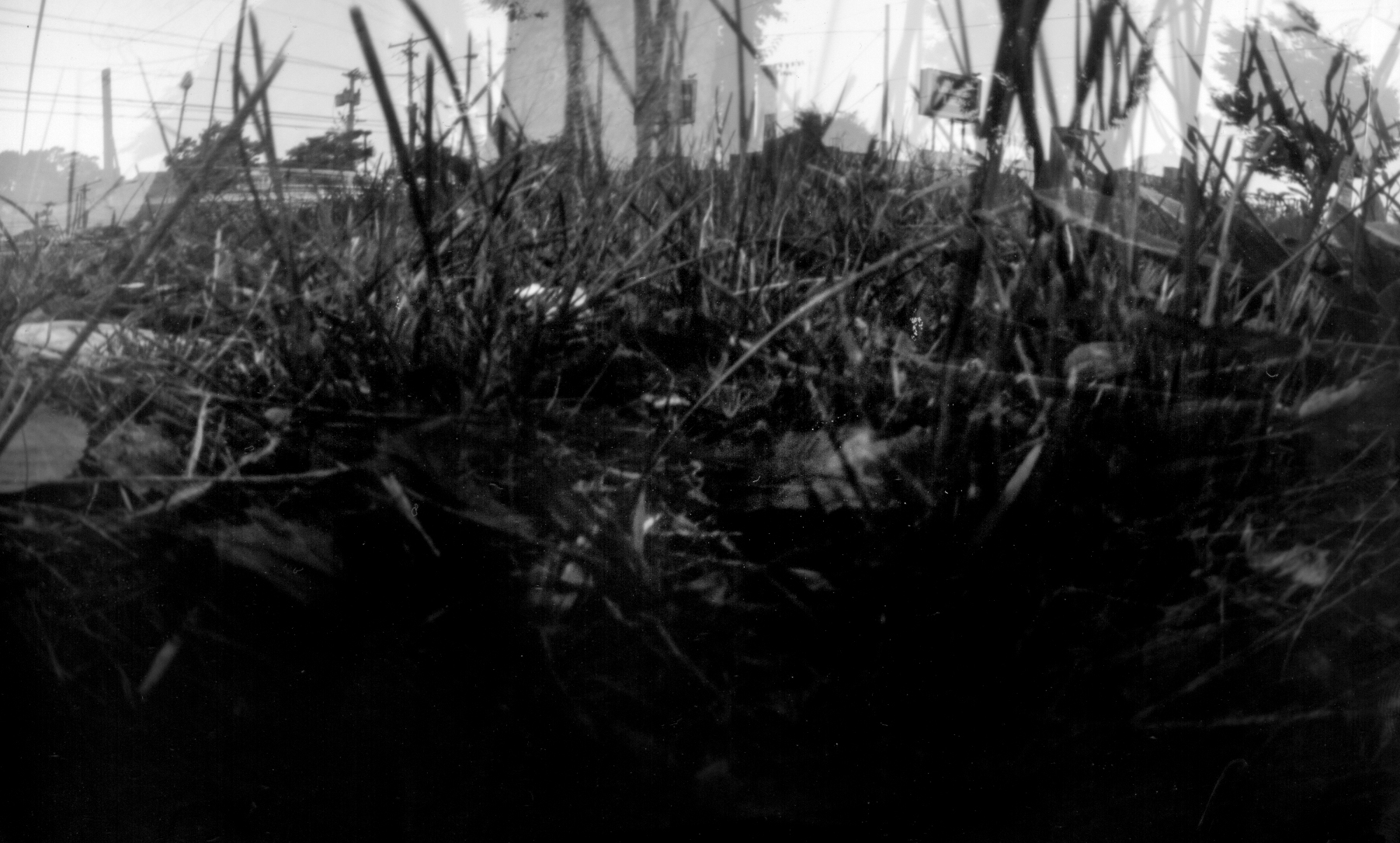
These pictures were made mostly along my bike commute in various locations in Providence, RI. September 2014.
Listen to the Pictures Part 2
Parts 1-4 of the audio piece created from field recordings made during the walks along the Moshassuck River. Recordings were made over a period of about 9 months.
Listen to the pictures: Conanicus' Bow audio
The first section of the Conanicus' Bow audio montage. Created from field recordings made on the project walks along the Moshassuck River.
The full audio will be available on Saturday when the show opens.
The full audio will be available on Saturday when the show opens.
Providence in Siver invades AS220 Project Space
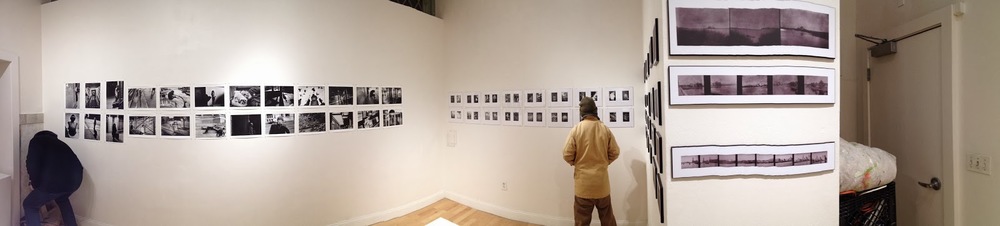
 |
| Paul Shelasky hangs his excellent street work |
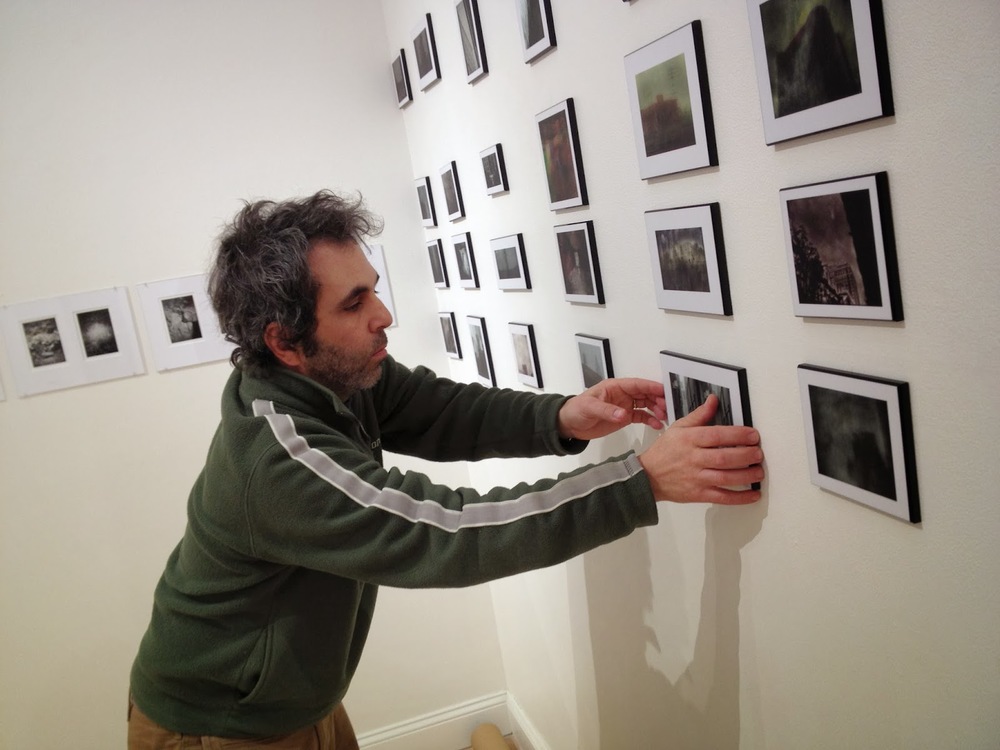 |
| John Nanian hard at work |
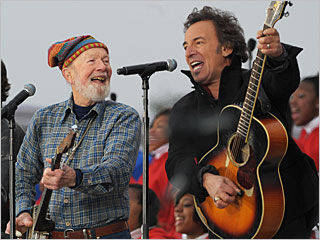 So long Pete, it's been good to know ya.
Pete Seeger and Bruce Springsteen performing at the Lincoln Memorial Obama Inaugural Celebration Concert.
Much more great info here at Unionsong.com
New work: Conanicus' Bow @ AS220 Project Space
Opening on Saturday February 1st. Providence in Silver: photographs by John Nanian, Warren Eve, Paul Shelasky and Erik Gould @AS220 Project Space, Providence RI.
I'm very excited to be part of this group show and to show some new work. 40 photographs with text and audio.
to walk the Moshassuck River, only 8.9 miles in length, flowing from Lincoln RI to the bay at Providence. Used and abused, this river makes its way almost unseen through a built landscape including former textile mills, a casket factory, three cemeteries, a major rail line and an interstate highway.
I relate my experience in photographs, words and field audio.
"Even under the open sky it is difficult to see and to get to, well guarded by a thicket of trees and vines and exit ramps. There's water there? Hiding in plain sight until comes a rainy spring and with great flood announces to the unlucky that although it may be your house or workshop YES indeed: a river flows (temporarily) through it..."
New work New book
Book: Conanicus' Bow is now available!
More about this project soon.
More about this project soon.
Woonsocket RI / Working methods flashback
For Labor Day, A process flashback. I made a number of the pictures in Woonsocket RI with a baby Crown Graphic camera and 6x9 roll film back. I thought at the time that I wanted to continue a view camera method: camera on tripod, ground glass focus and framing, but with a smaller camera and 120 film. So I got a baby crown and a very nice 65mm Super Angulon lens. On 6x9 that works out to be very close to the same angle of view as a 28mm lens on a 35m camera. Perfect I thought. I got a bright screen to help with the focus, the SA was an f8 lens. I also got two graflex roll film backs, locating the later versions with the rollers installed. Should be quick and light, compared with a 4x5 or 8x10.
Still, even with the rollers in the backs I could see that that film flatness was less than ideal, in fact it was pretty bad. No problem I thought, the lens stopped down has such depth of field I won't have any problems with lack of focus. This was true. However the lens couldn't help with architecture turning into ribbon candy near the edges of the frame, in focus yes, straight no. For landscape it would be fine, but facades, not really.
This and the very limited range of movements brought this experiment to a close, but at least I tried it.
Always fun to wander around Woonsocket.