Cold Coffee
never breaking news.
Go Go Graflex! Resources for Graflex cameras
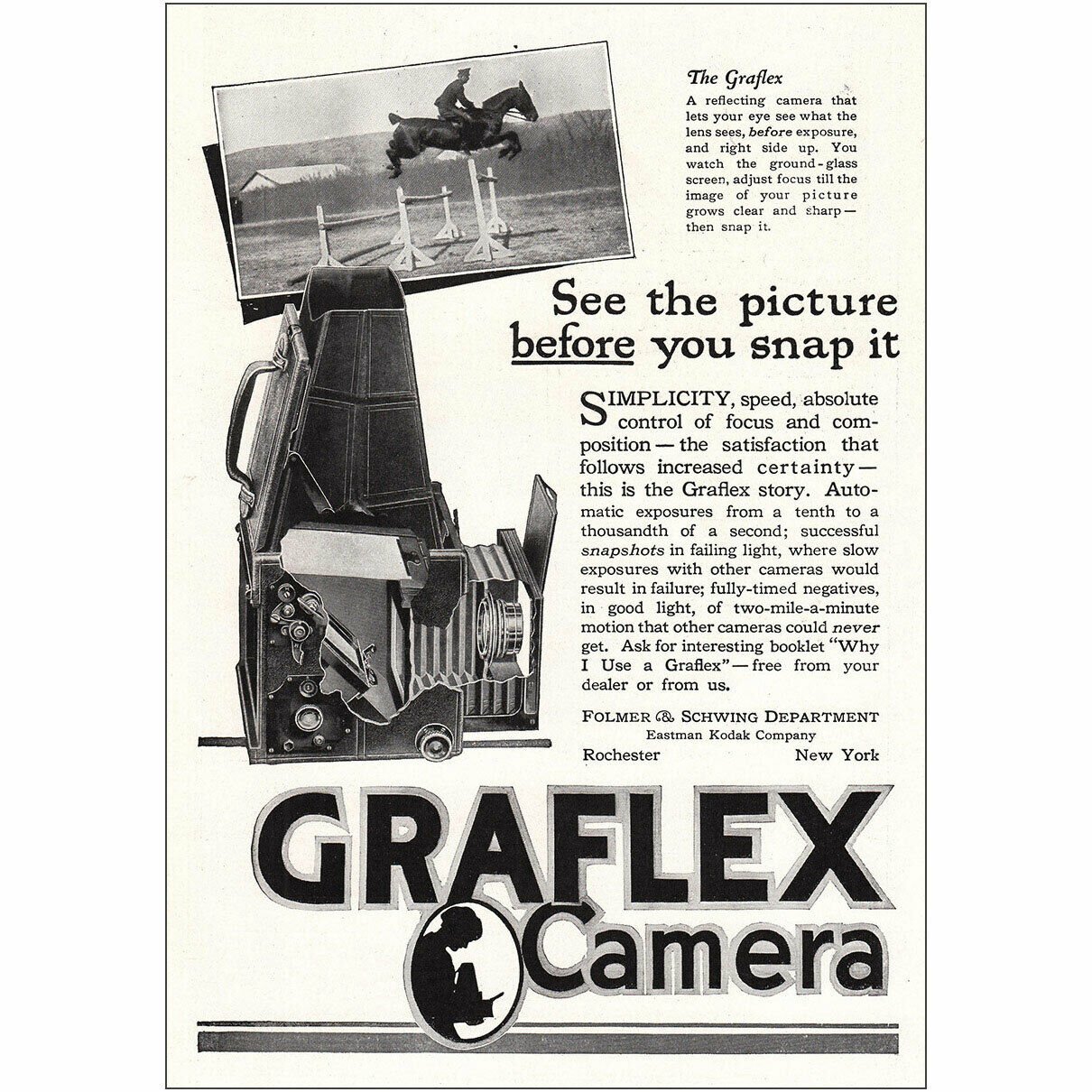
As you may know, I am a fan and user of Graflex reflex cameras, so much so that I am the admin for the Flickr Group Graflex SLR. These are great cameras to use, but they are also old cameras and so they require some TLC, service and repair from time to time. Happily, there are many great options for repair and replacement parts, cool mods, and improvements. I'll share a few things I've found, and I’d love to hear about anything you've discovered.

I love using Cut Film Magazines, otherwise known as Bag Mags, even more so now that I can get replacement leather bags. These magazines work better when the bag isn't dry and stiff. This ebay seller offers new bags you can install yourself, and often has refurbished magazines as well.
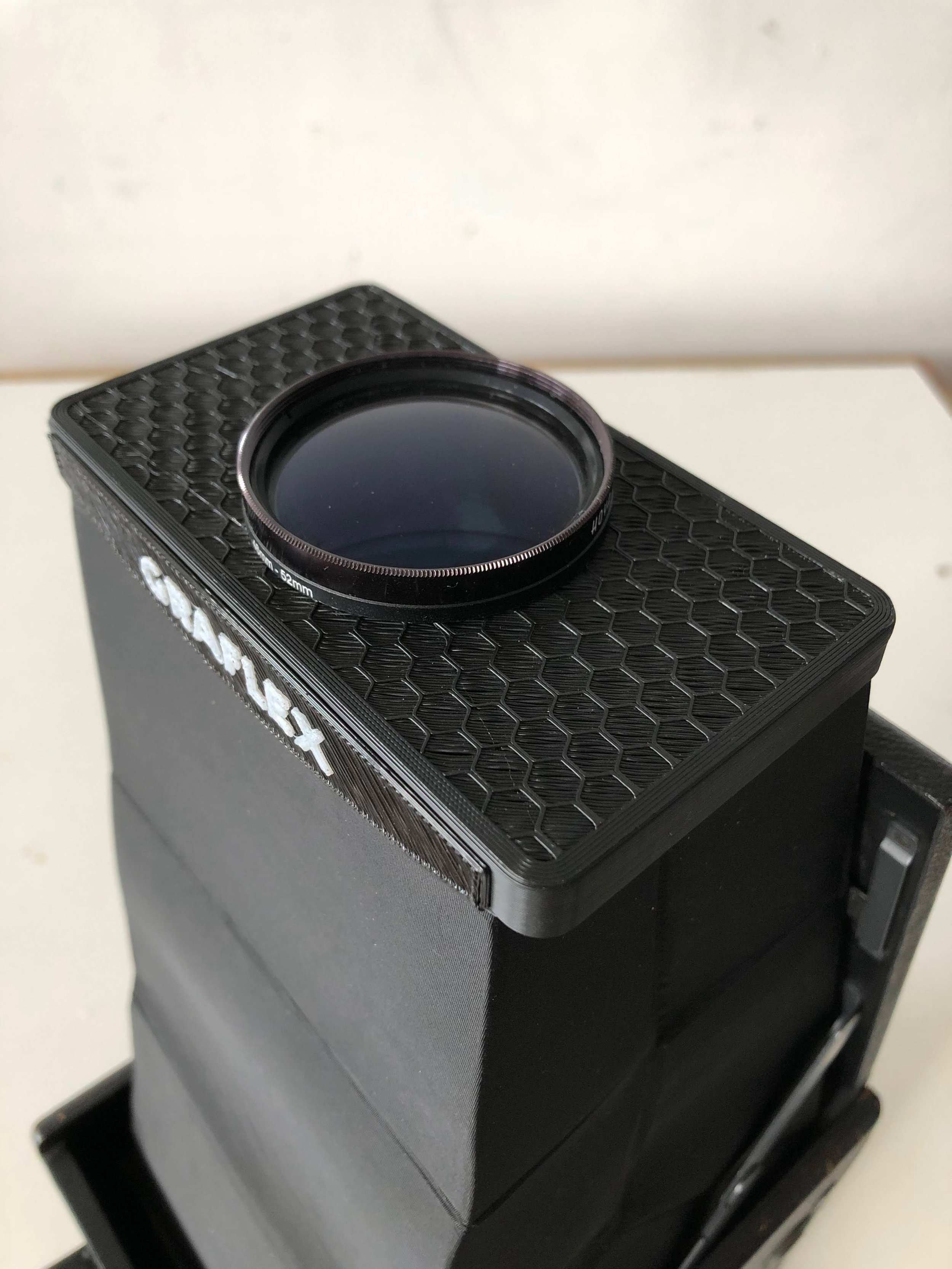
Next, Holgamods made a viewfinder magnifier frame for 4x5 cameras. This frame is a 3D printed piece, and it doesn't include the magnifying lens itself, which is a common treaded close-up filter. It works quite well.
An alternative idea for a magnifier is a sheet fresnel magnifier like these from Amazon. Inexpensive and easy to trim to fit.
Viewing hoods are often in bad shape, and I've seen many different approaches to the problem. If you are like me and would prefer to stay with a hood like the original, here are two options:
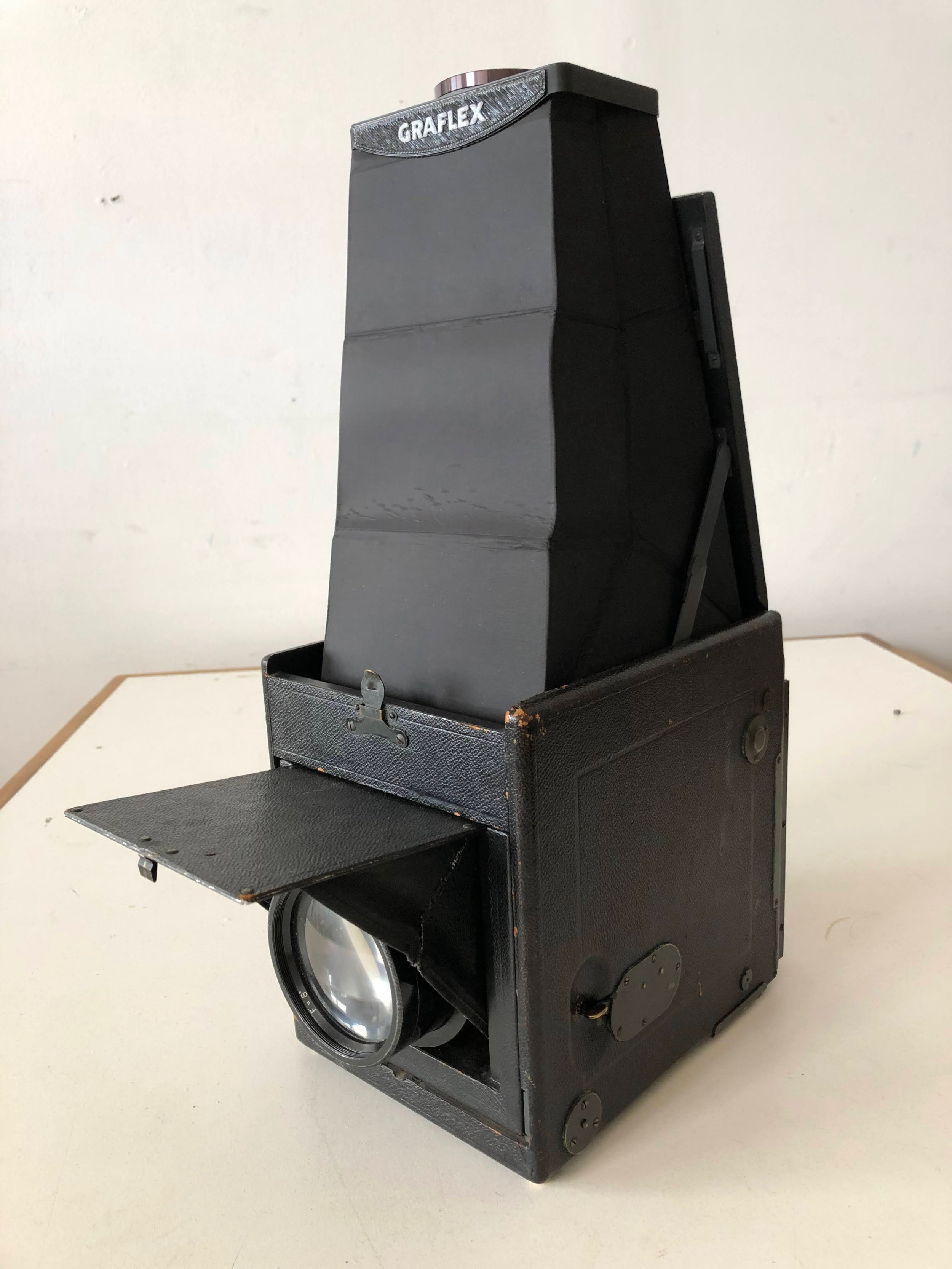
This one is listed for 4x5 cameras, but they make some other sizes on request. It works well, but it isn't a close match in terms of materials. You will have to transfer the metal parts from your existing hood.
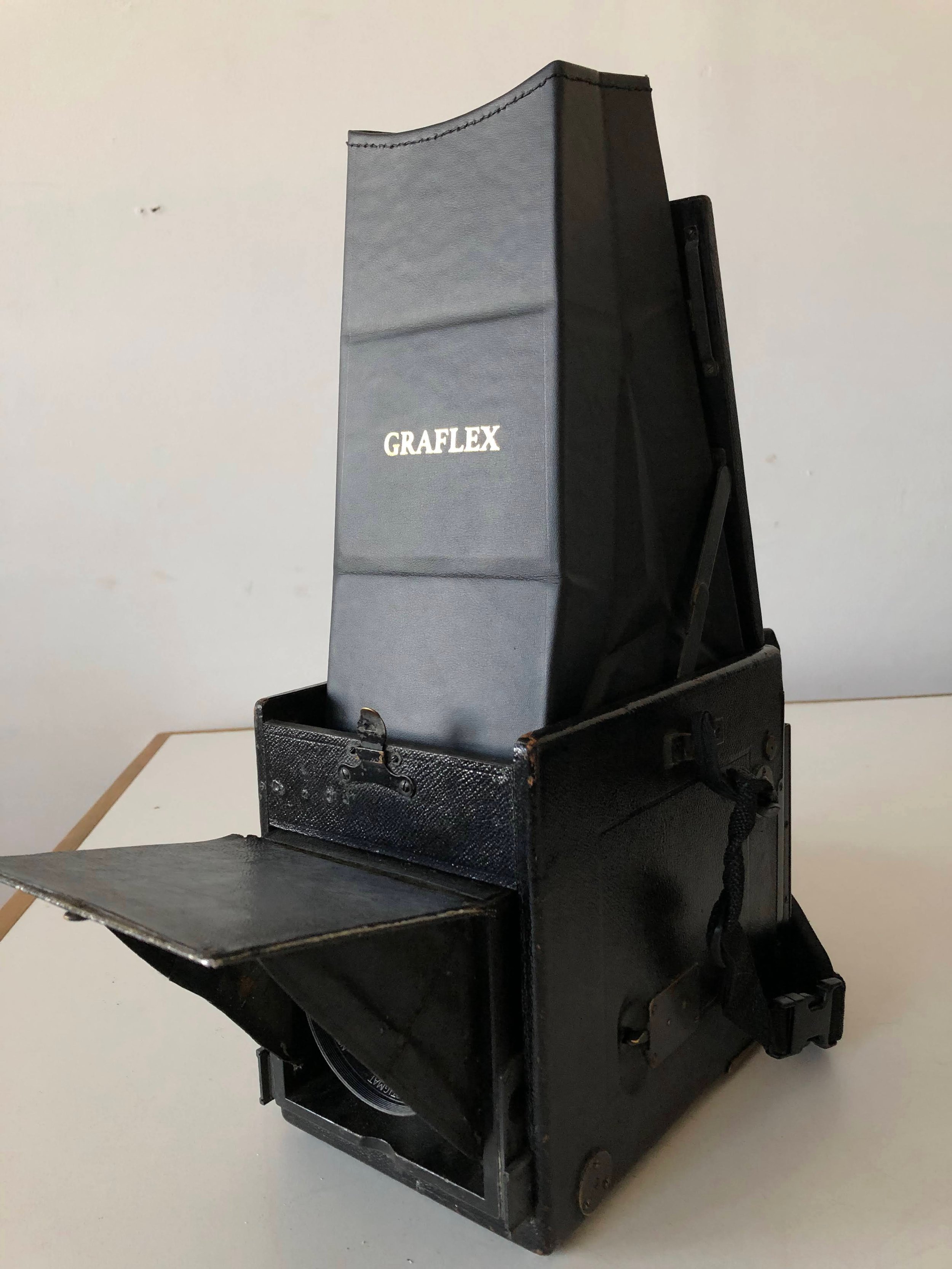
The next hood is one I have recently received and installed, and I am very impressed with the quality and the appearance. The eBay seller will make one to order for all Graflex models, as long as you can supply measurements. Here is mine, custom-made for my Series C 3x4. Like the first, you must transfer the metal parts from your old hood. It looks and works great, and what a pleasure to be able to see the full ground glass.
Looking to make a new shutter?
Aki-Asahi in Japan has the material; look for the rubber/nylon type at the bottom of the page.
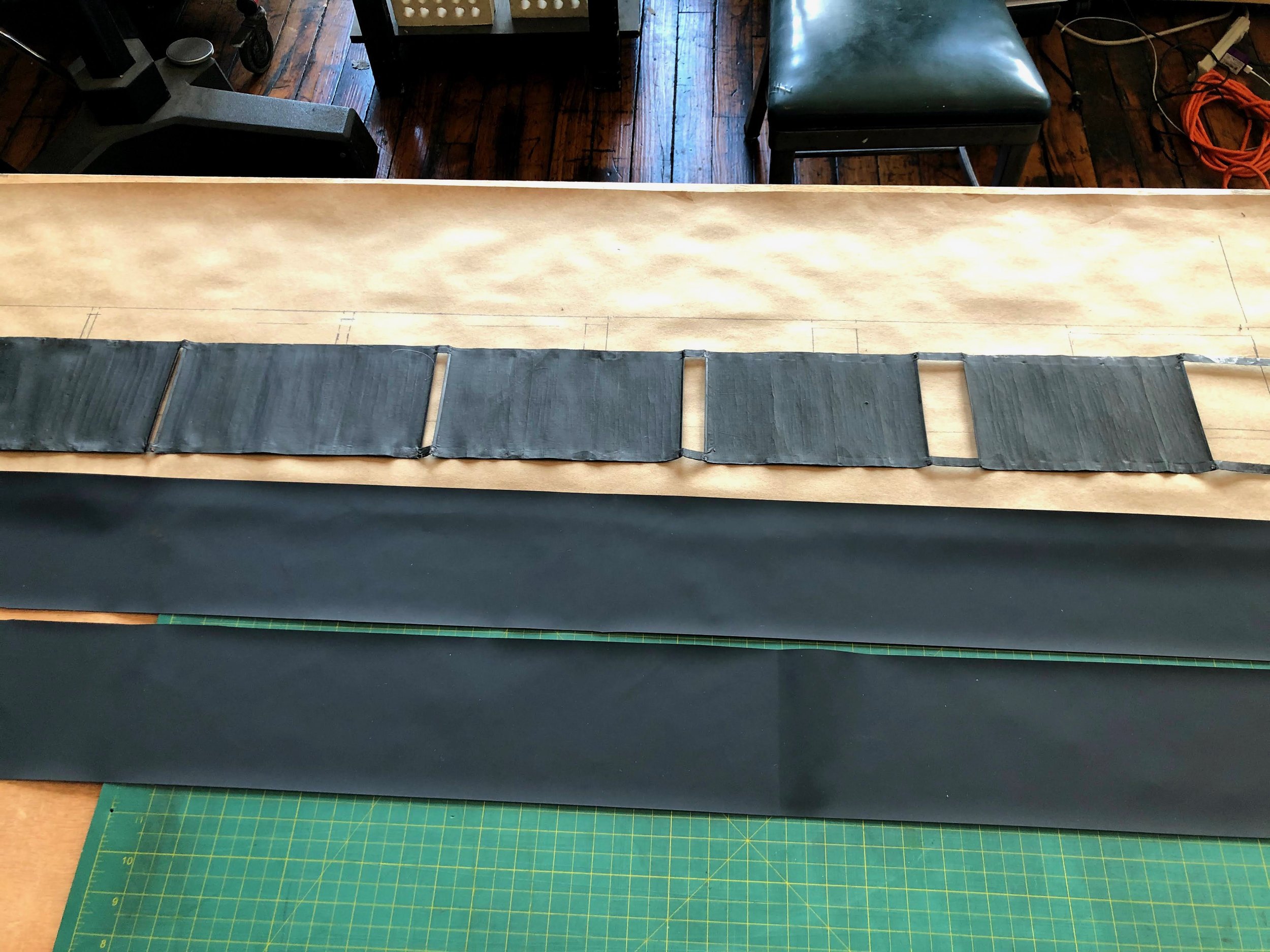
I will share my own adventure making new shutter curtains in a future post. In the photo you can see the old and dried-out curtain I removed from an RB Auto and the new material from Aki-Ashai below it. It comes in a width wide enough to make two curtains, which is what I did, this shows the fabric just after I divided it in two.
Whether its a big repair or just a tune-up, it is satisfying to bring a 90-year-old camera back to life, I highly recommend it.


Here is a PDF of my shutter repair notes with the dimensions of the 3x4 curtain.
https://www.dropbox.com/s/cradbo5kzdzgmyw/Graflex%20repair%20notes.pdf?dl=0
Getting Better
self-improvement, photography style.

If you've been doing photography for a bit, you know that getting better doesn't happen automatically. Like anything worth doing, it takes practice. Getting your shutter count up there is just the beginning. You have to want to get better, which may sound obvious, like don't we all want to get better? Maybe, but what happens when it doesn't come easily, or we just feel stuck? Becoming self-critical in a useful way can be challenging, and perhaps you do photography to balance other things in your life that are not so fun. Definitely nothing wrong with just having fun, but maybe you can expand the fun stuff and improve on your own terms.
Here are a few things I do. Taking lots of photos is good practice, but don't forget the rest of the process. Develop (whatever that means to you), Edit, Share and Look. I try to look at all kinds of work, artworks I like, artworks I don't get, movies, everything. I look at photography, but not just photography, and not just what is happening on social media. I love seeing photography in physical forms: projected film, photo prints, and photobooks. I love books, and so I gravitate to them, to look at and to make.
It's hard to edit work if you don't know what it's about, and here's a thing that seems crazy, but just because you made a picture doesn't mean that you understand it. This is definitely something I've found to be so: All of the thoughts, feelings, memories that accompany each photo I make aren't actually available to the person viewing it when that person isn't me. What's more, viewers have their own thoughts, feelings, and memories that even I don't know. Wild.

So to help myself bridge that divide, I print stuff and keep it around me. If you are picturing a hoarder surrounded by stacks of old newspapers right now, I'm sorry. It isn't quite that bad yet. It's great to have stuff on hand, so you see it when you aren't necessarily thinking about it. You live with it, in other words, and in doing so, you move yourself a little closer to seeing it the way someone else might. Seeing a picture in the context of other pictures suggests connections, and for someone who likes to gather images into books, those connections can be catalyzing. I print single photos, and I print little books too. Happily, there are many tools available to make that relatively easy.
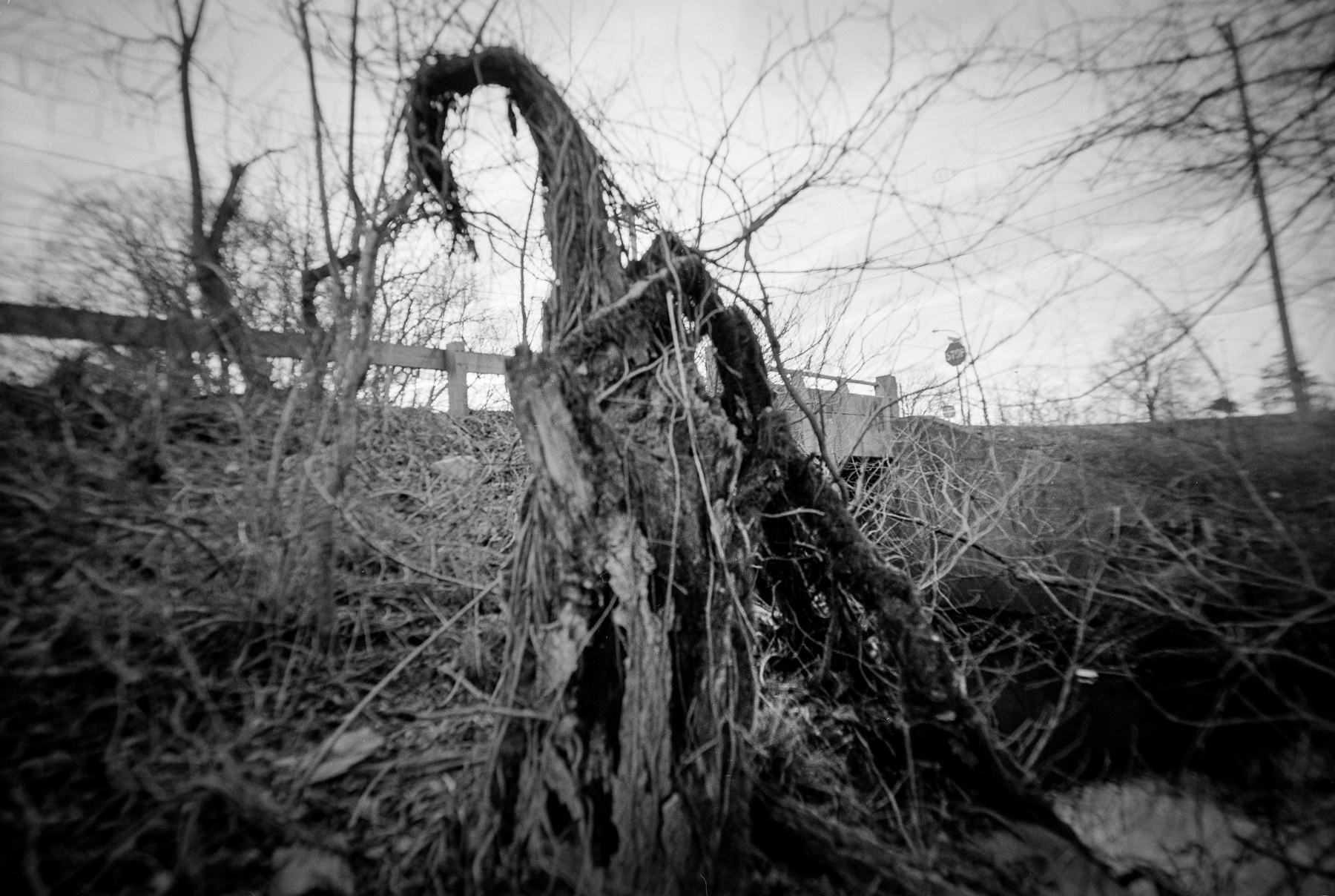
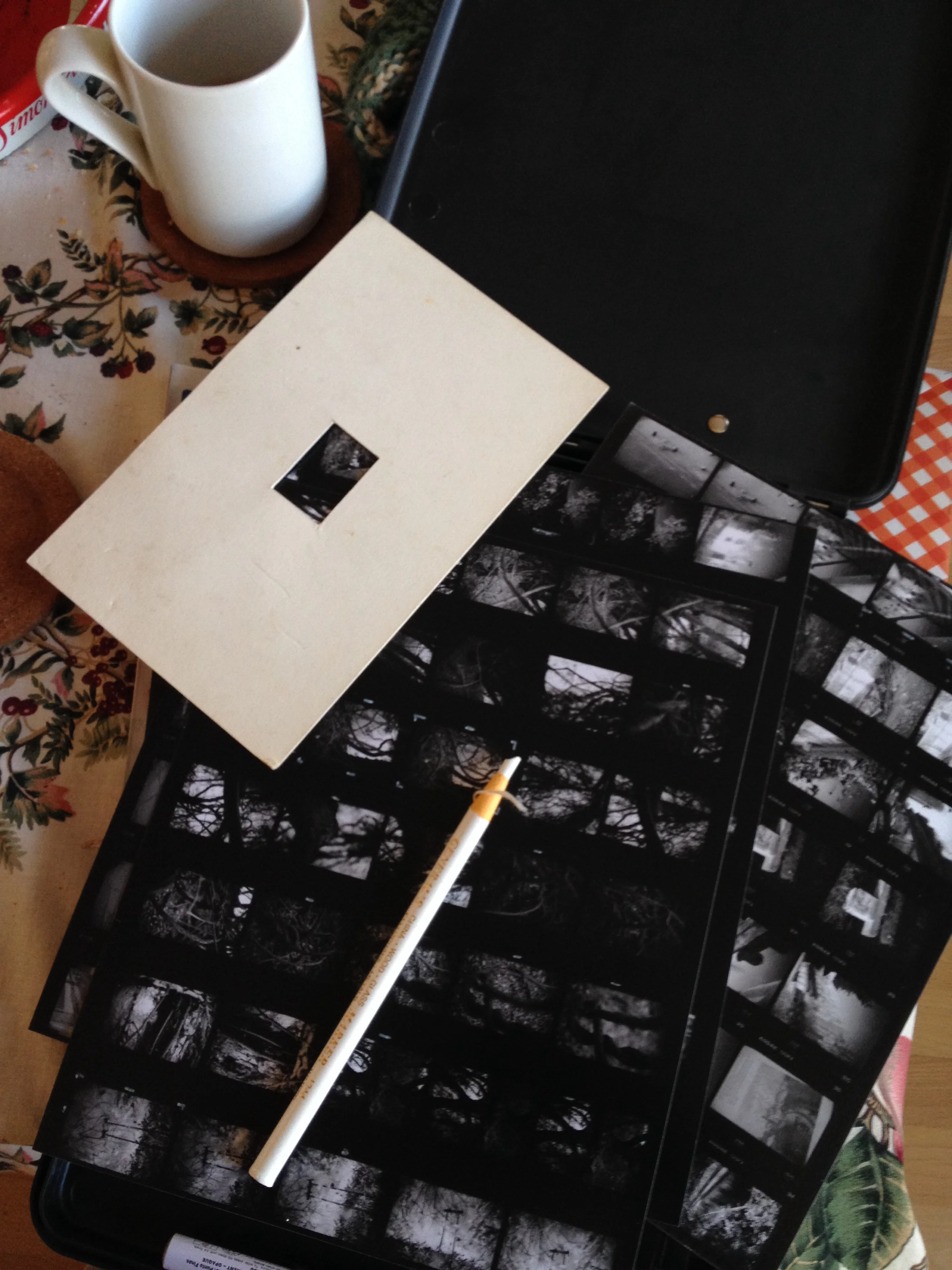
Digital forms have their place in this for me, too. Certainly for sharing, but as a further extension of my own self-review, I find it very useful. For example, I've added a new page to this site collecting a number of my photo walks, and in doing so, I've found some commonalities that I had missed. To that end, I'm presenting a less edited (or redacted) group that shows a bit of the exploration that goes on for me instead of making a single, final choice. Doing so gives me this fun little grid of this vine monster:

What a beast.
When all else fails, read a book. I'd love to hear about your own strategies. And if you're looking around this site and thinking, "it ain't working, chief,” you're not alone; I think that often myself. But that's what getting better is all about, right?
Five [+2] Sheets with Shanghai GP-3 - Shutdown 1 Edition
2020 is winding down, and good riddance. December is a good time to scrub the decks, wash our hands, and sweep out the old. With that in mind, I’m posting this piece from the first shut down. I’m now in our second shut down as we enter what we hope is the home stretch to saner leadership and the new normal, whatever that might be. I wish everyone health, happiness, and success in endeavors, both big and small.

My venerable Series C
It began as it often does with a camera. In this case, a 3x4 Graflex Series C. I will restrain myself from extolling its virtues but suffice it to say I love this camera, and while roll-film backs are handy, I desired to use it in all its 3x4 fullness. Ilford makes film this size (3 1/4 x 4 1/4) in their annual special run, but the price was a bit beyond my budget. I wasn't quite ready to go down the road of cutting down 4x5. As of yet, more on that later. On Facebook, I came across a Hong Kong dealer who offered Shanghai film in several unconventional formats, so I contacted them about the 3x4. Yes, they have it, and as the price was excellent, I impulsively ordered 600 sheets.

3x4 Bag Mag + GP3
On to testing: The film doesn't come with much data, but no matter. I planned to use my go-to developer, Pyrocat HD. I loaded up a few sheets, exposed them at EI 100, and developed them in Pyrocat 1:1:50 at 9 minutes at 20º C. Not bad, but pretty contrasty, and the shadows were thin. On the next round, I went with EI 80, developed for 8 minutes. Much better but still rather contrasty. If you like high contrast, this film will certainly get you there. One more round at EI 64, developed for 7 minutes. It looked good, contact printed well, so there it is.
When the pandemic hit, I had the opportunity to photograph just for myself, albeit close to home, and I found that to be a centering experience. I engaged with scenes near home and focused the tumult of anxious emotions into something tangible, a welcome respite. Also welcome, the "something tangible" was having the opportunity to make prints from these 3x4 negatives and to get a better feel for this film. These photographs are all 7x9 inch prints on Oriental Seagull FB paper. My conclusion is that GP-3 is quite lovely, with fine grain and the capability to render a full tonal range.
One final note on this film, just before our shutdown, I had a test shoot with some friends in the daylit studio as a trial for a portrait shoot that was not meant to be. With an EI of 64 and lenses ranging from f4.5 to f2.9, my shutter speeds fell on the dangerously slow side. So now I've invested in a guillotine-style cutter to chop down faster emulsions for the next studio round. Cameras lead you down many unexpected paths.

Attending a party in borrowed clothes by way of an abandoned railroad

Over at Emulsive HQ, they do these happenings called film parties, and this month it was time for the #fp4party which stars as you likely guess Ilford FP-4. I find January a great month to join in on a party as I find I need a little extra motivation to get out in the cold and grey Rhode Island winter to make photos. Saying to a group of folks on Twitter “sure, I’m in” seems to be just enough to get me out and get something done. And so I did.
FP-4 is an excellent film full stop. But rather than further my winter of discontent with a cold tripod I decided a more sensitive film would be better suited to my conditions and purpose. I skipped over my usual Tmax 400 and went to the fastest 120 film there is, Ilford Delta 3200. Using which does mean that my images will not be eligible for consideration in the viewer voting at the end of the week but as my dad used to say “we’re not here to win a beauty contest” so I’m good with that. For the tech fans: my film was Ilford Delta 3200 in 120 which I rated at its “data sheet speed” of 1000 and developed in Kodak T-Max developer diluted 1:4. The camera was a Fuji GSWIII 6x9.
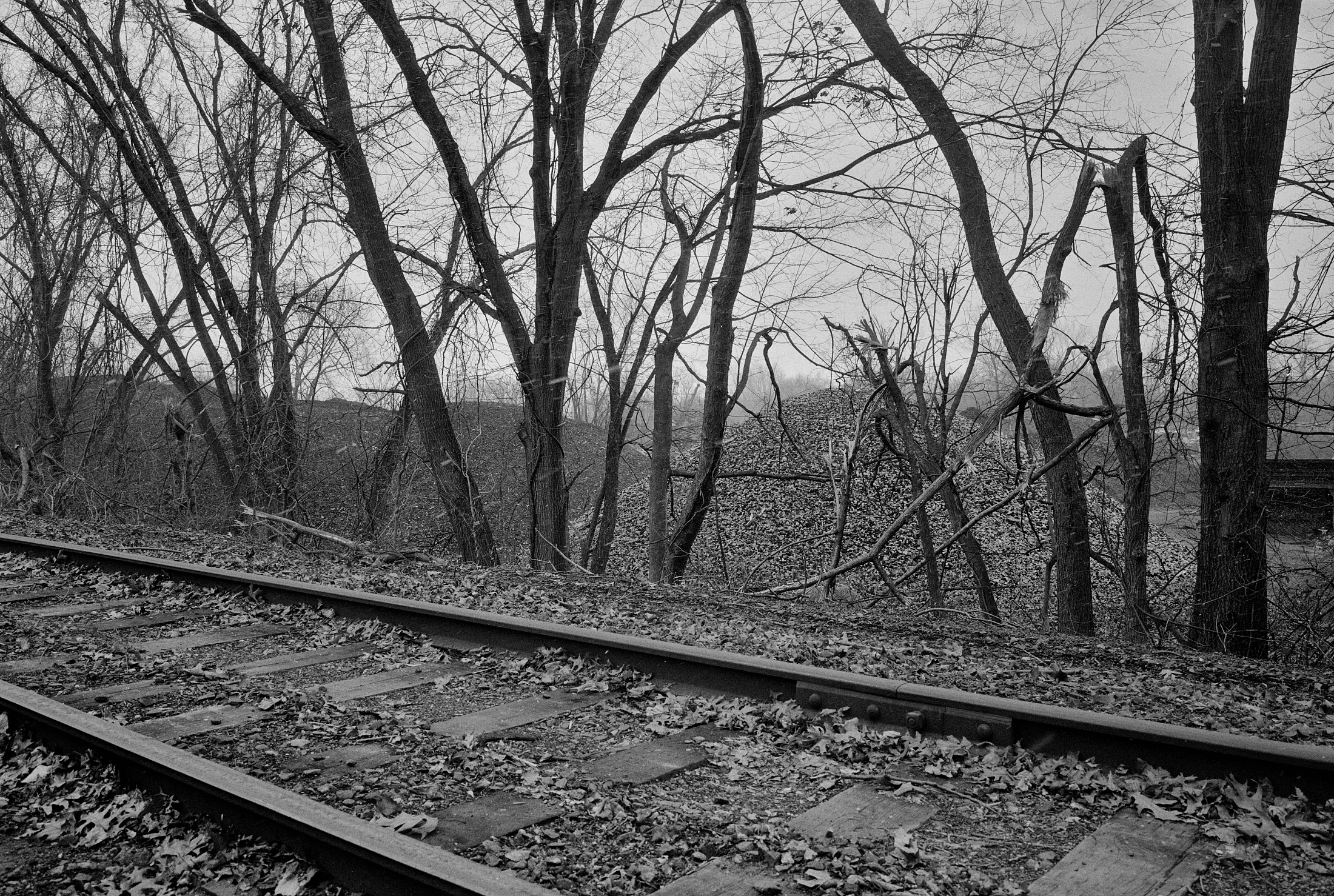
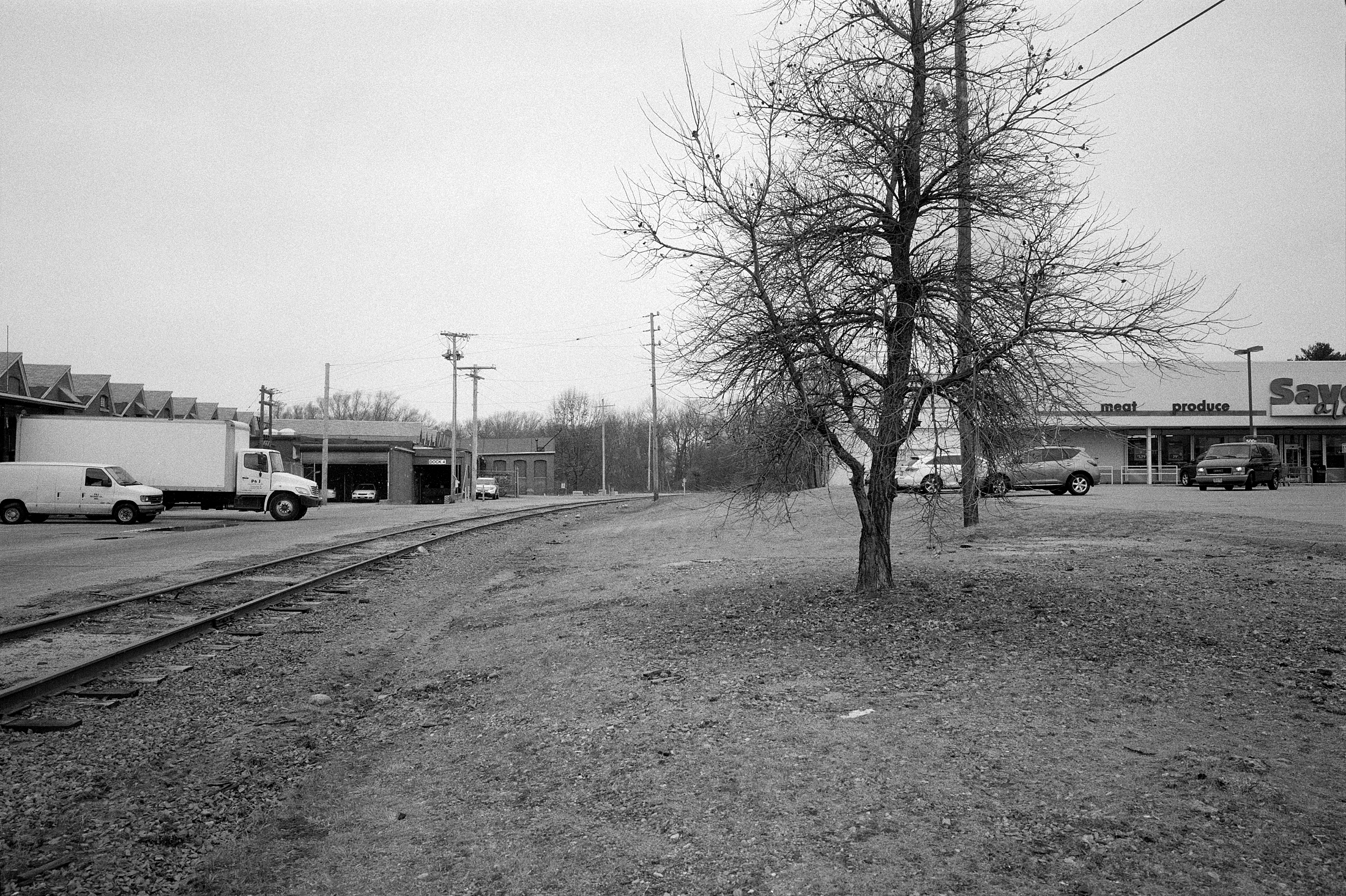
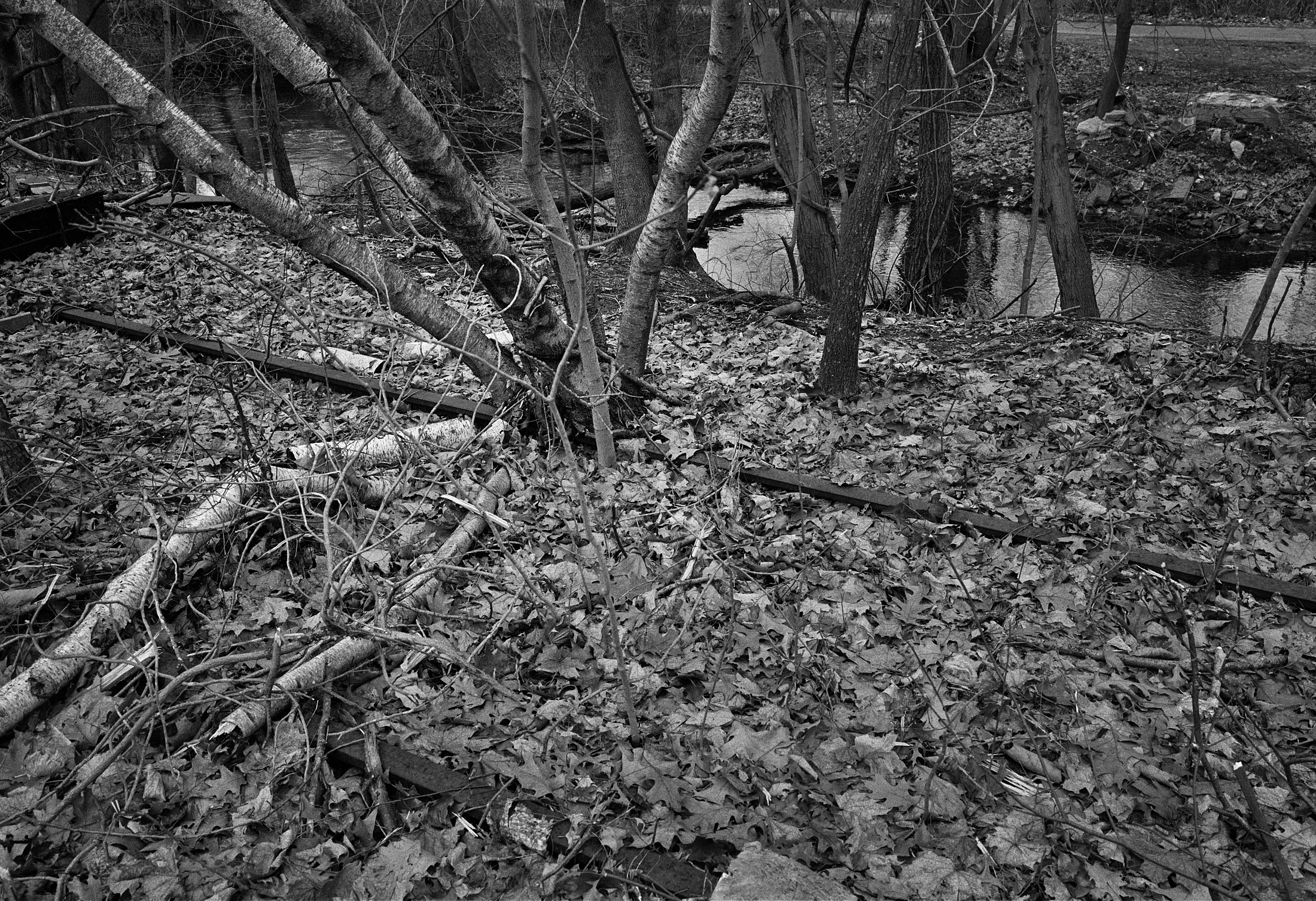
As for my subject, I went to my list of desires to find a walking photo meditation along the rail line of the former Moshassuck Valley railroad in Pawtucket, quite close to home. I first encountered the MVRR without realizing it when I walked the river of that name. After doing a bit of research, I discovered that the diminutive railway had a rather interesting and long history. Although at 2 miles it was one of the shortest in the country it retained its independence from its start in 1847 right up to 1981. It ran passenger service until the 1920s and fought and won a rate dispute with “The Company” the mighty New Haven Railroad. When I learned that an extension was planned (a crucial move in winning the rate dispute) that would have brought the railroad right by my house, I was hooked, and I knew I had to explore this bit of neighborhood history further.
This is just a first effort, but I am encouraged that there is more I can work with. In the spirit of the party and my virtual notebook I’m sharing here every picture from both rolls in the sequence I made them.
The MVRR was folded into the Providence and Worcester Railroad in 1981, and this branch is actually not wholly abandoned. It sees some occasional service. I note evidence here of recent tie replacement and brush clearing, perhaps indicating that the P&W’s new owners still see some value in the line.
For more info: http://www.abandonedrails.com/Saylesville_Branch
And here is a cool home movie of the railroad in use from 1970.





Links in a chain

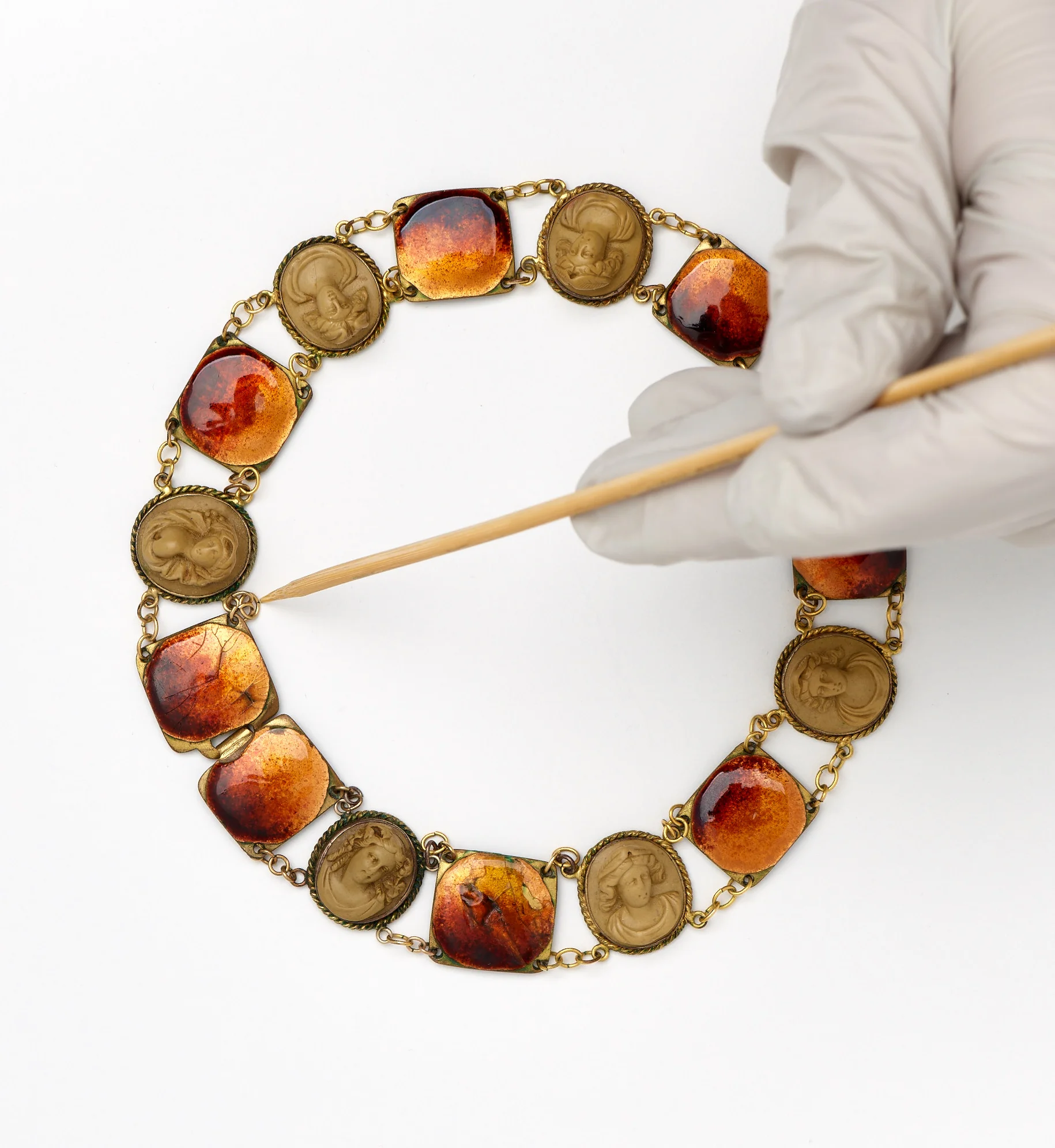
Working on a piece in the RISD Museum collection; Mae Luther, Necklace, ca. 1930, 2000.51
When I was a young guy and looking to establish myself as a professional photographer, I visited the downtown studio of a well known commercial photographer. He specialized in catalog work, primarily for the jewelry industry which was still a big thing in this area then. I had heard he was looking to hire a new assistant. The studio was quite impressive, and they were indeed working on a jewelry catalog shoot at that moment. I watched while an assistant crouched under an 8x10 camera with a little stick and carefully pushed a gold chain into the desired position, link by link. A nervous-looking art director hovered nearby. “Oh my god, I can’t work that way, I’d go mad!” I thought — all that effort for a gold chain. It was that and the photographer’s requirement for a mandatory drug test that put me on a different career path. And so here we are.
Opening Day

I wrote a short post for the image and words site Physical Grain about my rituals and baseball. Have a look...
[Physical Grain seems to be no more, the essay follows below- eg, opening day 2026]
Opening Day
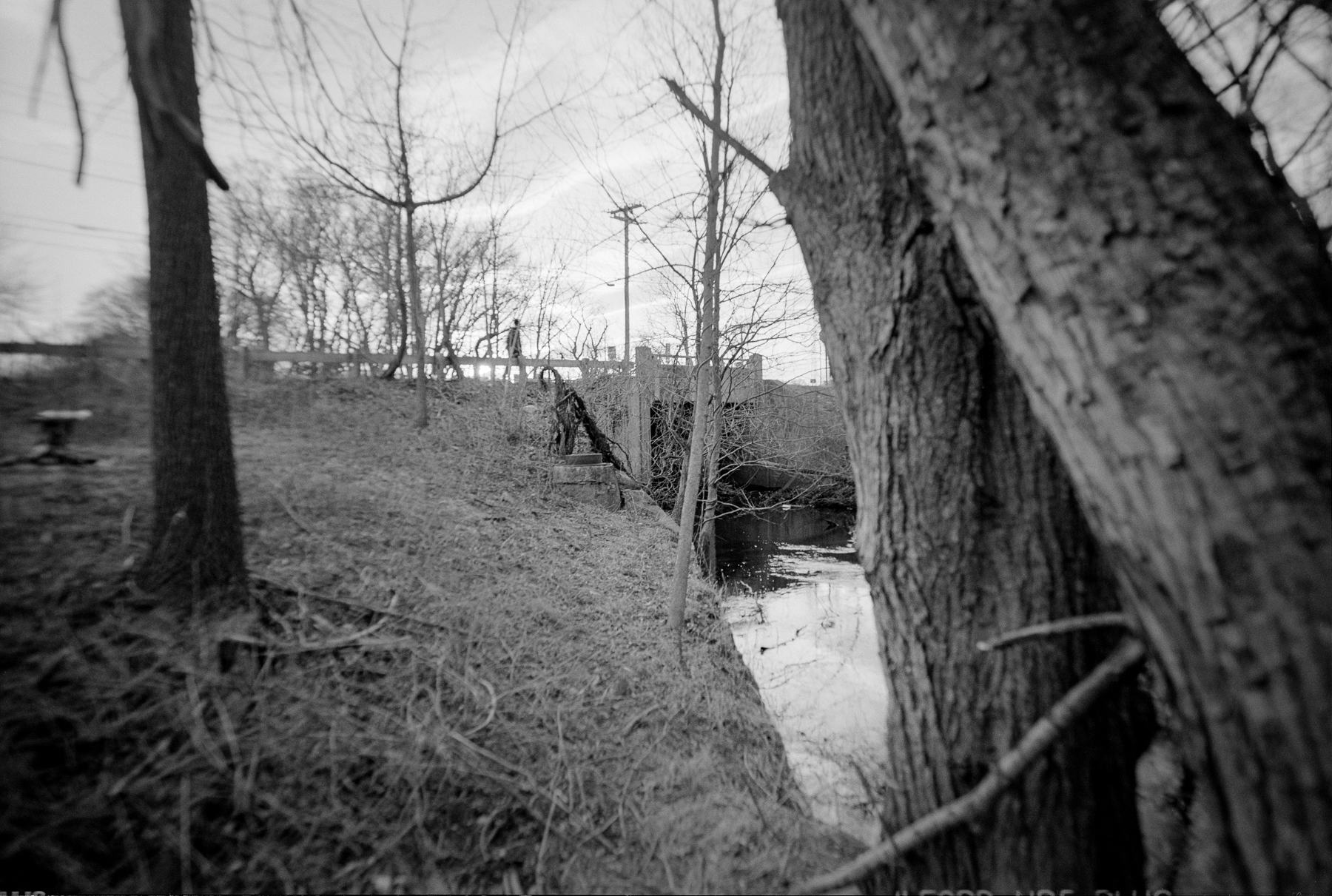
There was a time in my younger days, in my view camera days, when I imagined my photographic season aligning with the baseball season. Although that has passed (I wrote about that here.) I still try to honor my commitment to my photography on two particular days: New Year's Day, when I go to the darkroom, and on the opening day of the baseball season, when I get out there with a camera. One might imagine from this that I’m a huge baseball fan. I’m not. This year’s opening day fell on April 2nd, and I was barely aware. This was a typical Sunday filled with tasks and family time. We have an Easter Egg hunt and a formal tea on the ticket for the afternoon, but I have a brief window in the morning, and so I set out.
The day before, I had spotted a couple of promising locations from the car. At the first location, I realize right away that the sun is exactly on the wrong side of the street, so I take a pic or two for reference, and on to the second. This is just a scruffy bunch of trees at a curve in the road, with a steep slope falling away, houses visible through a screen of winter bare branches and trunks.
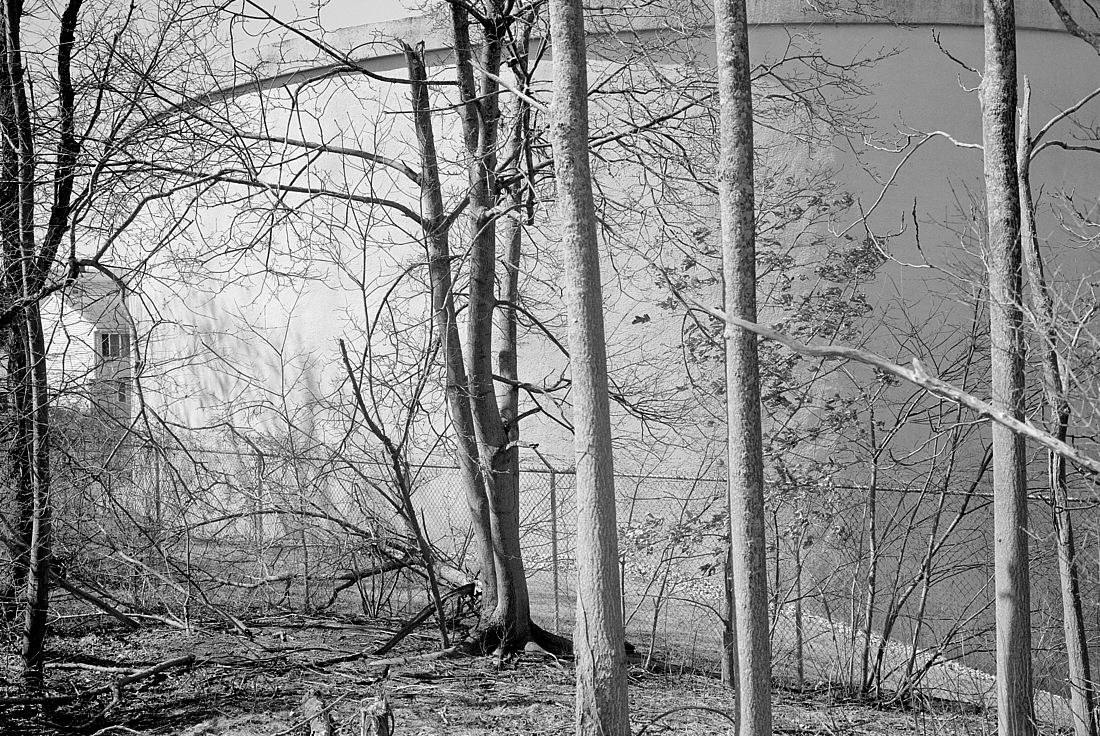
I walk along, recalling what I thought I had noticed the day before, considering what might possibly make a picture. The spring sun is warm, and the wind that had been tormenting us seems at last exhausted. It is good to be out, with nothing to do but look. On this day that is almost literally true, I had grabbed my camera bag from a previous outing, cameras still loaded, but I find myself at this moment with one frame remaining. Determined to make it count, I carefully considered my options. Finally, my eyes land upon a cluster of trees with the curve of a concrete water tower beyond, a glimpse of a house puncturing the space on the left. A quick check with the meter, a double-check that the reading has been transferred to the camera, a deep breath, and ca-chack. Throw my pitch, and I’m off the mound.
Having issues: defeat streaky development in 2017
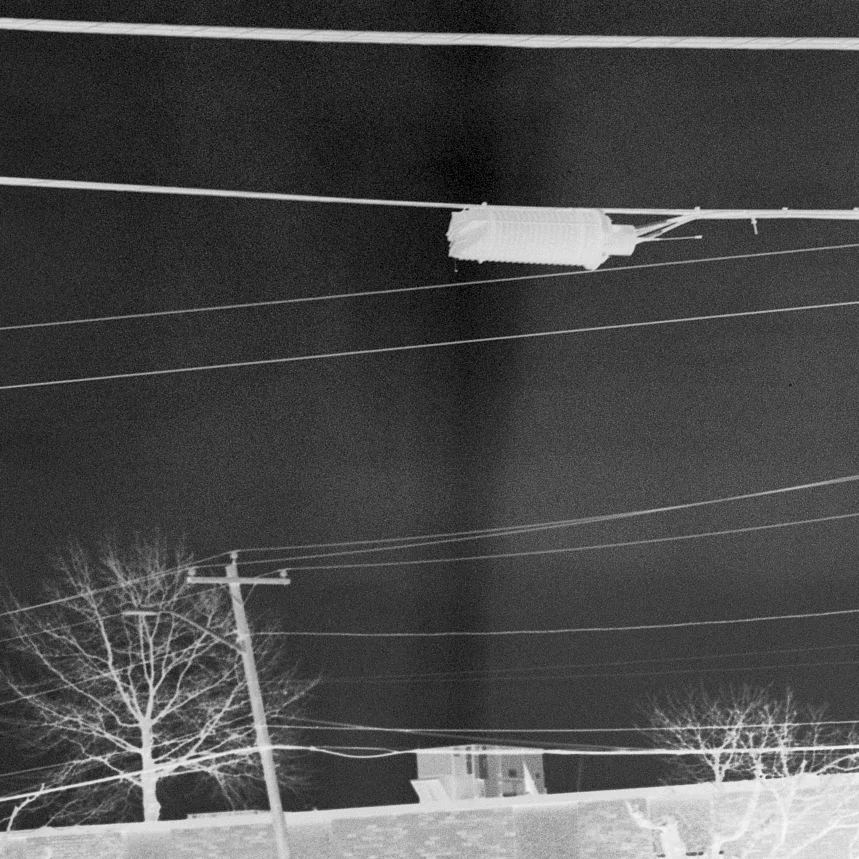
Develop your own film? Here's a common development issue that can pop up from time to time. It's a streak of extra density running across the short dimension of roll film, visible especially in light areas such as the overcast sky seen this example. It can happen with both 35mm and 120 size film, this one is on some 120 Ilford FP-4+. I've cranked up the contrast a bit in the scan to make this devil more obvious.
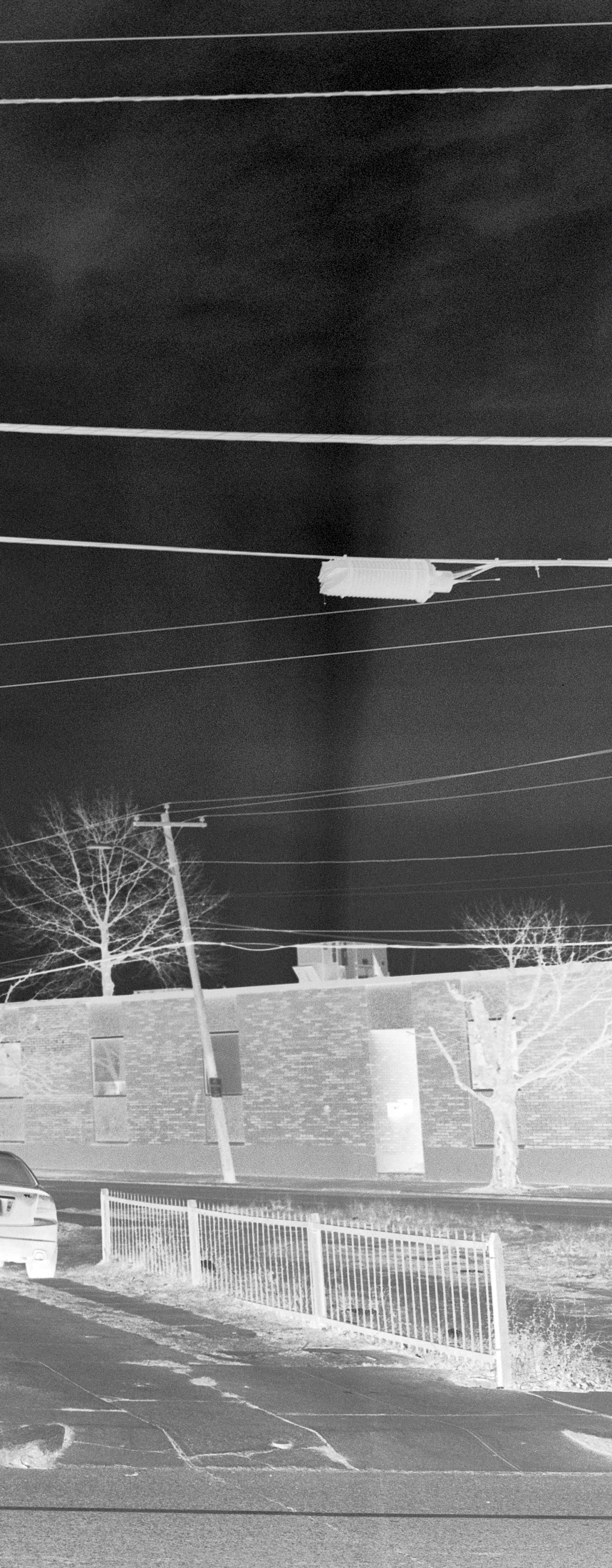
In the negative...

As a positive.
What is the cause? This problem occurs during the initial seconds when developer is being poured into the developing tank, especially with 4 or 8 35mm reel size tanks. As the tank fills developer comes in contact with the film before the reel is totally immersed. The time between contact and full immersion is long enough for development to begin in the area of contact. This creates uneven density in an area where it should be uniform. Not good.
Happily I can think of many solutions to this problem. Let's dive in.
- 1. Get fundamental. First thing is to to check your pour technique. You should be aiming to have the tank filled within 15-20 seconds. Tip the tank slightly as you fill to allow air to escape and then pour pour pour. Then cap the tank and agitate with vigor. If that doesn't work:
- 2. Give up. Send your film off to a lab and let someone else worry about it. Upside: More time to do other things. Downside: additional expense and the loss of control over a crucial part of your work process.
- 3. Give in. Accept that an occasional streak or spot, bleep or bloop is just a natural part of an organic process and just proves that your pictures aren't made by an unfeeling machine but by a flesh and blood person keeping it real. Downside: some people won't get it and will just think you're sloppy.
- 4. Give over. Figure that it will happen once in a while so shoot only dark and busy images that will hide a random streak, or if you do wish to photograph some lovely light grey tone, take a page from your cousin the "professional" photographer and spray and pray. Downside: wasting film and becoming your cousin.
- 5. Modify. Change something in the hope that the problem will go away. For instance try a different film type. Maybe HP-5 will be ok if FP-4 wasn't. Downside: giving up on a film that you otherwise like, creating limitations for yourself as you eliminate film types one by one, still experiencing the issue since in fact you're not actually addressing the problem.
- 6. Slow down. Change your developer or developer dilution so it's less active. In theory this will give you more time before development begins. Downside: Development time is longer. There may be changes in image quality that you may not care for. Difficult to know how much dilution is enough before you risk exhausting the developer.
- 7. Scale down. Develop all your film one roll at a time in small tanks. Downside: takes much more time that you might wish to use to do other things.
- 8. Scale up. Get a processing machine like a Jobo. Downside: expensive, takes up more space, not very portable.
- 9. Presoak. You will find a fair amount of debate over the efficacy of presoaking your film in water. On the one hand the manufacturers say it's not necessary as modern films have incorporated surfactants to encourage even development. On the other hand many people have had complete success using a presoak, including Ansel Adams. Jobo recommends a presoak for their rotary process. The theory is that a presoak will encourage even development as the water absorbed by the emulsion will be displaced by developer slowly, with the added benefit of bringing the tank to the process temperature.
Personally I used a presoak for many years (largely because of Ansel's recommendation) with little issue. Oddly, one issue I did have was with X-tol developer in a rotary Jobo processor, I was getting the dreaded "wagon ruts", bands of uneven development running the length of the film. Jobo support recommended skipping the presoak which did in fact eliminate the problem. But I digress. For many years now I've not used a presoak but I feel pretty safe in saying that there's little risk if you do. Downside: one more step added to the process, some small adjustment in development time may be needed.

The handy lifting rod.
- 10. Get a lift. This one requires the fewest changes, but does require that you develop your film in an actual dark room and have a second developing tank on hand. A lifting rod is very useful, but not completely necessary. For the big 8 reel tanks (and larger!) this is the best method to ensure not only even development but to be certain that the film on the top of the tank is being developed for the same time as the one on the bottom.
How to? Place your loaded reels into one tank, using the lifting rod if you have one. Fill the second tank with developer. Turn out the lights, open the film tank and lower the reels into the developer, smooth and steady. Cap the tank and agitate as normal. Now you can switch on the lights and continue as usual. Downside: you need a darkroom.
Issues with film development can creep into the process of even the most careful worker, or lab. Hopefully one doesn't cost you a once in a lifetime image. If you take the time to understand the problem and to review the fundamentals you should be back up and running with confidence in short order.
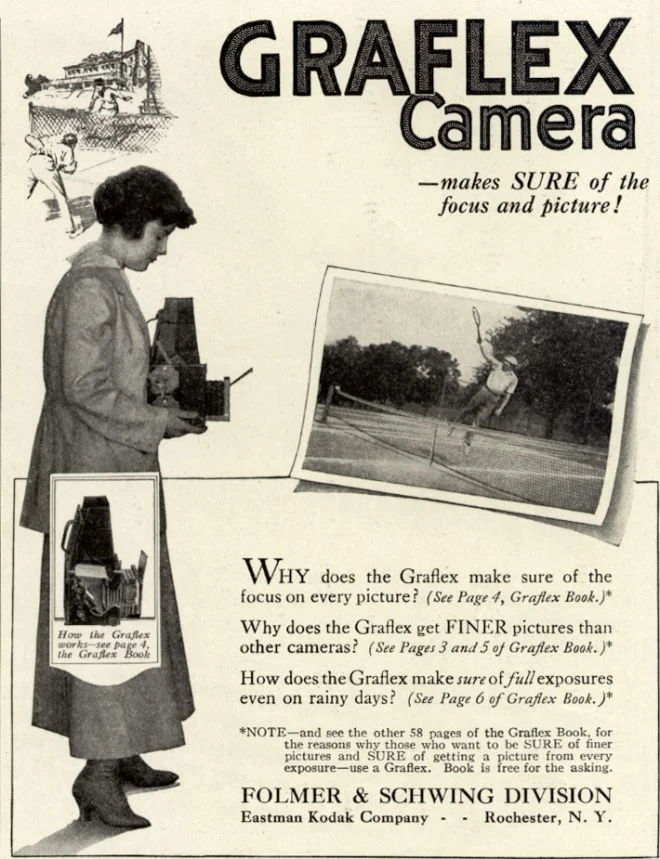
The Graflex and you.

So many questions...
Want to shoot large format hand held? Want to shoot wide open and large format and hand held? Want to rock it like it’s 1929?
For answers to these and other burning questions check out my introduction to the Graflex on the Film Shooters Collective.
Why it's good I'm not a doctor
Getting a problem wrong and then right.
Technical problems pop up from time to time for all photographers, and like a doctor it's up to you to diagnose the problem and if possible fix it. Unlike being a doctor, the consequence of being wrong is far less dire, especially if you are just taking pictures for your own interests. Still, I'm glad not to be a doctor, and what follows is a good example why.

Some time ago I shot a few rolls of film with this camera: a modified Graflex XLSW that shoots 120 film and has a 47mm Super Angulon for a lens. After inspecting the film I noticed that the images were showing considerable softness at the edges, not at all typical for this lens. The cropped image shows it pretty well. Rather Holga-like, not SA-like.

Cropped image

So I check the camera and I notice that one of the sliders that holds the graflok back to the body had slid to the unlocked position. This allowed a small amount of play as the back could move out of alignment slightly. I decided that had to be it. I even put the camera on a tripod and put the ground glass back in place to check it out. Even though I couldn't see any difference between locked and unlocked I believe I had the right answer.

Look, I used graphics
So problem solved I think I go about my merry way, and I shoot some more film. Again I see edge softness but I compound my error in assuming that because I uncharacteristically shot these rolls wide open, that the large aperture was the cause. I don't know why I assumed that since I have years of experience shooting super wide lenses like this SA and I know that they perform much better than that wide open, but I did and so took no further action.
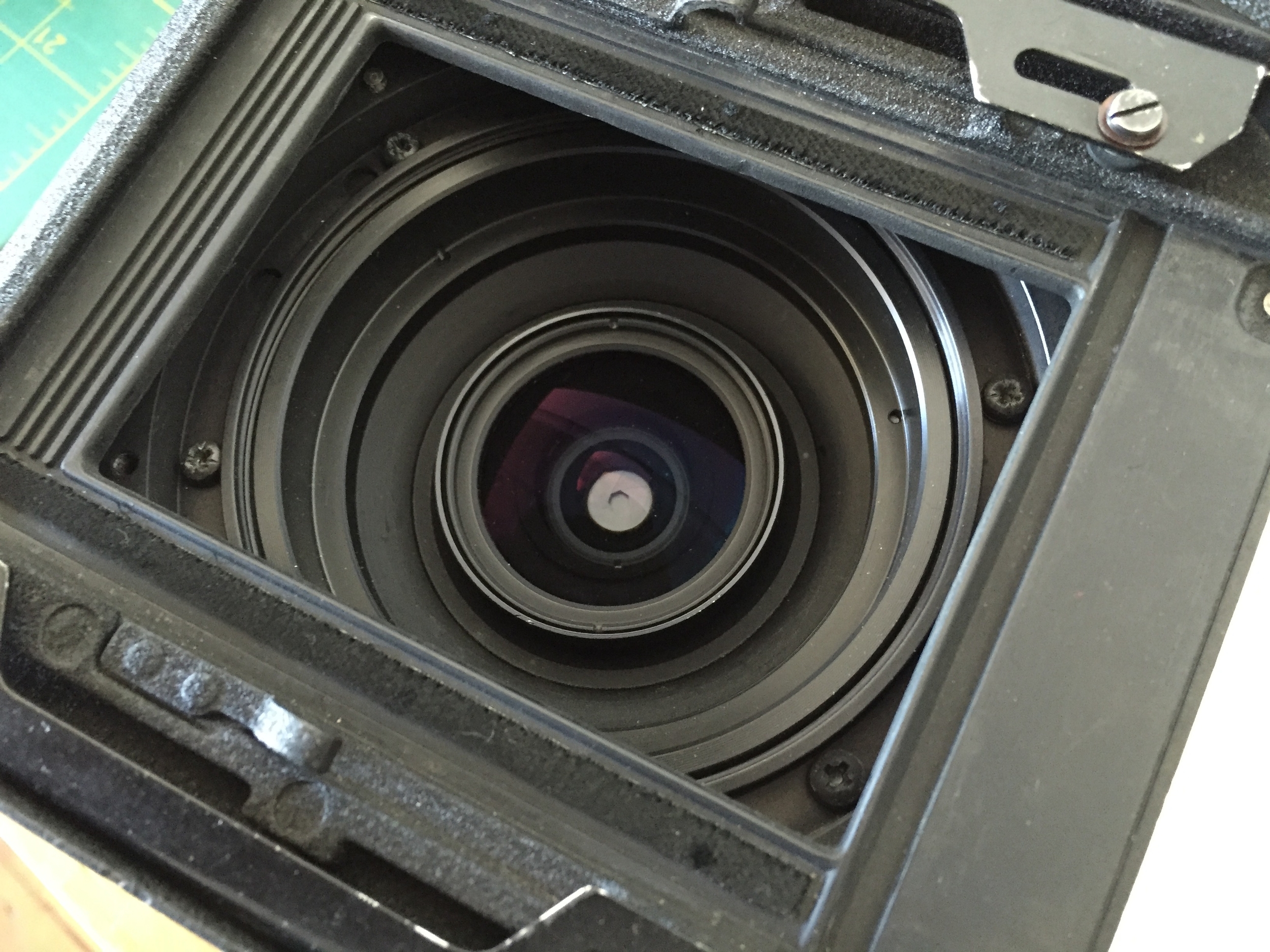
At least I had the sense to do a test roll under more typical circumstances and found that yes indeed I had not solved the problem. This time the thought occurs to check the lens, front element is tight, lens is tight in the mount. Rear element? Hold up, it's loose. Very loose. Another half turn and it is falling out loose. O.K. then. Tighten it up, check with ground glass, think I got it this time, but test again.
Yes, how about that. Problem finally solved. The advice is often given when speaking to a doctor about a vexing health problem: Ask "what else might it be?" Advice I should heed myself. If you are wondering how the rear element came to be so loose, I believe it was because of all the time the camera spent riding around in my bag attached to the handlebars of my bike. I will pad that out in the future and you can bet I will be checking the camera out more regularly from now on.


From the Archives: Reading the signs on Allens Ave.
"Give me your license and meet me there".
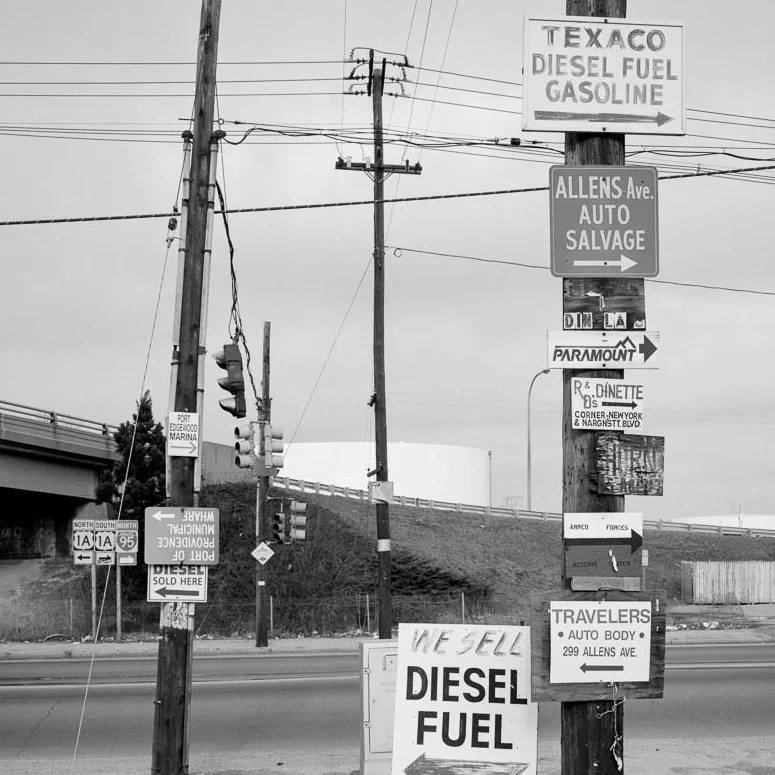
Some variants from the RI Photo survey Archive. This is a spot I returned to a number of times. I don't recall if I returned because I was dissatisfied with the first attempt or that I just simply liked the location. Now it's interesting to compare the differences. A return visit is in order.
Allens Ave, 1992, #1 4x5 Tri-X
Allens Ave, 1992 #2 4x5 Tri-X
These are the first attempts. I typically would shoot 2 sheets. I must have been on the fence about including cars as I tried it both ways. I printed the first, but now I rather like the second with stretch limo and the man and his young companion on bikes.
Allens Ave, 1993 4x5 Tri-X
A year later I returned, this time with an overcast sky. This is the image that I printed and exhibited for the 1994 show "On Land" at the Warwick Art Museum. The tension of the wires literally ties the composition together.
Note that in 1993, at least for one day, the "Diesel Fuel low prices" was upright.
Allens Ave 1994 #1 4x5 Tri-X
Allens Ave 1994 #2 6x9 (120) HP-5+
Finally in 1994 I returned once more, this time on a sunny afternoon. This time a composition similar to the 1993 take, but horizontal. Also on that day, showing what was to come for me photographically, I shot a frame with the Fuji 6x9 camera (machine as Tod Papageorge says). Echoing I'm sure accidentally the alternate of 1992 I include cars in the 6x9 frame.
Allens Ave, June 2006. 120 Ilford HP-5+ // Signage and signal boxes aren't what they used to be.
Ghost bike on Allens Ave, June 2006
I took another shot in 2006 just to compare changes and because I had stopped there to take a picture of a ghost bike that was chained to the railing below the on ramp just to the left of this view. That was the day I was hassled by a Providence cop who pulled up next to me and said "what do ya think you're doing? what're taking pictures of the tanks for?" I said I wasn't taking pictures of the tanks and I was just taking pictures for my self, for history. He asked "is that your car over there?" It was. "Give me your license and meet me there". I handed him my license and crossed the street, wondering where this was going. When I got to his car he had run my plates and was reading my name and address into the radio. He then started in again on why was I shooting fuel tanks and that this was a sensitive area and it's not allowed. I kept quiet, feeling more and more apprehensive, then he says "I could take your film" I say "I don't think that's..." and he cuts me off saying "but I won't, why don't you go take your pictures in some other part of the city", (obviously not understanding this photography of place thing) and hands me my license. He then drives off. I had a copy of the photographer's rights in my bag and I was preparing myself to pull that out as I had no intention of giving him my film. I knew I hadn't been trespassing or doing anything illegal. I was going to start naming my friends in City Hall and anyone else I could think of but I was relieved that it never came to that. Then I was angry, and mad at myself for not getting his name. I stuck around and shot a little more although I was hardly in the frame of mind for it, thinking the whole while about the chilling effect this sort of confrontation can have. Self censorship is the most prevalent form of censorship and I was determined not to let this incident keep me inside.
I use the word "paean" and mean it.
I wrote a little piece about one of my favorite materials for Emulsive.
“There’s mystique about them; smooth, finely grained, challenging. Something for the true pros and “serious types”...”

![Photography and Baseball [metaphors]](https://images.squarespace-cdn.com/content/v1/54246465e4b05cf30a42bdf2/1459818648305-ROJANYG979720ECYF3LR/graveyard_douglas_ave_92_fp4-Edit.jpg)
Photography and Baseball [metaphors]
Today is the first day of the baseball season and although it's snowing and many games on the east coast have been postponed it still makes me excited. Excited for the baseball season? Nope, don't really care about that. I get excited for the photography season.
Graveyard, Douglas Ave, Prov. 1994
When I was young and could indulge in such fanciful notions I had this idea of aligning my photo season with the baseball season. Training camp opened and I would go through my gear, do some film testing and generally get myself ready to get out there. In these years I was doing most of my own work with a view camera, and I didn't shoot that often in the winter. (I don't really like snow pictures and don't often do them. Here's a rare exception, from 1994 4x5 FP-4)
So the baseball season would start and I'd get out there and start working. Hopefully by the All-Star break things would be going along well, shooting, processing, seeing the field. Going well or not it was a moment to reflect and to see what was needed to make the most of the rest of the season, knowing that the fall light lay ahead. I never made the payoffs and I never won the pennant but I kept at it until winter. I don't really know how that came about as I'm not really a baseball fan of any seriousness, but these days I don't let myself take the winters off.
Going year round can generate a lot of self-inflicted pressure, and that pressure can in turn put up creative blocks that need to be overcome. I've developed a tactic for that that seems to have taken the form of another sports metaphor: the change up.
The change up can simply mean picking up a different type of camera, or shooting different film. It can be changing modes all together, perhaps listening and recording audio or sitting down with a notebook and writing. Once when I was feeling especially frustrated and completely lost I gave myself permission to give it up and just write. Which I did for about three months. When I picked up a camera again it was because I was excited to do something with it, I was inspired again. I knew that photography would be there if I needed it and as it turned out I did and it was.
There are times I will shift from one project to the next and that can bring about a new set of problems but I'd rather that than feel I was pounding my head on a wall or just going through the motions. Identifying a habit and then doing the opposite can be a great change up. Avoiding people? Go shoot portraits. Only like sun? Go shoot in the rain.
Maybe photo projects have their own seasons, certainly they their own internal rhythms. Stay flexible and you can move with them too. So get out there, give it 110%, leave it all on the field, take it one picture at a time and bring home a pennant. Whatever that is.
The ghosts of edits past
Editing a project for a show or a book has it's stages, from shooting, which may continue well into the editing stage, to the initial selection from contact sheets, printing, sequencing, more printing and then on to book layout or exhibition hanging.
When it comes to sequencing, I've found no better way than working with actual prints, laid out on the table or the floor, shuffling and shifting until the rhythm is right. Digital or film, it doesn't matter, you need the space to see it all together flowing from one image to the next.
The hardest aspect of any edit is the cutting away of things you like and have become attached to. It starts out fairly easily but eventually you get to where it hurts, and you agonize over each choice. But choose you must and (hopefully) the sequence shows you what it needs most. The deadline looms, you convince yourself it's right and up it goes.
It begins...
Sequencing underway...
We have an edit...

On the wall for all to see.
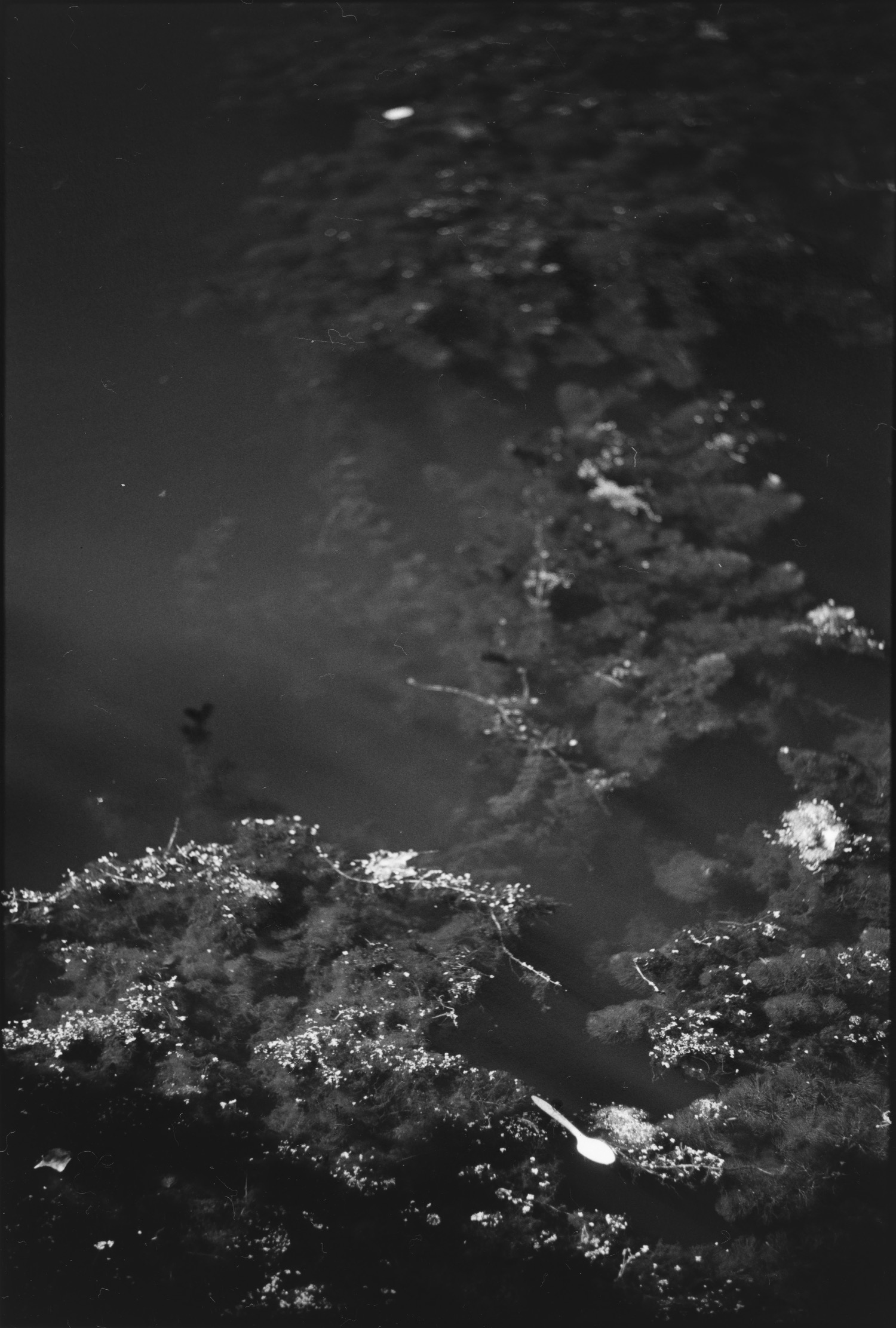
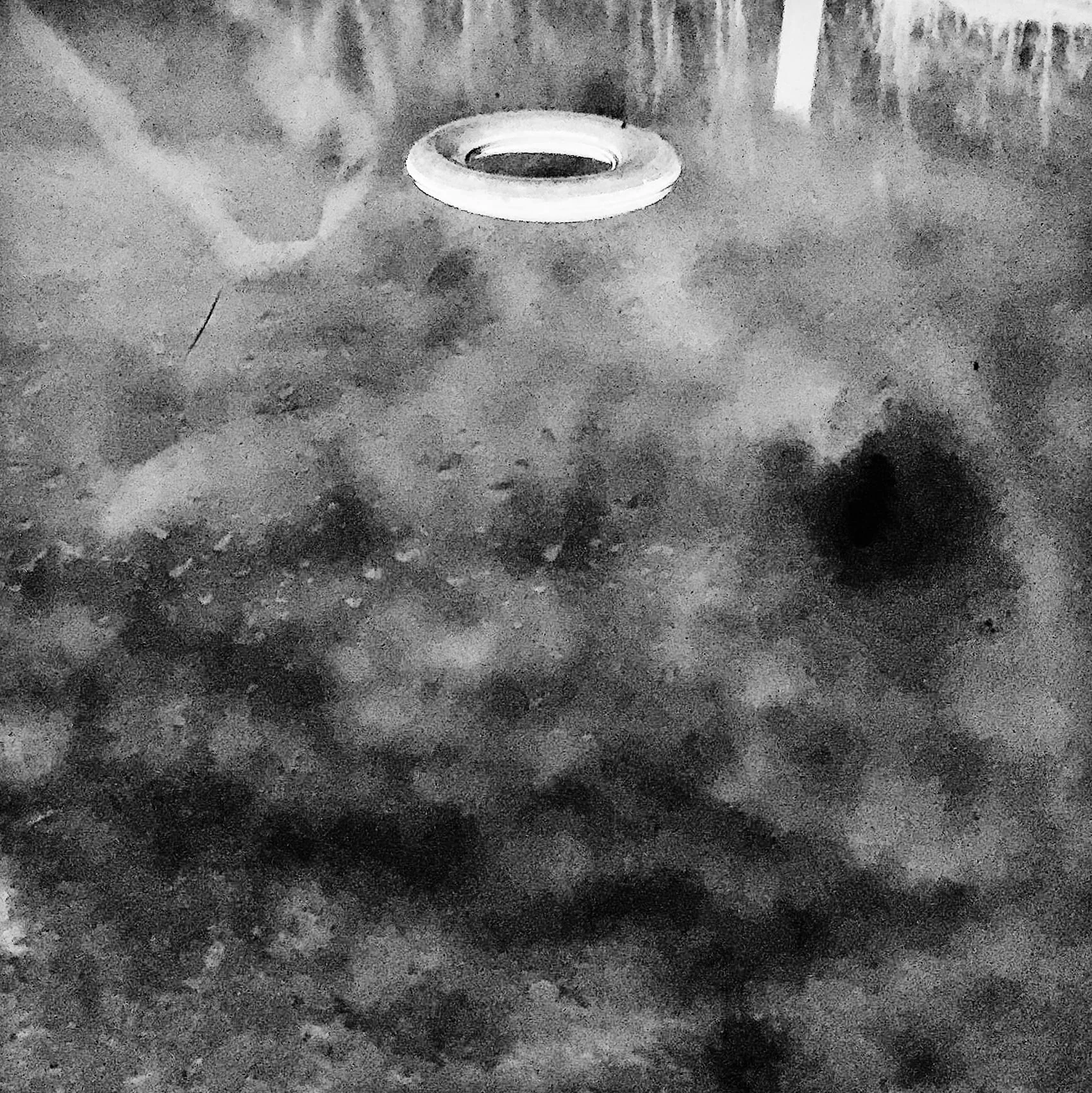
You pack up the outtakes, hang the show, make the book and move on. Sometimes those outtakes linger with you, like ghosts popping in unexpectedly until finally you go back to that box and have a visit. Some, you admit you still like. Some give you ideas for new work. Thanks to the miracle of modern digital media you can put them up and excise your ghosts. And so I shall. These are outtakes from Canonicus' Bow.



Closing the Loop
On work and practice.
I don't make New Year resolutions but the end of year break seems to be as good a time as any to reflect and to think about what I'd like to work on in the coming months. Specifically I've been thinking about how I go about what I do and how I can be more effective in doing it.
Taking apart the term creative practice I'll consider both halves in order. Looking back at 2015 I find that i have a number of interesting projects going, I have ideas that I'm excited about and I'm curious enough to want to continue the pursuit. I have been shooting as the stack of negatives (and digital files) testifies. So far so good. However I know myself well enough to know that I'm very fond of keeping projects somewhere between 20-80% complete. Not completely vapor but still ripe with potential, still able to keep me happily busy pursuing leads and reaching dead ends free from the final nail and critical assessment that comes with being done. There are a couple of projects that I wish to see in a finished state by this time next year. I can visualize that, so it remains to move them there. Ideas, actions (in the form of taking photographs and recording sounds) words written, the creative half looks healthy enough.

How about the other word, practice? I like the sense of that word that describes what musicians do prior to performance. Few people are so gifted as to be able to perform at a high level without dedicated practice, and beyond that there are positive aspects that come only through repetition. There is a physical fluidity that comes from what's described sometimes as muscle memory, you just know where and how to move without having to think about it. There is confidence that comes from that and from a deepening insight into what the materials are capable of. Therein lies the catch within my own recent process. Insight and knowledge requires seeing the thing through every stage. For me that would mean from shooting or recording, to negative or file, to print or to screen to whatever the finished state should be. Then looping back through the process over and over again. I have plenty of practice in shooting and handling the camera, I earn my living shooting after all, but to get better I need to see finished prints and edited files, and I need to have others see that too. I need to close the loop. That is something I didn't do often enough in 2015. That is what I will endeavor to do this year. We'll see how it goes.
An alternative approach to contrast control with HC-110
When developing film, vary dilution with HC-110, not time and get the contrast you want.

There is more than one way to skin an onion and this take on film processing is a good example. Kodak's HC-110 is a very versatile liquid developer that gives excellent results with many films and is known for long shelf life. It works well in small tanks and in rotary systems. It was my standard developer for many years and although I no longer use it regularly I still recommend it to anyone looking for a good all-rounder.
The approach described below is one where different contrast ranges are achieved by using developer dilution as the variable, instead of the usual change in time. Here time, temperature and agitation are kept at a constant. I didn't create this but I have used this myself, probably because I enjoy the way it gets me thinking about film development controls in a new way.
What follows is transcribed from The Handbook for Contemporary Photography, 4th Edition by Arnold Gassan. 1977. Arnold was a professor of mine at Ohio University and I don't think he would mind me sharing this. I think it interesting and still useful.
Contrast Control through Developer Dilution
Another way of controlling contrast...is through varying the dilution of the developer. This is a very useful control with some of the liquid concentrate stock solutions, and of these Kodak HC-110 developer offers exceptional qualities.
Contrast control through developer dilution uses the high energy HC-110 with its almost unique ability to provide very clean separations of shadow densities and also offer linear separations of all equal exposures into the high densities, even though diluted to a very great degree.
The effects of varying developer dilution for HC-110 and Tri-X rather than developing time can be seen by examining figure 4-31.
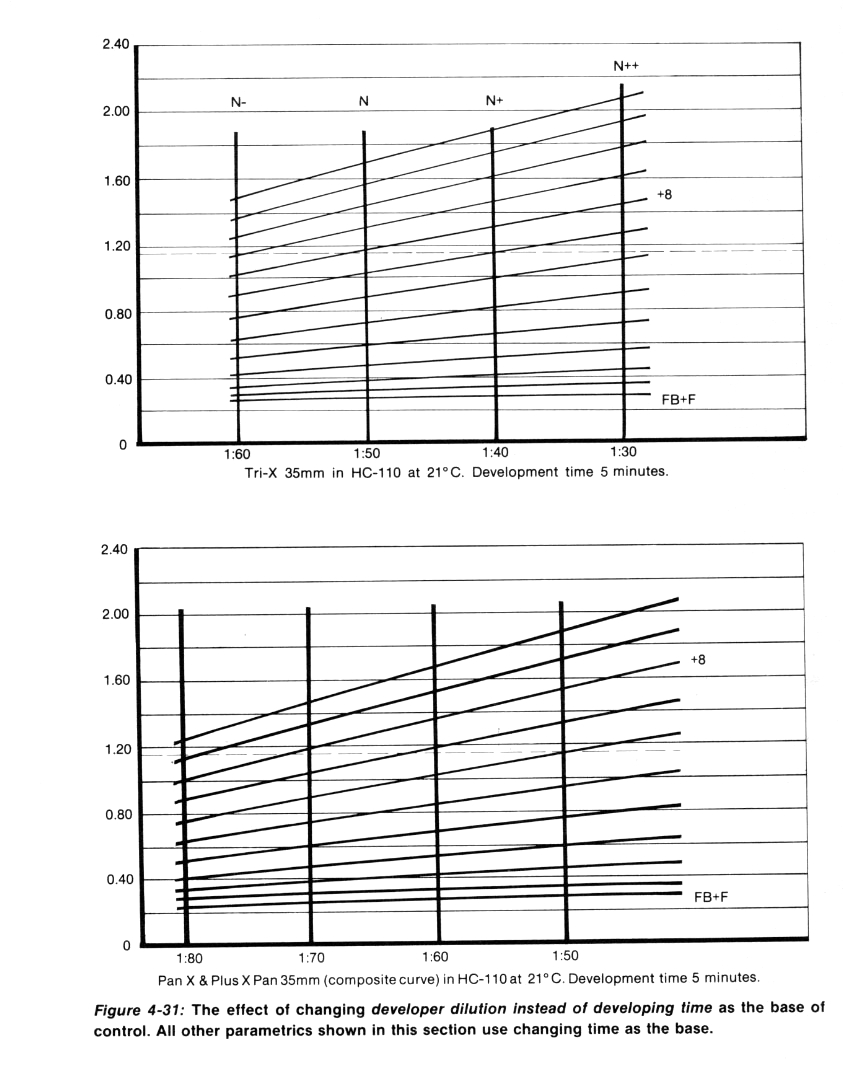
These curves show the equal separation in the shadows and also the contrast variations possible by merely varying the concentration of the HC-110 while keeping time, temperature and agitation constant.
The advantage of this system is that a widely distributed, very stable, highly concentrated commercially available developer of known quality is used only at a standard time-- one which is physically long enough to avoid problems inherent in short developing time. The concentrated syrup can be measured accurately with pipettes, or this simple two step dilution schedule can be employed:
Make a working stock of 1 part developer and 9 parts water.
Do not mix more than what will be used in a few days.
Distilled water is recommended.
From there dilute the working stock in dilutions as follows to make dilutions of approximately:

*Total=450 ml for a two reel tank.
In my own approach to HC-110 I have always skipped the stock solution step and mixed my developer directly from the syrup. I also abandon Kodak's letter system (dilution A, B, C etc) and use a ratio that is easy for me to remember and to mix. I used that with this system and when I use HC-110 in the more conventional way.
Gassan provides some recommended dilutions for a variety of films, but keep in mind a few things:
- These dilutions are from the 1:9 stock solution to approximate dilutions from the syrup (ratios in the left hand column).
- This data is from 1977 and films have changed
- He finds that a "decade change of dilution e.g. a change of 1:50 to 1:60 approximates a paper contrast grade". (for Kodak films, see below)
- The system works for Ilford films as well, but that they exhibit greater sensitivity to developer strength variations.
- There is almost no loss of shadow detail with this developer, even at the extreme dilutions.
All film is developed in HC-110 at 21C / 70F for five minutes with standard agitation.
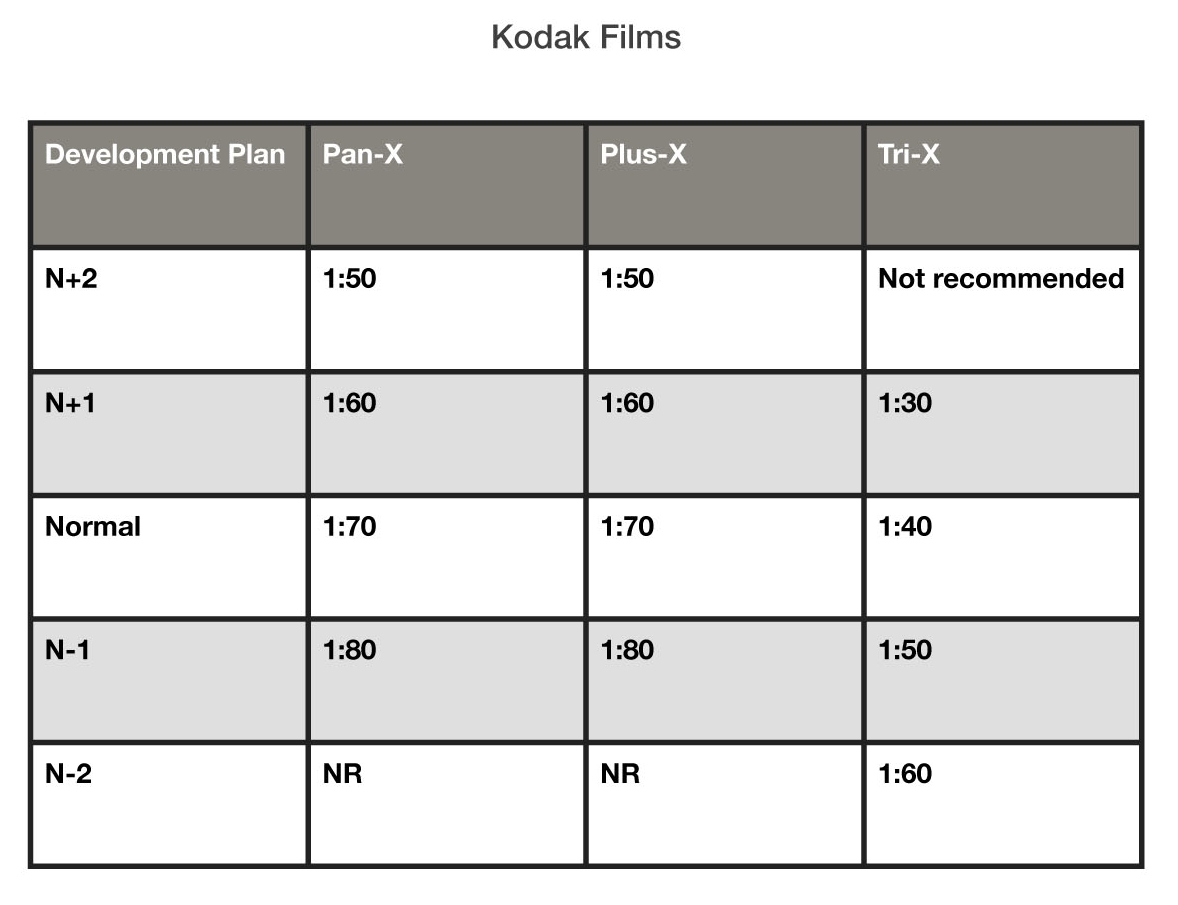
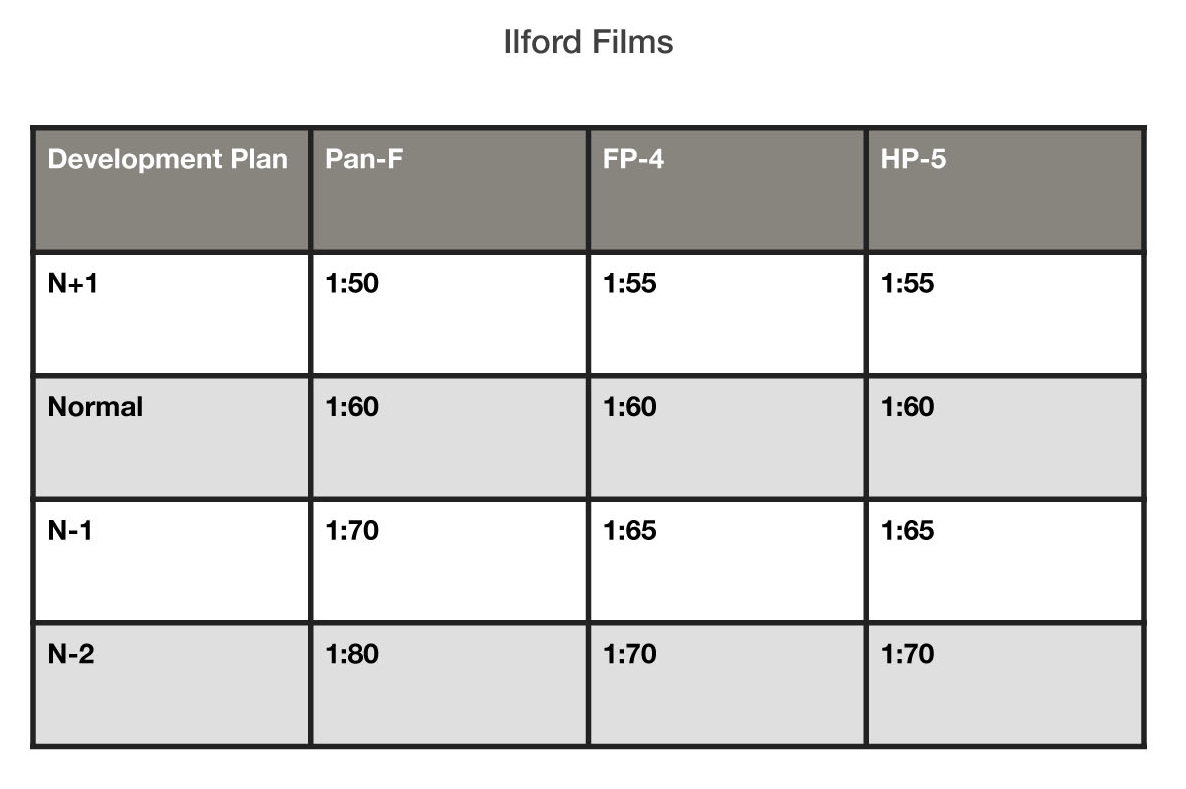
"N" meaning Normal contrast in zone system terminology
Gassan based these dilutions on a goal of developing a highlight density [zone VIII], to a density of 1.15 above FB+F.
He concludes with this insight into his approach to 35mm photography:
The whole purpose of this control system is to produce high quality, low density negatives that will print easily and well, rather than to "push" film. High energy developers produce high densities under extreme low light levels. And they also produce negatives that are more graphic and less tonal -- that are not so much translations of colors into the grey scale of the photographs as they are graphic simplifications of the world.
The sense of graininess in 35mm is affected by exposure far more than most photogaphers are willing to admit. A correctly exposed minimum density negative is "filmy"; this means that the page of a book can be read easily while looking trough the negative. The least overexposure will mar otherwise excellent negatives that would enlarge well and have maximum resolution of detail. Two stops overexposure will enlarge the grain so much that the maximum degree of enlargement with out obvious grain is about 6 diameters.
I've no doubt that many of his former students remember him saying "make a negative that prints easily and well..."
I've used this system myself and found that it worked quite well with Ilford HP-5. My "normal" was 1:55 for 5 minutes at 70˚F. That was over 20 years ago, so please take that, and all of this as starting point for your own testing.
Bucket Week - Day Five
Confusion and mystery are great motivators.
Archive finds - Pawtucket in the '90s
This week in honor of the city of my residence and my daughter's home town, I will be featuring Pawtucket, Rhode Island, aka the 'Bucket'.
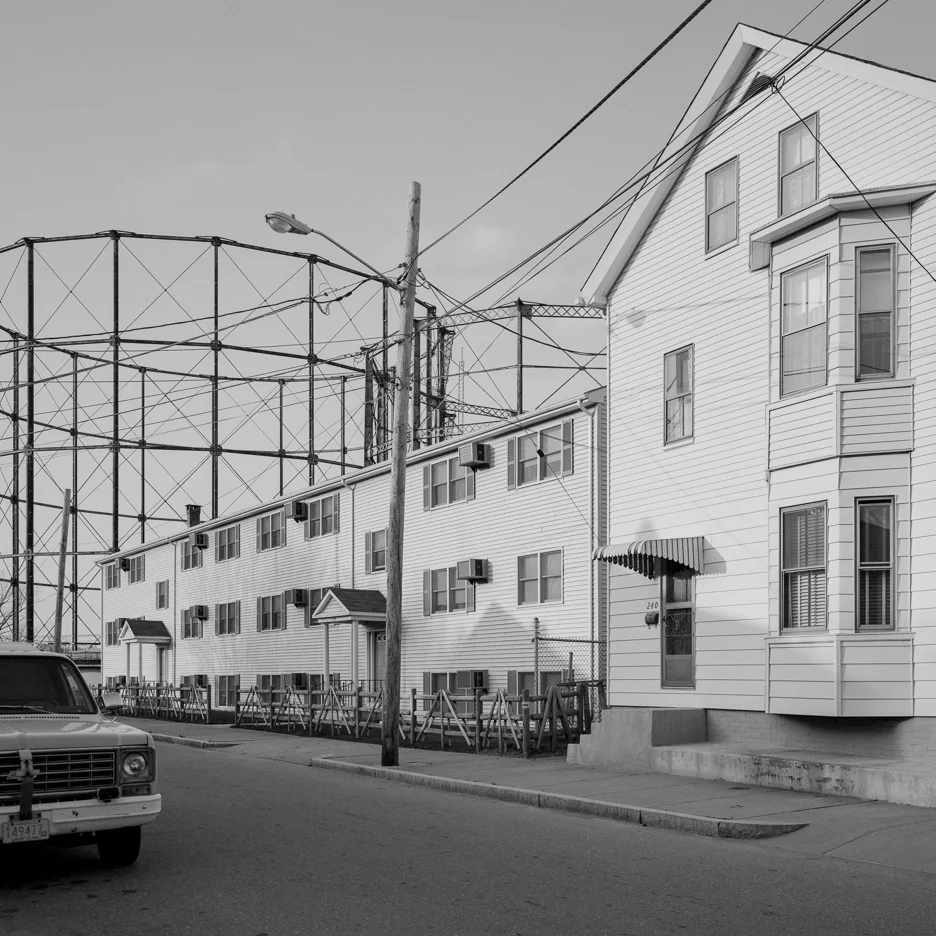
Gas Holder and Apartments, Pawtucket, 1992.
This picture from 1992 has always been among my personal favorites. I was very new to Rhode Island, hadn't even found a job yet and I was living with my girlfriend on Hope street. She had a job in Pawtucket and i would drive her there in the morning and pick her up in the afternoon. I didn't know anything about Pawtucket. I knew one way to get to her workplace. I would go up Hope street, pass my favorite intersection of Ridge and Pidge, pass the Almacs where we shopped. Before the days of wayfinding tools and geolocational support you could get lost. These things are great aids to personal navigation but the feeling of being lost and stumbling upon some place new and unexpected can be a great stimulant for a photographer. I think that always knowing exactly where I am with the help of an app is not the most conducive state of mind if I wish to be receptive to a new place. Confusion and mystery are great motivators. Curiosity is king.
On this day I wasn't entirely lost, but I was exploring. On my way up Hope street there was a little sign shortly after Hope became East Ave. that said 'downtown' with an arrow pointing right. So poor then was my notion of the relationship between spaces I wasn't totally sure what downtown this was. Was there more of Pawtucket that I hadn't seen yet? Did this circle around somehow to downtown Providence? I went right and then down a steep hill.
I came upon two of those great giant trash can like structures that were used to hold natural gas. These things have intrigued me since childhood and these two seemed to be sitting right within a residential neighborhood. On Taft street (was there a Pawtucket connection to our largest President?) I saw the gasometers looming over a house and a row of apartments which sat glowing in the afternoon light. I found my spot, planted the tripod and rushed to focus, afraid somehow that something with fly away. It can be really hard sometimes to slow down and take a good look at the groundglass image. I wanted that truck, I wanted that child's bike on the right, I didn't want the shadows to climb much higher. Quick with the film holder, exposure, flip, exposure and that was that. Couldn't afford to shoot more film but I knew I didn't need to.
I didn't find my way to 'downtown' that afternoon but i'd forgotten that anyway.
Andrew Wertz found this on Shorpy. A Kodachrome from 1941.
Jack Delano, New Bedford, Ma, 1941
Bucket Week - Day Four
Downtown in winter.
This week in honor of the city of my residence and my daughter's home town, I will be featuring Pawtucket, Rhode Island, aka the 'Bucket'.
At Summer St. and North Union, downtown Pawtucket, 1994
Today's pair represents something that I rarely do, which is to say something that I do all the time. That is take multiple, slightly different views at one location. I do that often, what I usually don't do is promote more than one view as the work goes forward. Normally I will make a choice, or feel the choice has been made for me, one is usually clearly the "best", or the best I could do. With these I've continued to like both variants. Although I don't remember I believe they are shown here in the order I made them. I framed up the first and then moved forward for the second. I think the shadows agree with that. There is one thing here that shows something that I do rarely do: photograph snow. My guess is this is late winter. Made with a 4x5 camera on Tri-X film.
At Summer St. and North Union, downtown Pawtucket, 1994
Bucket Week - Day Three
In Oak Grove.
This week in honor of the city of my residence and my daughter's home town, I will be featuring Pawtucket, Rhode Island, aka the 'Bucket'.
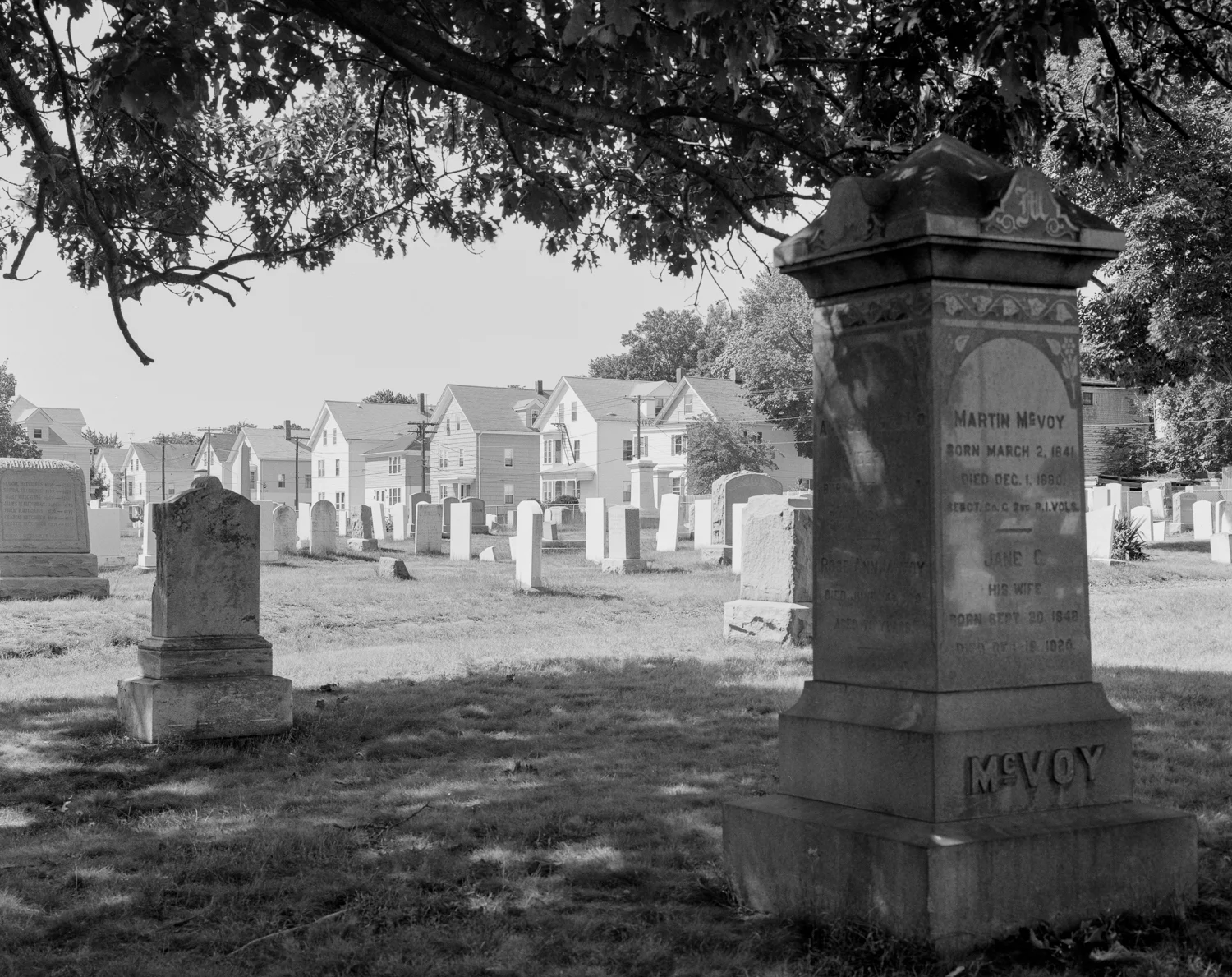
Oak Grove Cemetery, 1994
Gates of the Oak Grove Cemetery, 1994
Some people are put off by pictures of cemeteries. Some people are put off by cemeteries in general. Not me. I find they are great places to explore, full of interesting names and fragments of interesting stories. They are usually relaxing places to photograph in as well. No traffic, often no people at all (above ground anyway) so you can mess about with your gear and not feel stressed. There are exceptions. Swan Point in Providence has a strict policy regarding photography and they will chase you out. Hasn't stopped me though, you just need to be quick(ish). In cemeteries within urban environments I find I'm drawn to the ways that the city of the living relates visually to the city of the dead, how the streets line up or how a row of headstones is echoed by a row of houses. This is very likely something else that Walker Evans has taught us to see. These two photographs are almost back to back from each other. I love the detail of the little lamb (a child's grave) in the lower right of the second image. These were made with a 4x5 camera on Tri-X film.
Bucket Week - Day Two
US Route 1.
This week in honor of the city of my residence and my daughter's home town, I will be featuring Pawtucket, Rhode Island, aka the 'Bucket'.
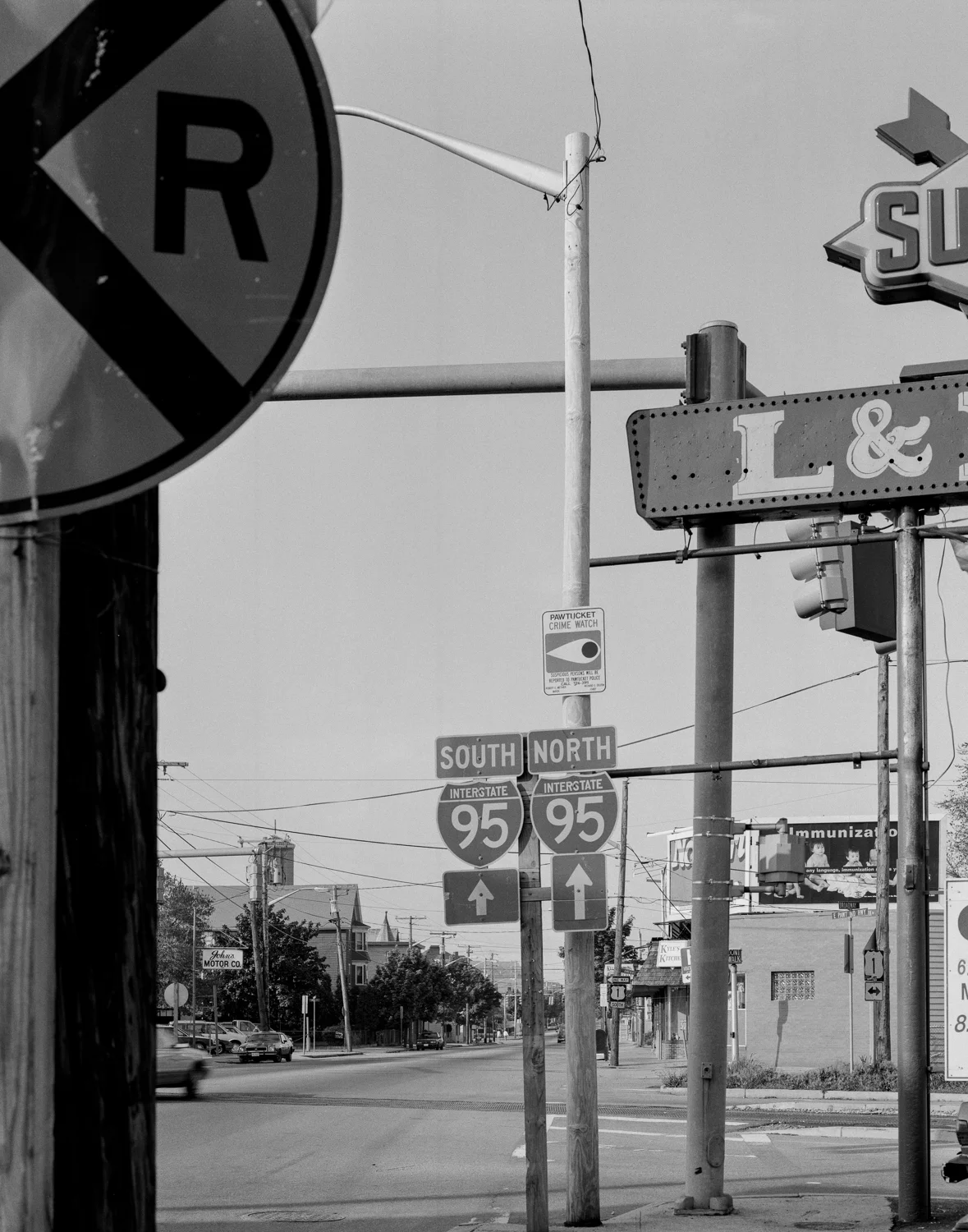
Broadway, Pawtucket, looking south, 1995
This picture was made in 1995. I had an idea to photograph Route 1 in Rhode Island from north to south. This is almost as far as I got. It did lead to other projects: the intersection set and a walk down RI route 2. This is a 4x5 camera image on HP-5 film.
Bucket Week - Day One
On the W.E. trail.
This week in honor of the city of my residence and my daughter's home town, I will be featuring Pawtucket, Rhode Island. Pawtucket will be kicking off it's campaign for the 2015 Pawtucket Arts Festival on Thursday. A worthy effort.
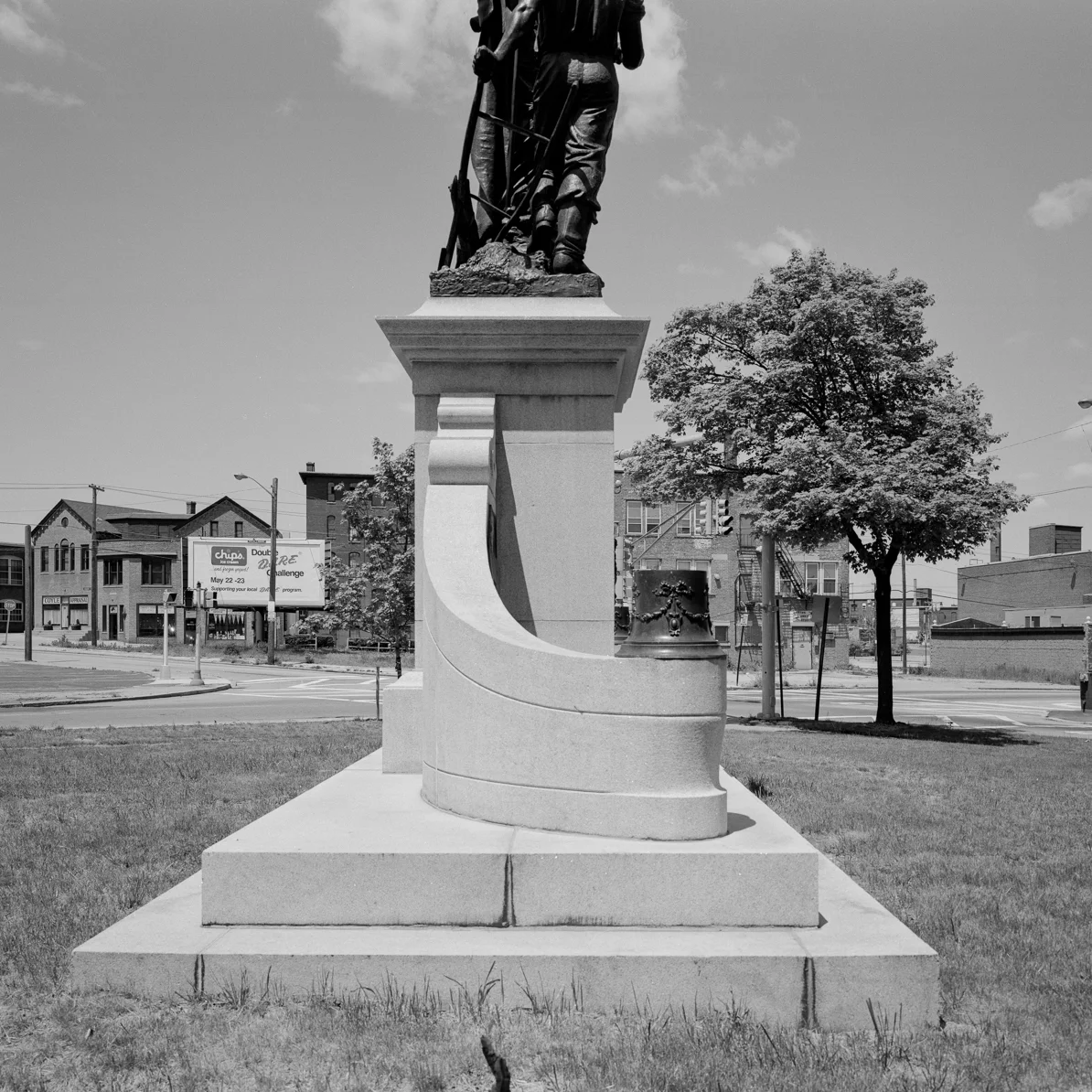
Wilkinson Park, Pawtucket, 1993
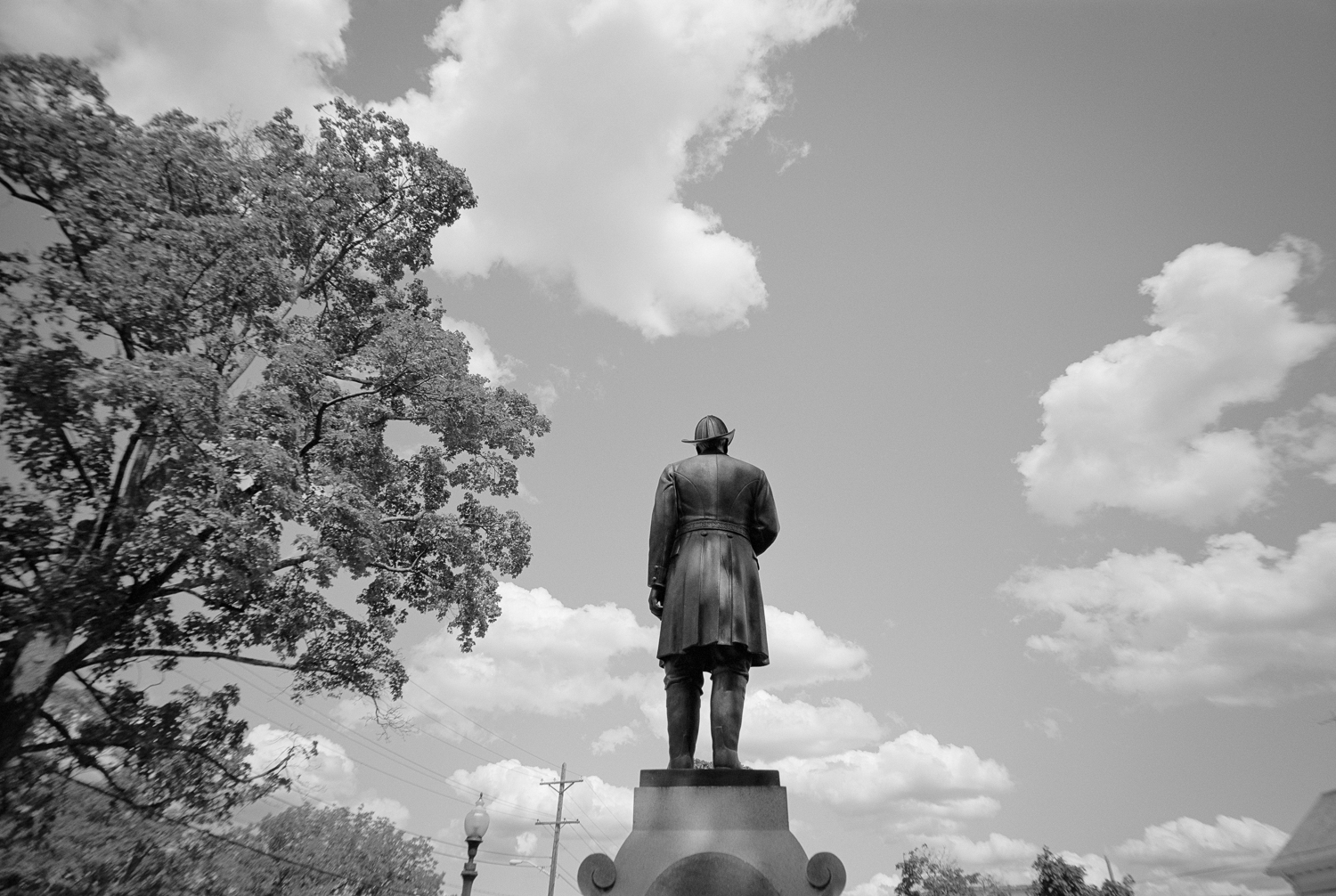
I made this image in 1993, not too long after I arrived in Rhode Island from upstate NY. I was working then exclusively with a 4x5 camera and I had just begun the work that became the Rhode Island Photographs project. This image is an homage of sorts to Walker Evans, and it is fair to say that almost everything I was doing then was an homage to Evans. Evans did a great series on war monuments during his time with the FSA. He was responding to photographs made of monuments during the Civil War, photographs he attributed to Mathew Brady, although we now know them to be made by others in Brady's employ. The Evans photographs inspired Lee Friedlander to make a series on monuments. I was thinking both of Friedlander and Evans when I made this.