Cold Coffee
never breaking news.
Why it's good I'm not a doctor
Getting a problem wrong and then right.
Technical problems pop up from time to time for all photographers, and like a doctor it's up to you to diagnose the problem and if possible fix it. Unlike being a doctor, the consequence of being wrong is far less dire, especially if you are just taking pictures for your own interests. Still, I'm glad not to be a doctor, and what follows is a good example why.

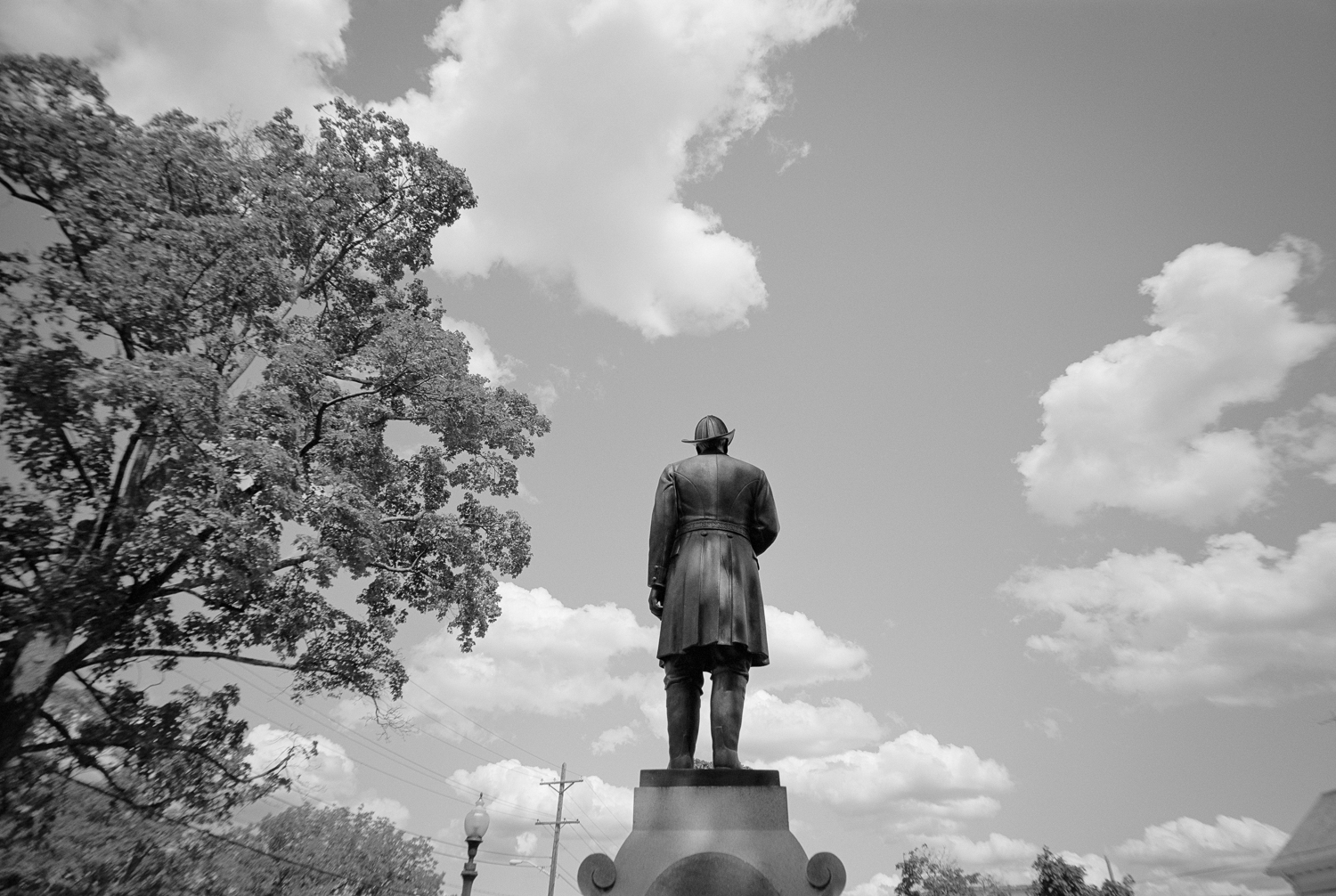
Some time ago I shot a few rolls of film with this camera: a modified Graflex XLSW that shoots 120 film and has a 47mm Super Angulon for a lens. After inspecting the film I noticed that the images were showing considerable softness at the edges, not at all typical for this lens. The cropped image shows it pretty well. Rather Holga-like, not SA-like.

Cropped image

So I check the camera and I notice that one of the sliders that holds the graflok back to the body had slid to the unlocked position. This allowed a small amount of play as the back could move out of alignment slightly. I decided that had to be it. I even put the camera on a tripod and put the ground glass back in place to check it out. Even though I couldn't see any difference between locked and unlocked I believe I had the right answer.

Look, I used graphics
So problem solved I think I go about my merry way, and I shoot some more film. Again I see edge softness but I compound my error in assuming that because I uncharacteristically shot these rolls wide open, that the large aperture was the cause. I don't know why I assumed that since I have years of experience shooting super wide lenses like this SA and I know that they perform much better than that wide open, but I did and so took no further action.
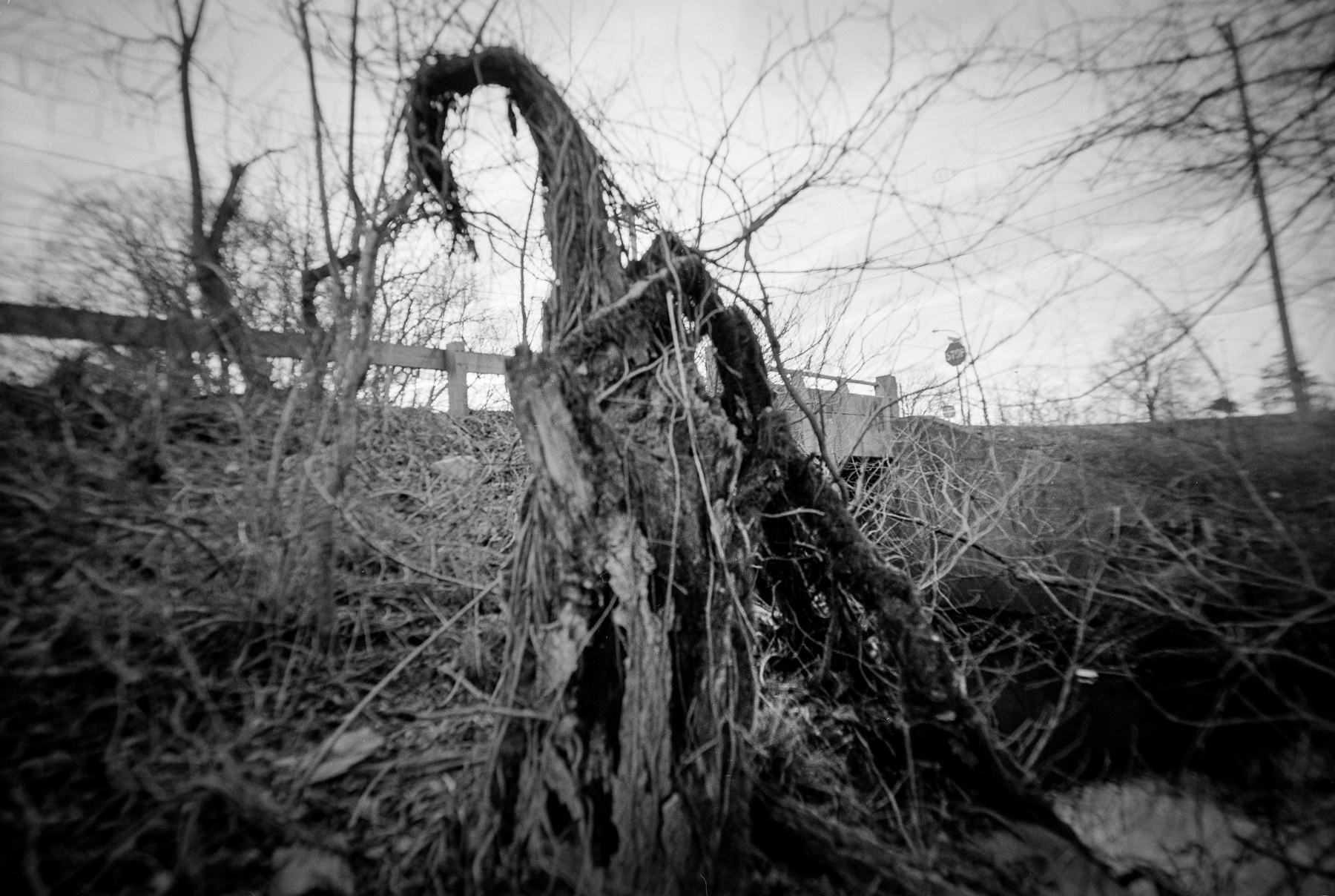
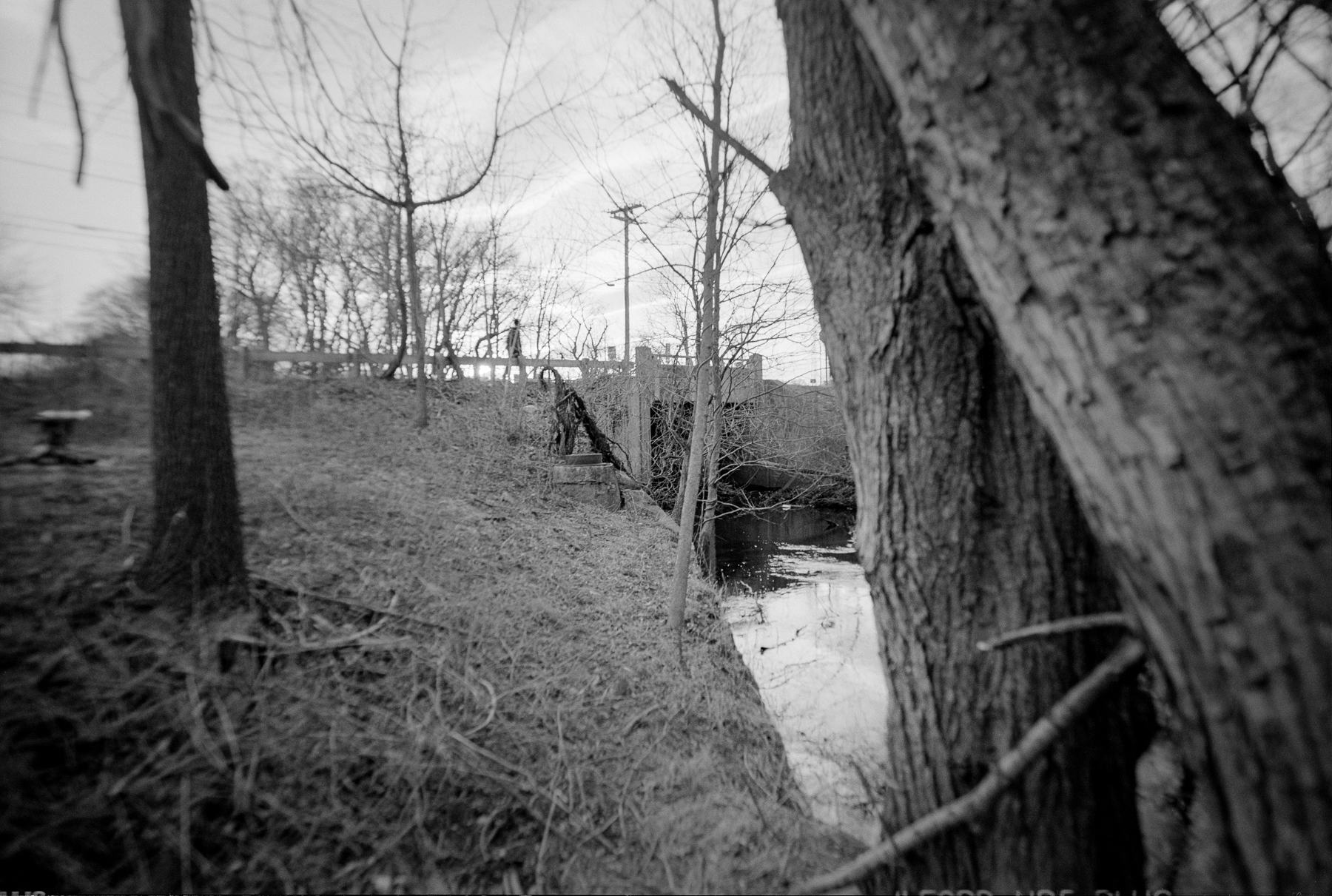
At least I had the sense to do a test roll under more typical circumstances and found that yes indeed I had not solved the problem. This time the thought occurs to check the lens, front element is tight, lens is tight in the mount. Rear element? Hold up, it's loose. Very loose. Another half turn and it is falling out loose. O.K. then. Tighten it up, check with ground glass, think I got it this time, but test again.
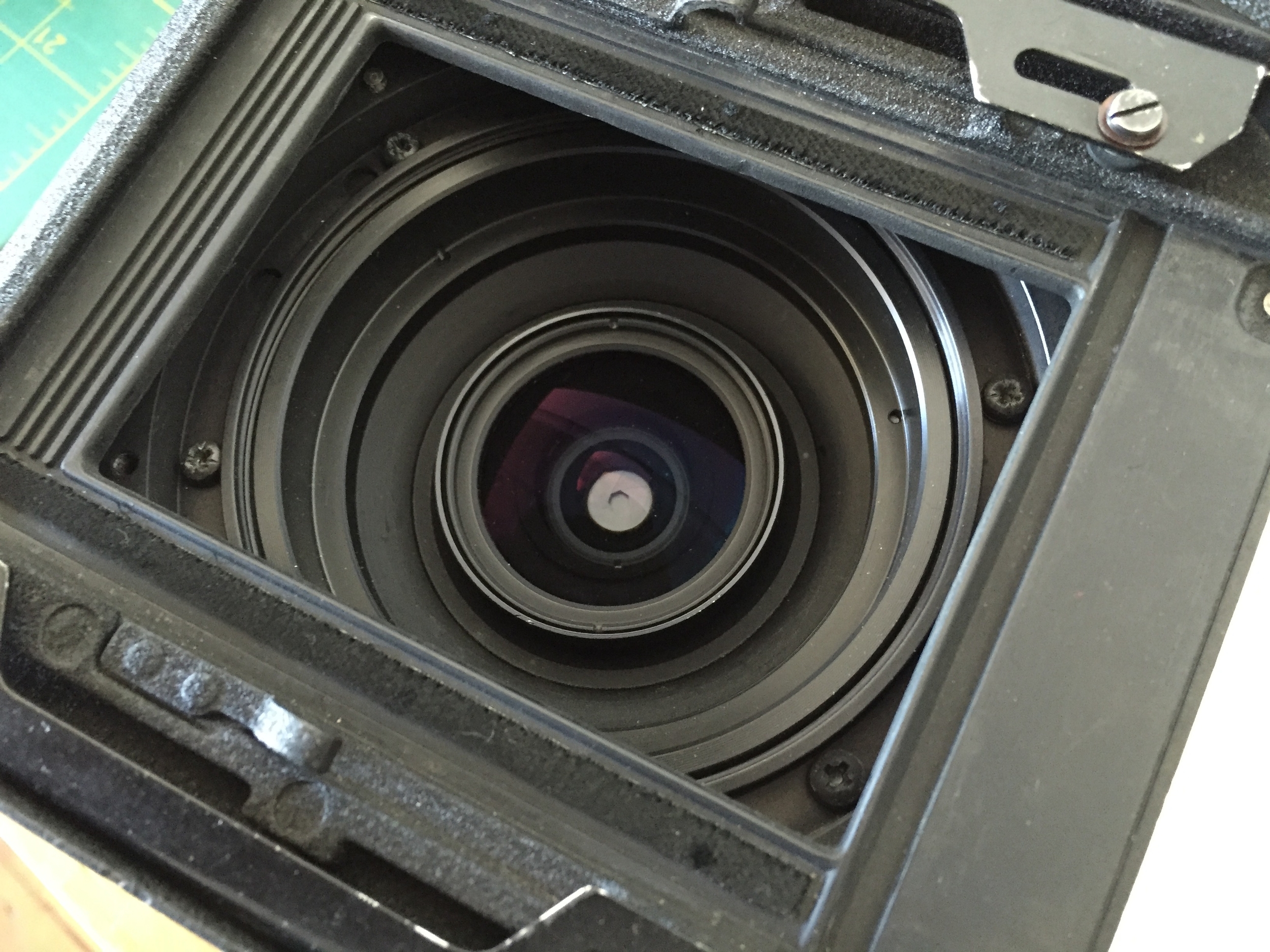
Yes, how about that. Problem finally solved. The advice is often given when speaking to a doctor about a vexing health problem: Ask "what else might it be?" Advice I should heed myself. If you are wondering how the rear element came to be so loose, I believe it was because of all the time the camera spent riding around in my bag attached to the handlebars of my bike. I will pad that out in the future and you can bet I will be checking the camera out more regularly from now on.


ICYMI: 120 Love

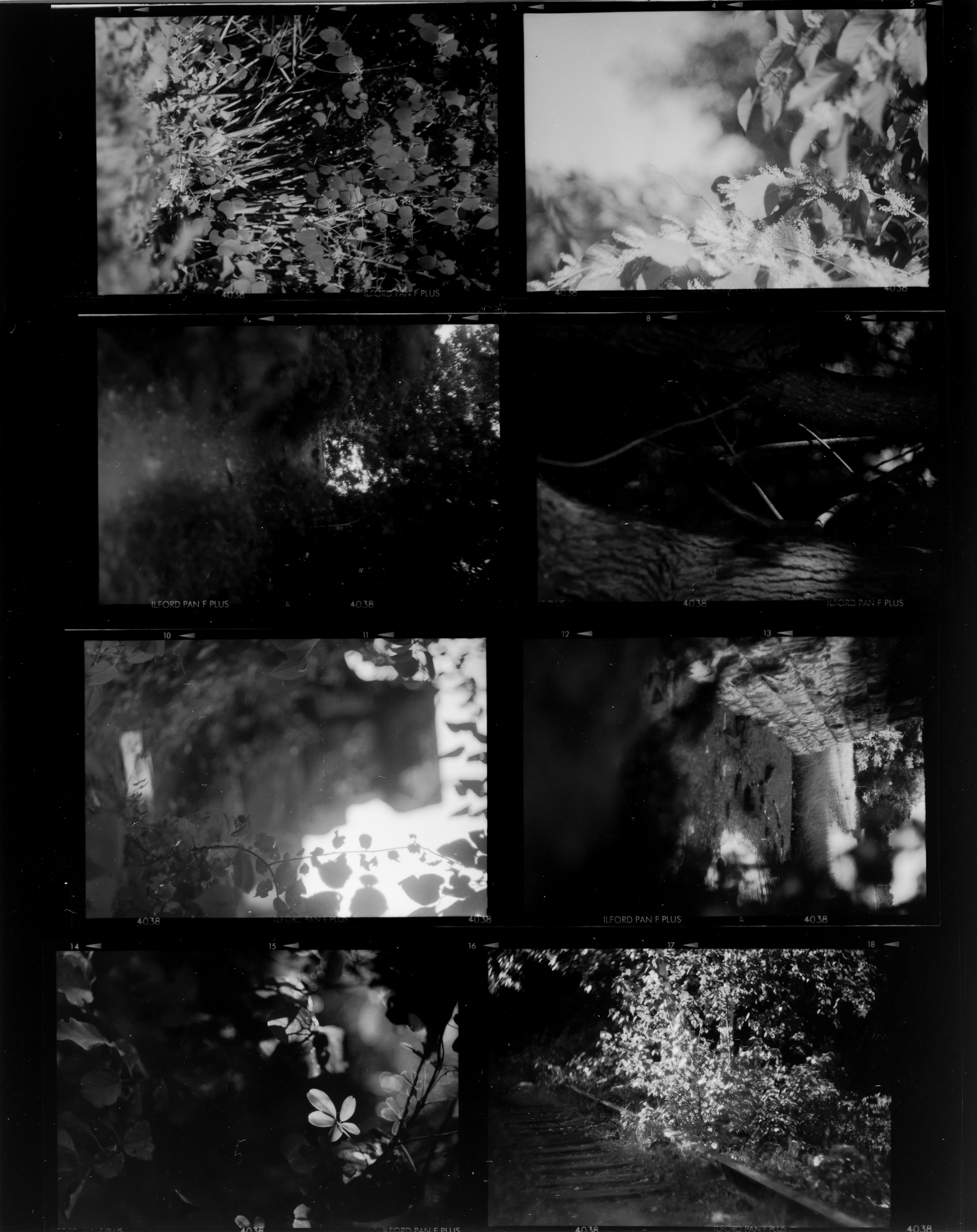
Earlier this year I did two things I never do. I entered a photo contest and I showed a contact sheet. This was for 120 Film Love Day. I don't regret it because not only did I win second place and get a 6x9 hoodie, but I also get the chance to share and connect with some cool people who run a great site with a great spirit based in Tokyo. Tokyo seems amazing to me, not only as one of the world's great cities but as a place where photography and film photography thrives. I hope to get a chance to visit one day.
Check out their site and their merch here. Includes a tee inspired by cool photographer and twitter pal Dan Schneider.
They gave me a spotlight on their blog, for which I am thankful.
Dear Comrades, have I told you about Commie Camera Day?
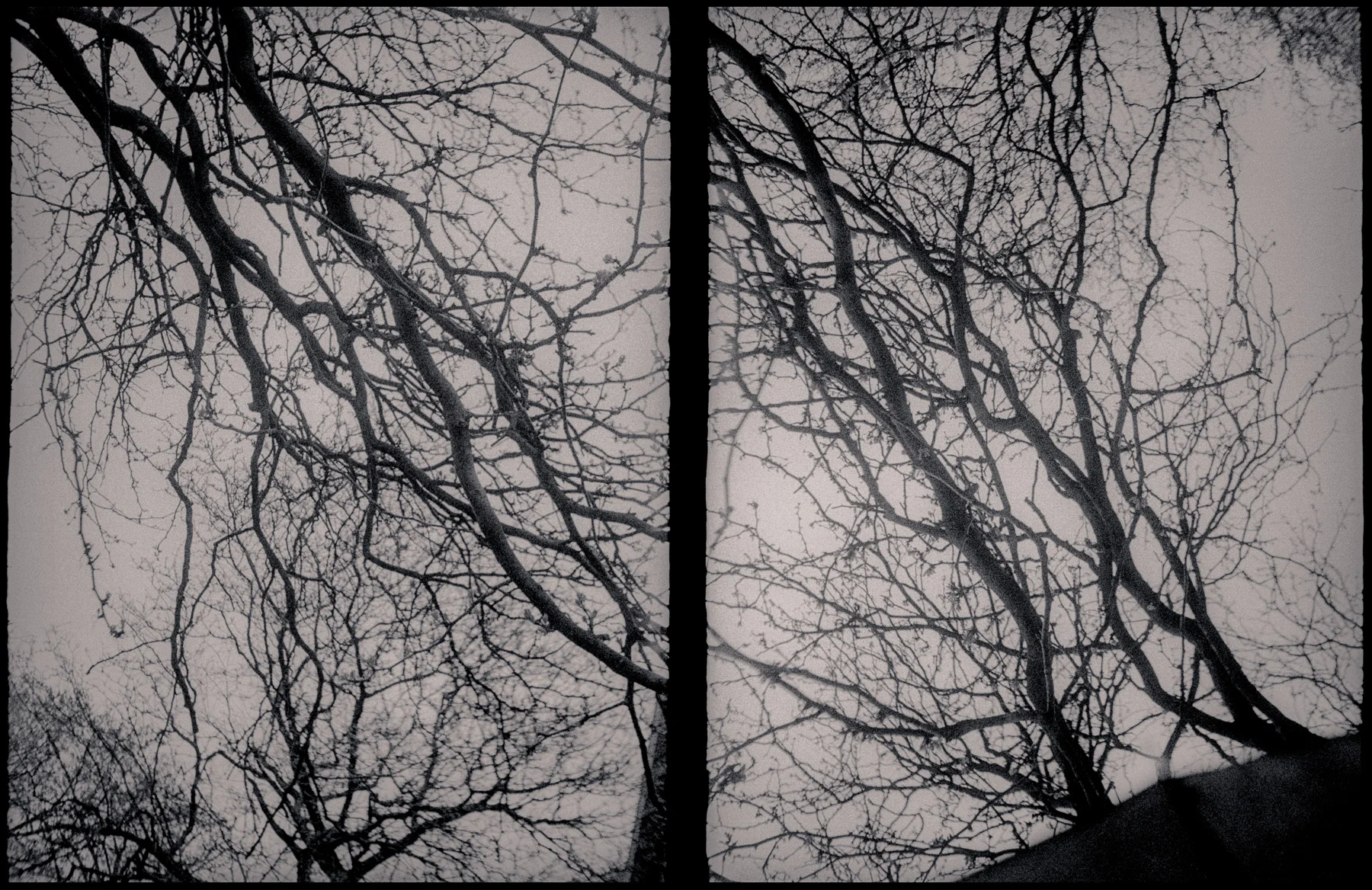
“Pause briefly from your labors and I will share with you some exploits of glory in the name of International Commie Camera Day...”

This is the Benefit St. Armory in Providence photographed with a Chaika half-frame camera. This is the building that I like to point out to anyone who will listen that was moved in 1906 (rolled on logs, mind you) to its present location in order to make way for the east side railroad tunnel, which lies a couple hundred yards to the south. The west portal of this tunnel was the site of the May Day "riot" in 1993, where some student partying got out of hand. This lead to the tunnel being sealed up. May Day became associated with the Communists in the 20th Century. Now that area is a parking lot. So it all comes together. Sort of.
I contributed a small write up about International Commie Camera Day for the Film Shooters Collective.
You can see the whole piece here.
From the Archives: Reading the signs on Allens Ave.
"Give me your license and meet me there".
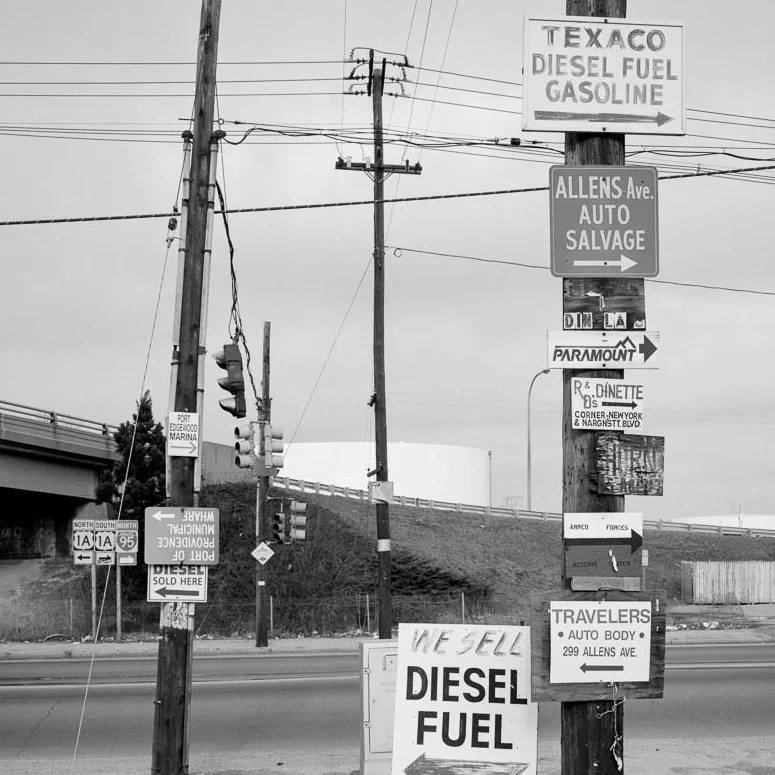
Some variants from the RI Photo survey Archive. This is a spot I returned to a number of times. I don't recall if I returned because I was dissatisfied with the first attempt or that I just simply liked the location. Now it's interesting to compare the differences. A return visit is in order.
Allens Ave, 1992, #1 4x5 Tri-X
Allens Ave, 1992 #2 4x5 Tri-X
These are the first attempts. I typically would shoot 2 sheets. I must have been on the fence about including cars as I tried it both ways. I printed the first, but now I rather like the second with stretch limo and the man and his young companion on bikes.
Allens Ave, 1993 4x5 Tri-X
A year later I returned, this time with an overcast sky. This is the image that I printed and exhibited for the 1994 show "On Land" at the Warwick Art Museum. The tension of the wires literally ties the composition together.
Note that in 1993, at least for one day, the "Diesel Fuel low prices" was upright.
Allens Ave 1994 #1 4x5 Tri-X
Allens Ave 1994 #2 6x9 (120) HP-5+
Finally in 1994 I returned once more, this time on a sunny afternoon. This time a composition similar to the 1993 take, but horizontal. Also on that day, showing what was to come for me photographically, I shot a frame with the Fuji 6x9 camera (machine as Tod Papageorge says). Echoing I'm sure accidentally the alternate of 1992 I include cars in the 6x9 frame.
Allens Ave, June 2006. 120 Ilford HP-5+ // Signage and signal boxes aren't what they used to be.
Ghost bike on Allens Ave, June 2006
I took another shot in 2006 just to compare changes and because I had stopped there to take a picture of a ghost bike that was chained to the railing below the on ramp just to the left of this view. That was the day I was hassled by a Providence cop who pulled up next to me and said "what do ya think you're doing? what're taking pictures of the tanks for?" I said I wasn't taking pictures of the tanks and I was just taking pictures for my self, for history. He asked "is that your car over there?" It was. "Give me your license and meet me there". I handed him my license and crossed the street, wondering where this was going. When I got to his car he had run my plates and was reading my name and address into the radio. He then started in again on why was I shooting fuel tanks and that this was a sensitive area and it's not allowed. I kept quiet, feeling more and more apprehensive, then he says "I could take your film" I say "I don't think that's..." and he cuts me off saying "but I won't, why don't you go take your pictures in some other part of the city", (obviously not understanding this photography of place thing) and hands me my license. He then drives off. I had a copy of the photographer's rights in my bag and I was preparing myself to pull that out as I had no intention of giving him my film. I knew I hadn't been trespassing or doing anything illegal. I was going to start naming my friends in City Hall and anyone else I could think of but I was relieved that it never came to that. Then I was angry, and mad at myself for not getting his name. I stuck around and shot a little more although I was hardly in the frame of mind for it, thinking the whole while about the chilling effect this sort of confrontation can have. Self censorship is the most prevalent form of censorship and I was determined not to let this incident keep me inside.
I use the word "paean" and mean it.
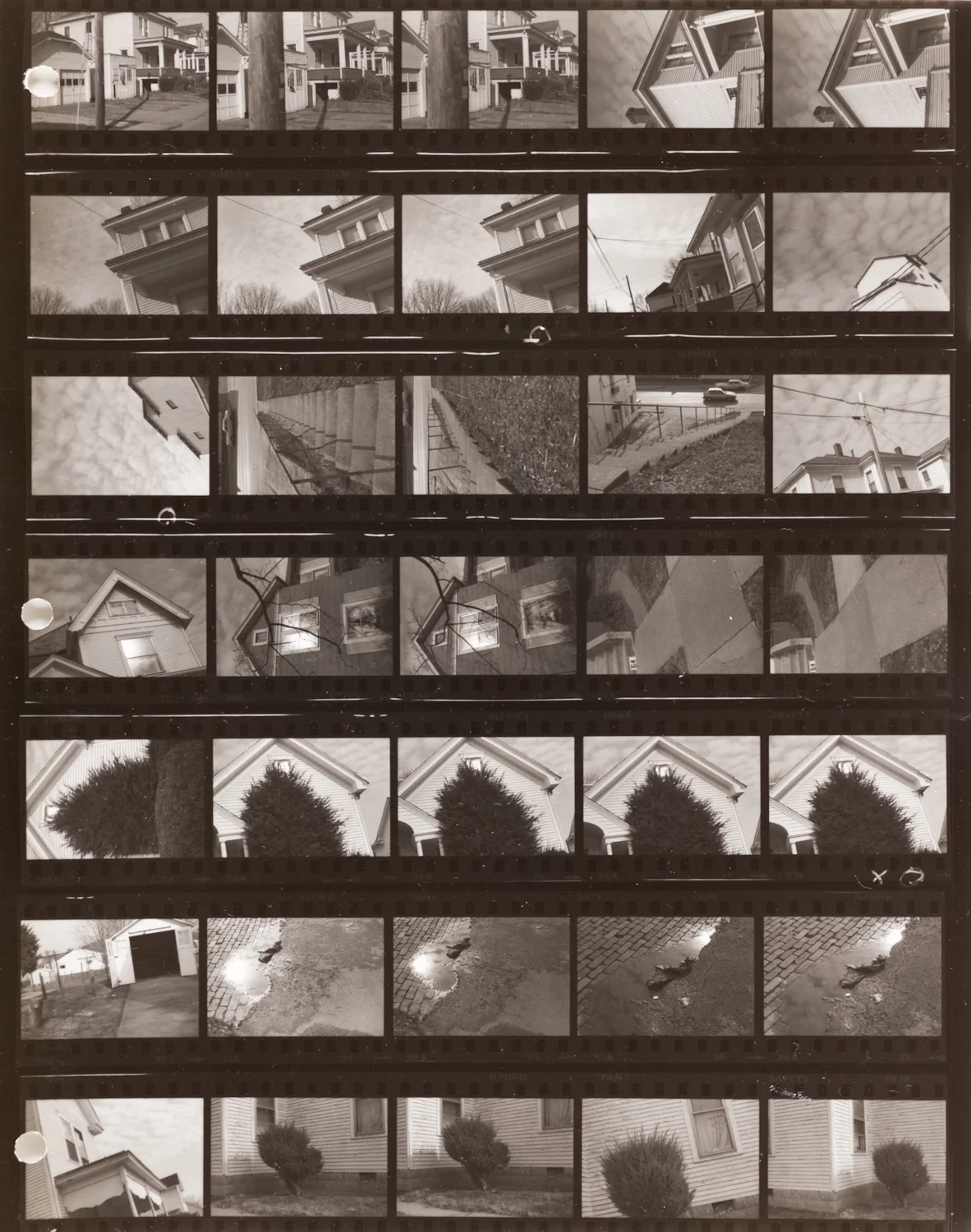
I wrote a little piece about one of my favorite materials for Emulsive.
“There’s mystique about them; smooth, finely grained, challenging. Something for the true pros and “serious types”...”

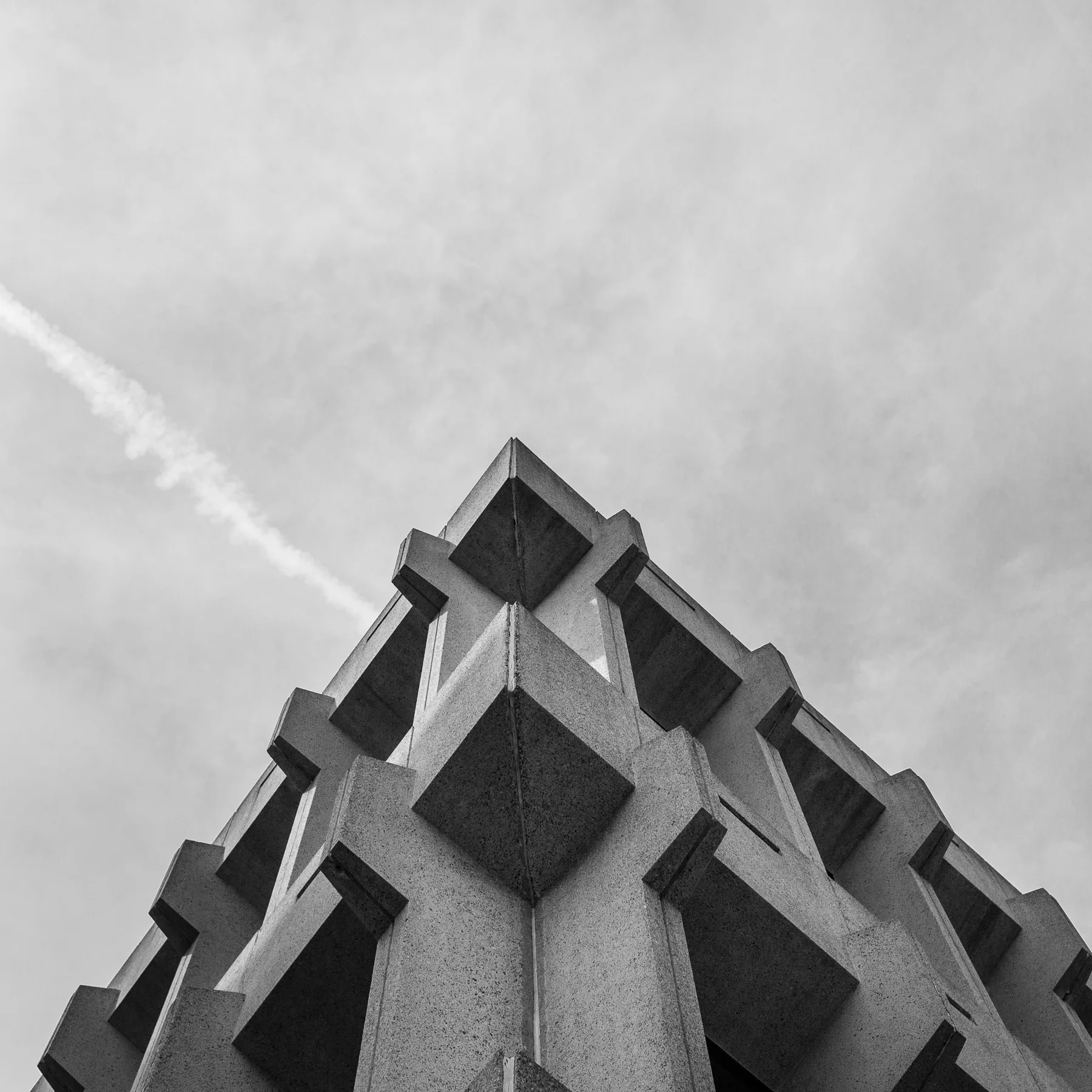
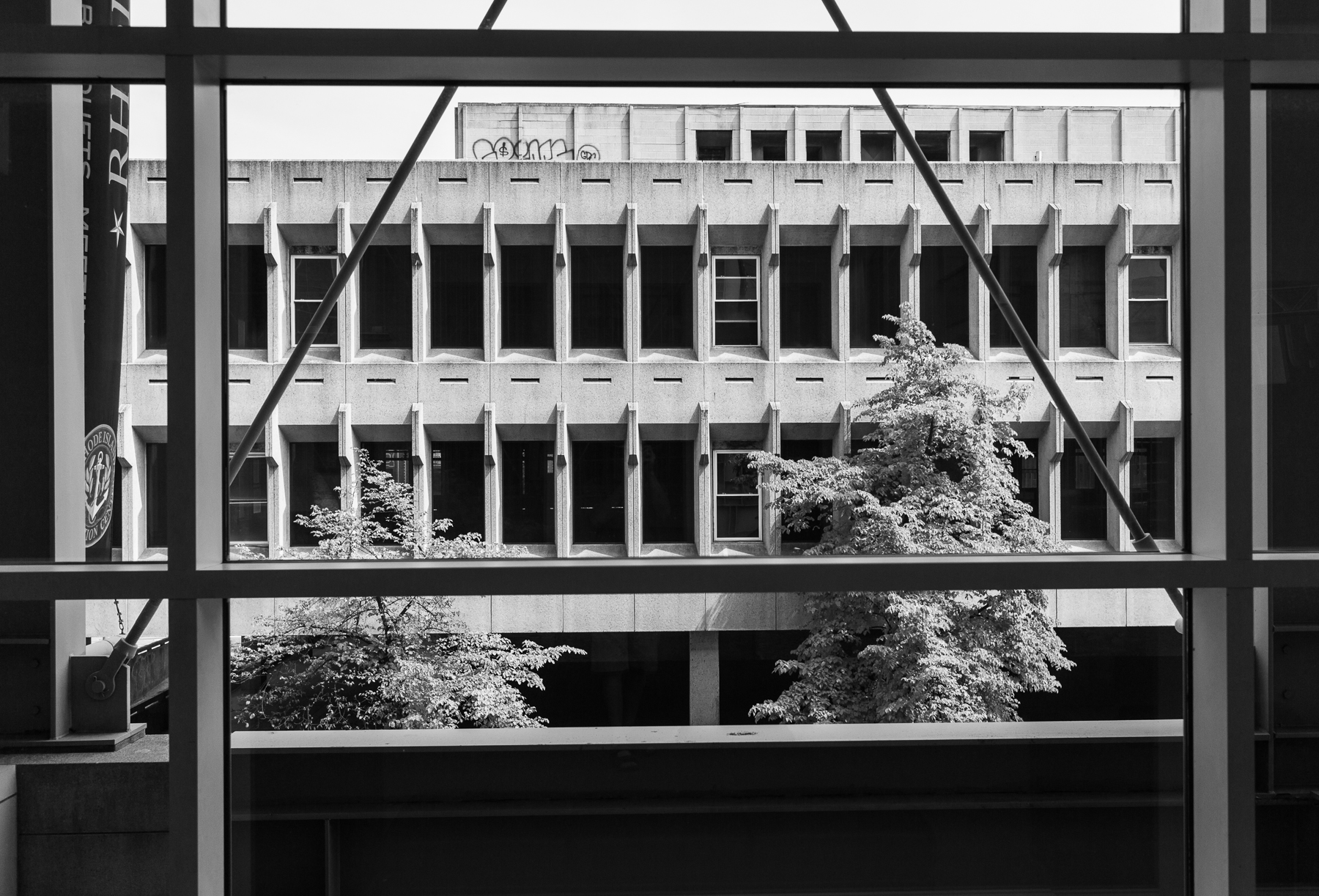
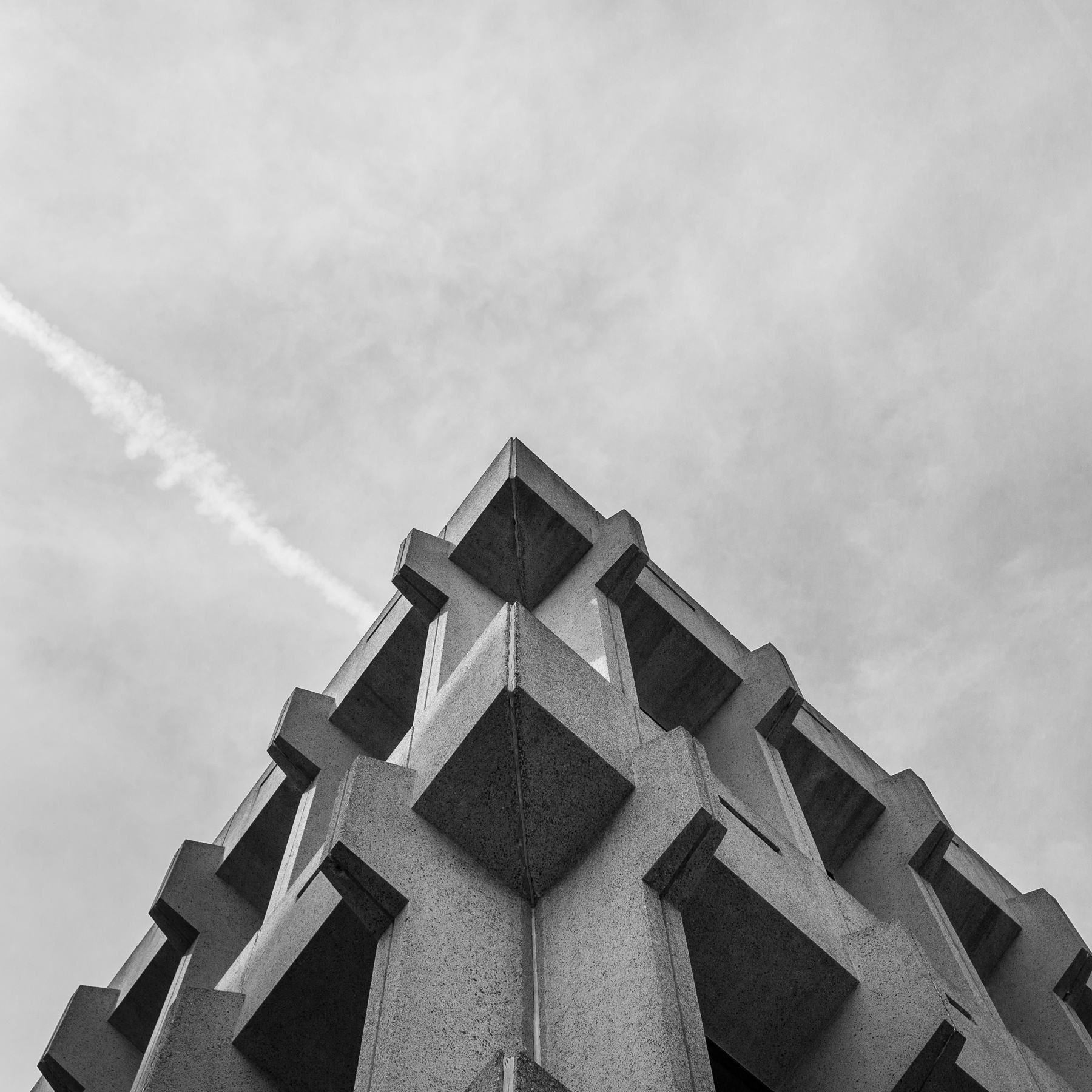
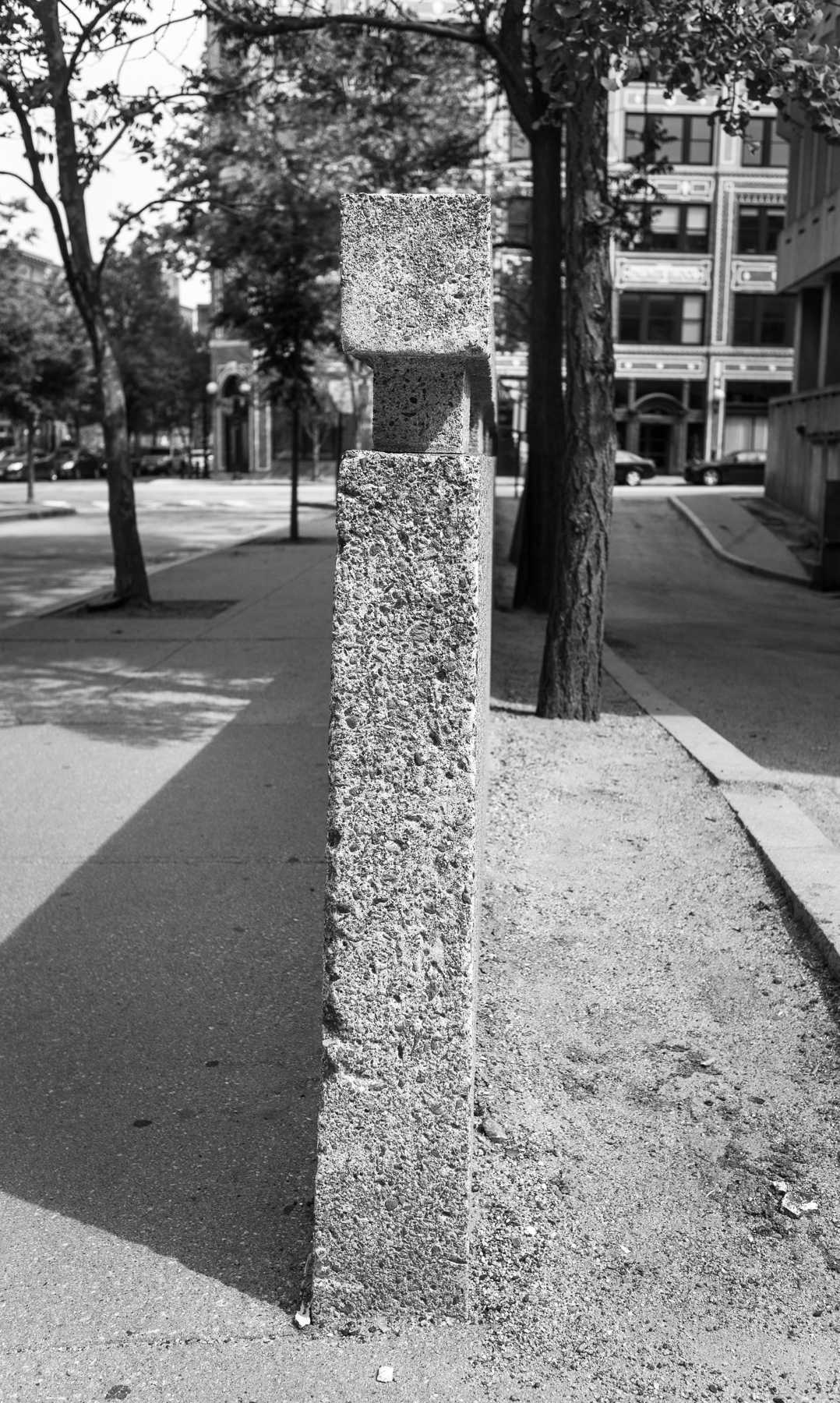
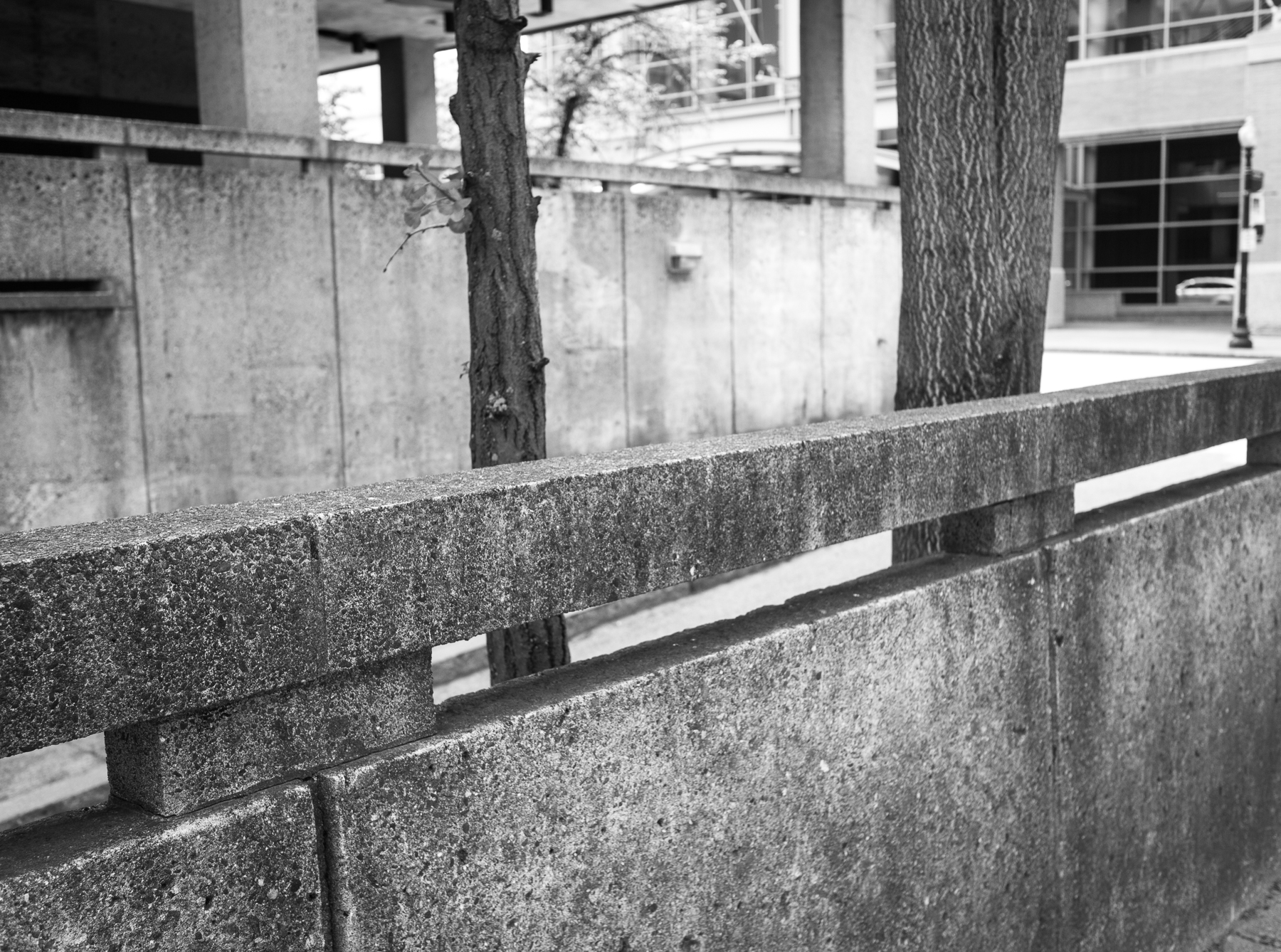
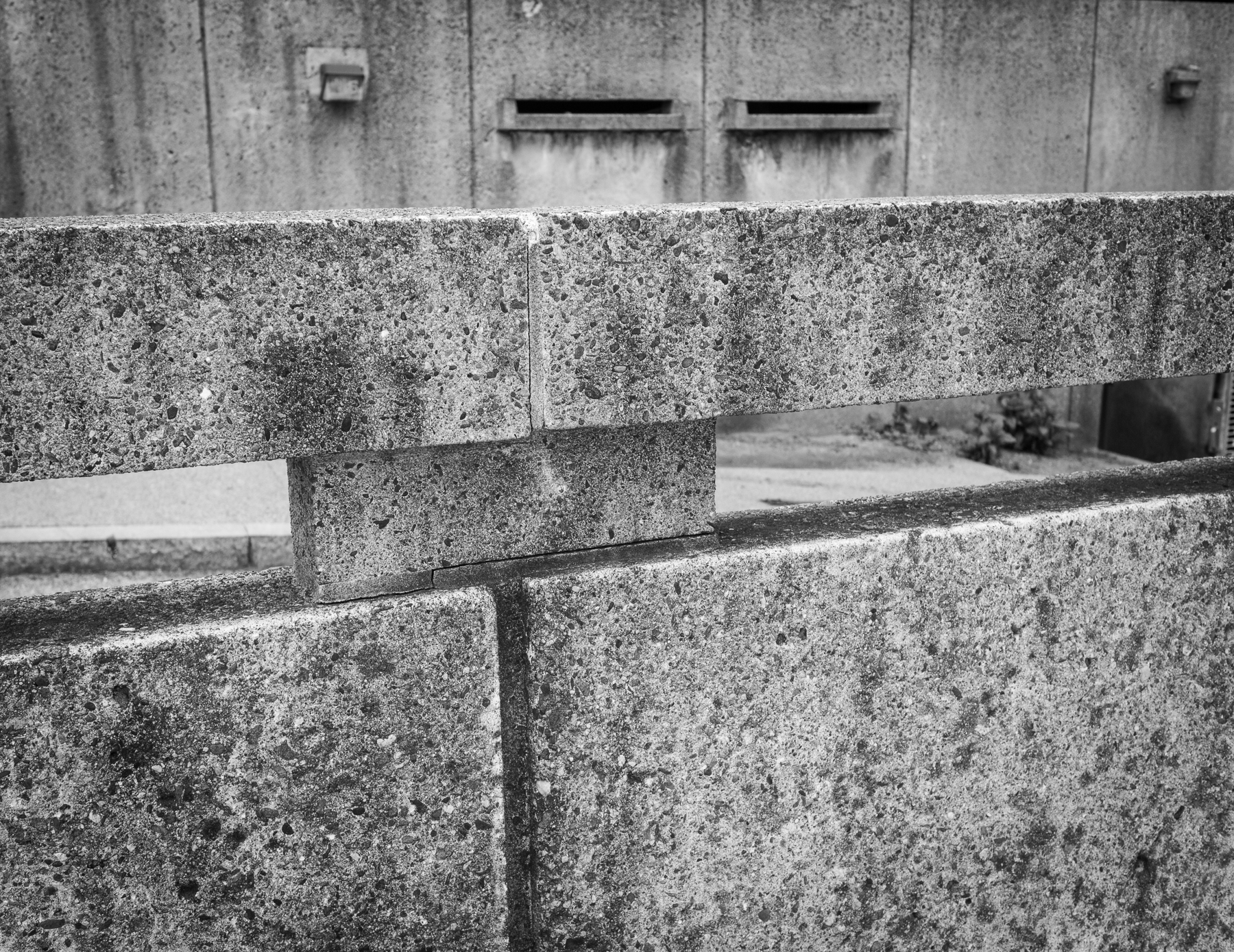
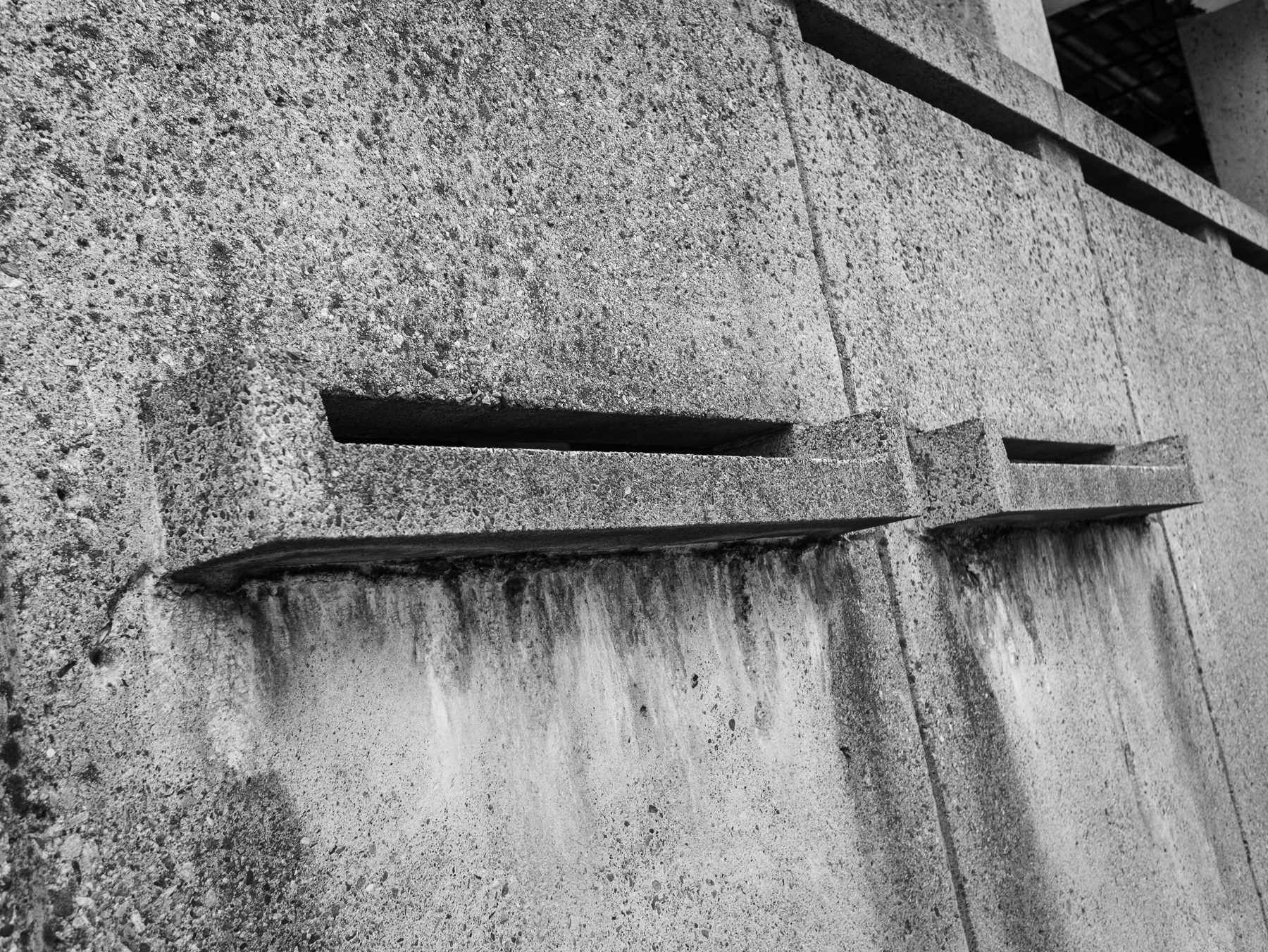
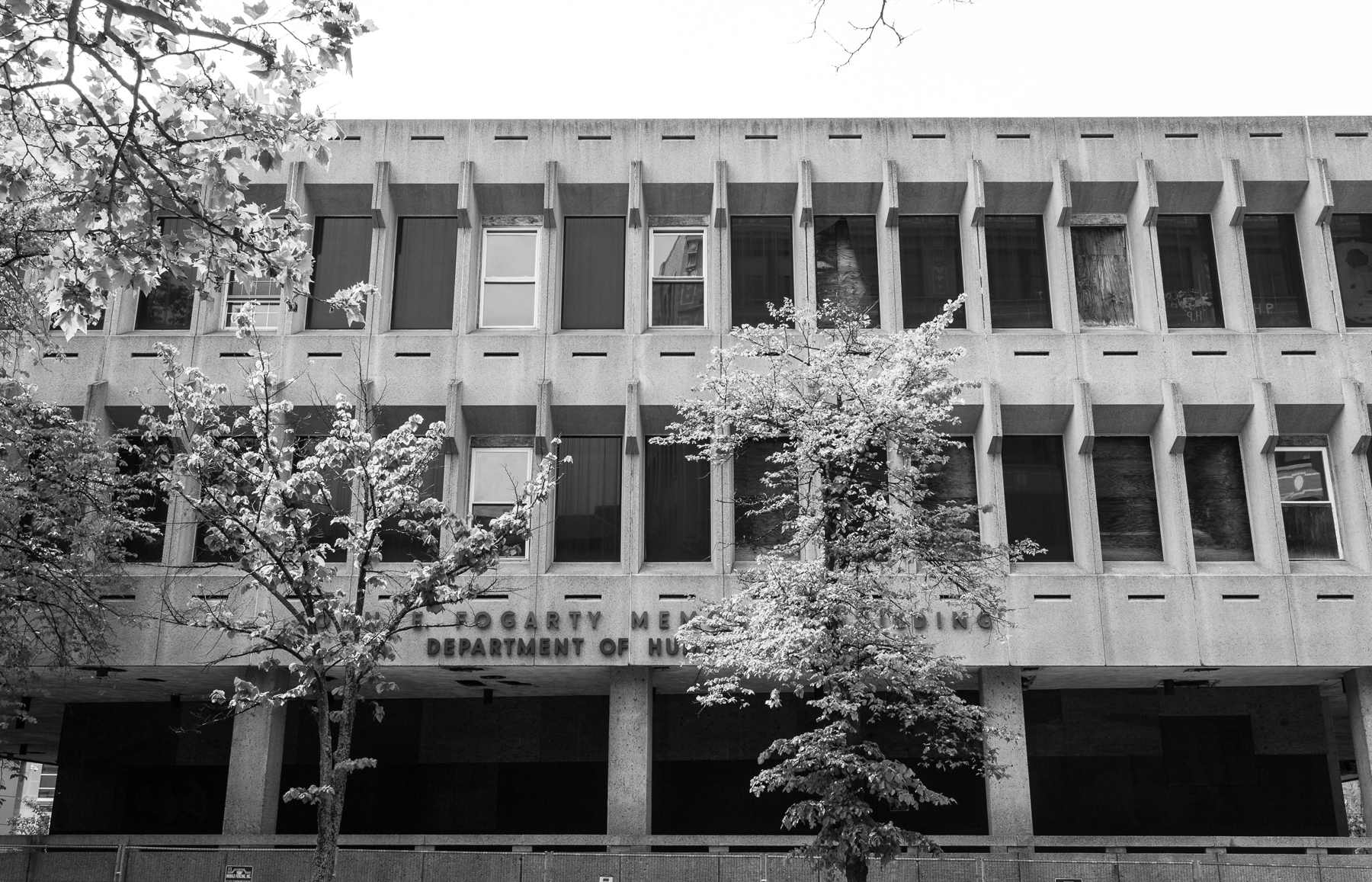
Brutal and Unloved
Sketches towards a photo essay on the doomed Fogarty building, Fountain Street, Providence.
Read about it here.
![Photography and Baseball [metaphors]](https://images.squarespace-cdn.com/content/v1/54246465e4b05cf30a42bdf2/1459818648305-ROJANYG979720ECYF3LR/graveyard_douglas_ave_92_fp4-Edit.jpg)
Photography and Baseball [metaphors]
Today is the first day of the baseball season and although it's snowing and many games on the east coast have been postponed it still makes me excited. Excited for the baseball season? Nope, don't really care about that. I get excited for the photography season.
Graveyard, Douglas Ave, Prov. 1994
When I was young and could indulge in such fanciful notions I had this idea of aligning my photo season with the baseball season. Training camp opened and I would go through my gear, do some film testing and generally get myself ready to get out there. In these years I was doing most of my own work with a view camera, and I didn't shoot that often in the winter. (I don't really like snow pictures and don't often do them. Here's a rare exception, from 1994 4x5 FP-4)
So the baseball season would start and I'd get out there and start working. Hopefully by the All-Star break things would be going along well, shooting, processing, seeing the field. Going well or not it was a moment to reflect and to see what was needed to make the most of the rest of the season, knowing that the fall light lay ahead. I never made the payoffs and I never won the pennant but I kept at it until winter. I don't really know how that came about as I'm not really a baseball fan of any seriousness, but these days I don't let myself take the winters off.
Going year round can generate a lot of self-inflicted pressure, and that pressure can in turn put up creative blocks that need to be overcome. I've developed a tactic for that that seems to have taken the form of another sports metaphor: the change up.
The change up can simply mean picking up a different type of camera, or shooting different film. It can be changing modes all together, perhaps listening and recording audio or sitting down with a notebook and writing. Once when I was feeling especially frustrated and completely lost I gave myself permission to give it up and just write. Which I did for about three months. When I picked up a camera again it was because I was excited to do something with it, I was inspired again. I knew that photography would be there if I needed it and as it turned out I did and it was.
There are times I will shift from one project to the next and that can bring about a new set of problems but I'd rather that than feel I was pounding my head on a wall or just going through the motions. Identifying a habit and then doing the opposite can be a great change up. Avoiding people? Go shoot portraits. Only like sun? Go shoot in the rain.
Maybe photo projects have their own seasons, certainly they their own internal rhythms. Stay flexible and you can move with them too. So get out there, give it 110%, leave it all on the field, take it one picture at a time and bring home a pennant. Whatever that is.
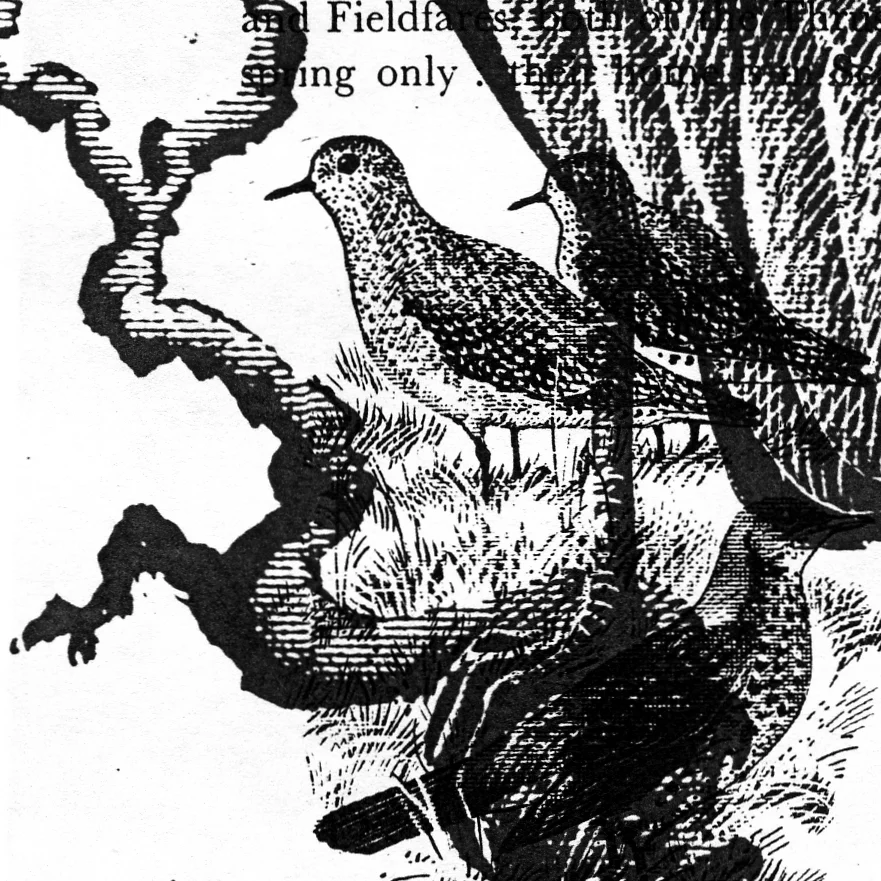
How to Tell the Birds
...that you’re sorry for shooting them, stuffing them, freeze drying them, mounting them and sticking them up for display...
[ These writings first appeared in booklet form in 2010. Inspired by a visit to the Natural History Museum in Roger Williams Park I share them here now for no other reason than spring, although snow is in the air.]


How to tell the birds that you’re sorry for shooting them, stuffing them, freeze drying them, mounting them and sticking them up for display in a natural history museum. You are also sorry that nobody looks at them anymore because people are more interested in a dinosaur bone and in the tire that came off the space shuttle that’s propped up next to the elevator. You are sorry about the planes that suck you birds into their jet engines and you are sorry for Chicken McNuggets. Very sorry.
You are sorry for all of it but it’s just not working out. We are just in different places. You are all great birds really, the best and you'll be a great catch for someone, but I've got my work and you birds have got your bird thing and the timing just isn’t good. It's complicated. It’s not you, it’s me. Take care birds.

How to tell the birds that the little house they have been living in, the little house nailed to a tree, the very house that they have fixed up so nicely with twigs and bits of plastic from around the yard, well that house has been repossessed by the bank and some men will be coming to board up the little hole in the front that you use for a doorway and you won't be able to get inside anymore. So you see you will have to go. Please keep the bits of plastic and that red bottle cap, we won’t need them. Take anything you can carry really, but you better get going. If you need any help we will leave you a card with a website on it. Sorry.

How to tell the birds that well the thing is the Company is downsizing and just doesn't need so many birds around anymore. In fact they don't need any except a couple of jays who can put on a show and the crows, who have negotiated a separate contract. Remember when the crows used to live in the country? Scarecrows, they were for them. Well they moved to the city and now they run everything. Whatever bird stuff needs doing, pretty much they are doing it. Anything left will be outsourced, so to speak to a few plywood bird cutouts. They don’t cost much and need just a little touch up from time to time.The chirping and singing and such have been converted to digital files available for download on the Company website. Straight to your phone, amazing. Anyway it's just there hasn't been the demand like there used to be and with the economy and all it was decided that the Company had to move in a different direction. You understand. Good luck.

How to tell the birds that you are just not interested in hearing their excuses any more, coming around with all those little chirps and tweets, the cackles and caws, the fussy little twitterings that they pass off as "song", you've had enough. It's always the same tune, there was this or that bit of food someplace, or they needed one more to make up the formation, and of course you can't tell them no, no matter that they don't know where they're going and the next thing you know you're in Canada or who knows where. Well no more. There's never a bird around when you need one, sure they’re happy to sing when the sun is shining, who isn't? But as soon as there is a little bit of weather... Take a listen... See? Nothing, nada, not a peep. Squirrels are more dependable.
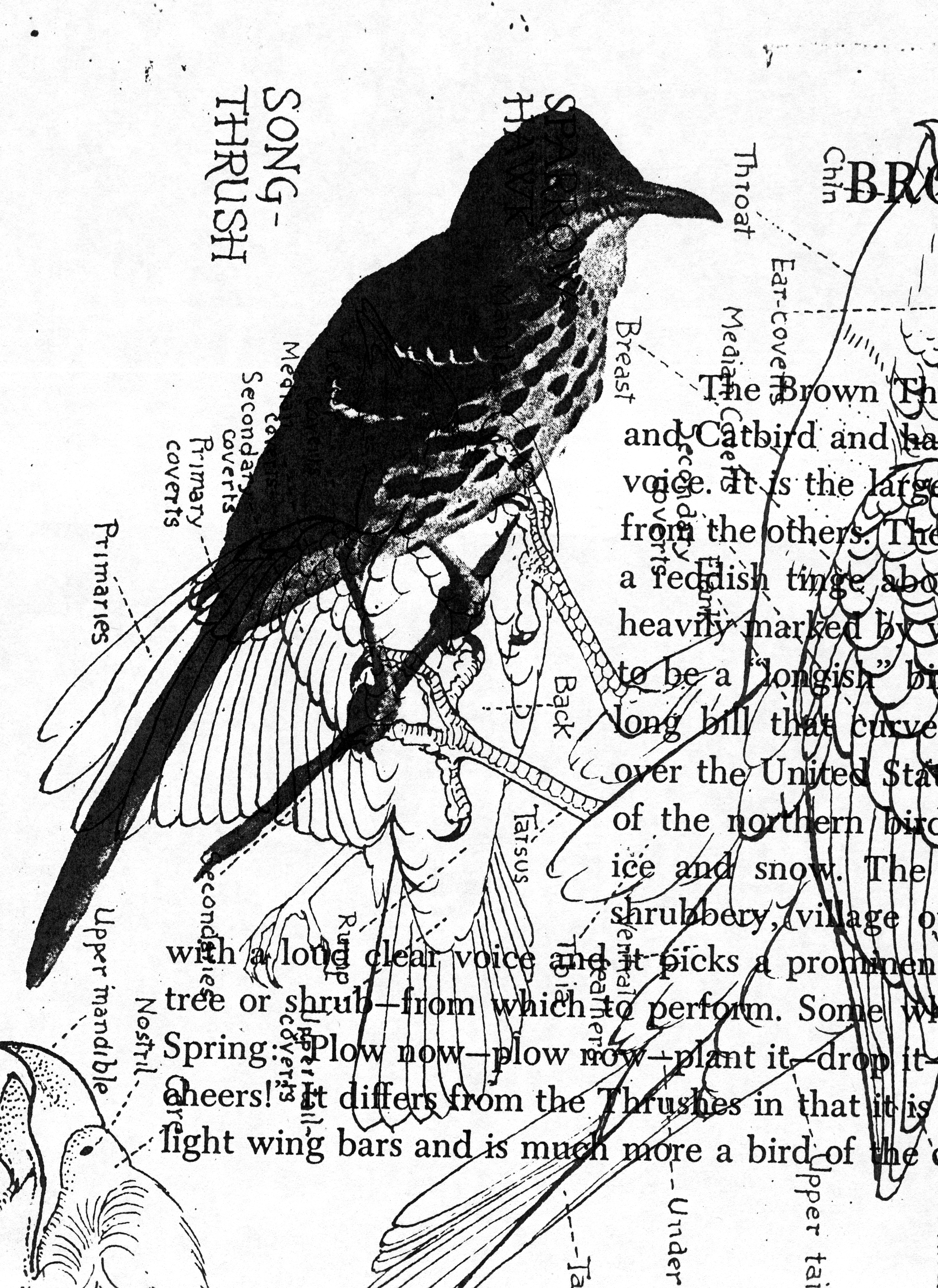
How to tell the birds that you don’t really mean it, you take it all back. Robin and Jay, Martin, Swallow and Finch. Bittern, Waxwing and Nightjar, Whip-poor-will, Wren and lesser Nighthawk, Plover, Killdeer and Oystercatcher, Dove, Fish Crow and Oriental Cuckoo, Shy Albatross, Reed Bunting and Prairie Warbler, Shiny Cowbird and Oriole and Bobolink. You are sorry, you want them all back. You have some seed and there’s a nice bit of suet back at the house. Birds, what do you say?
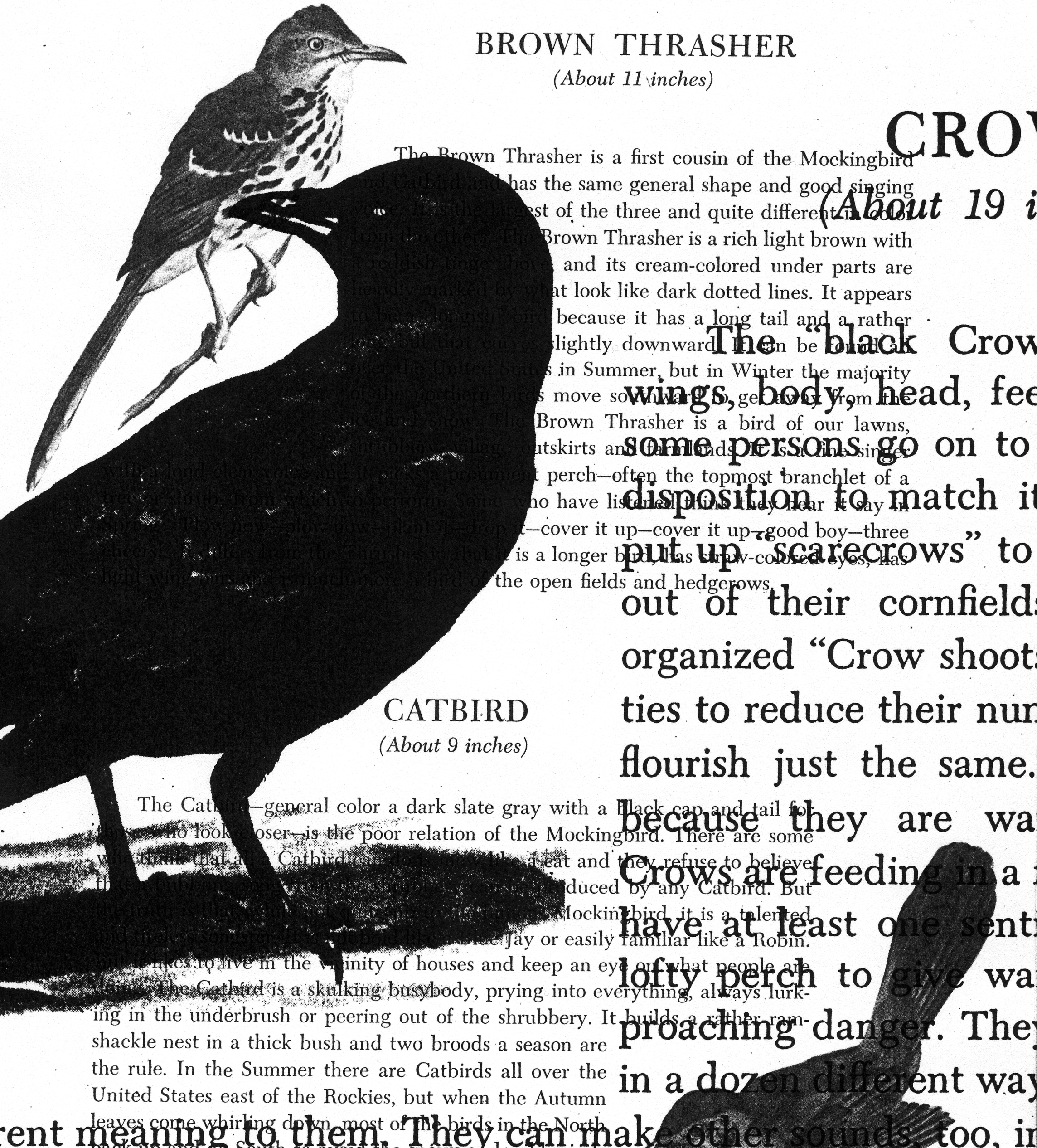
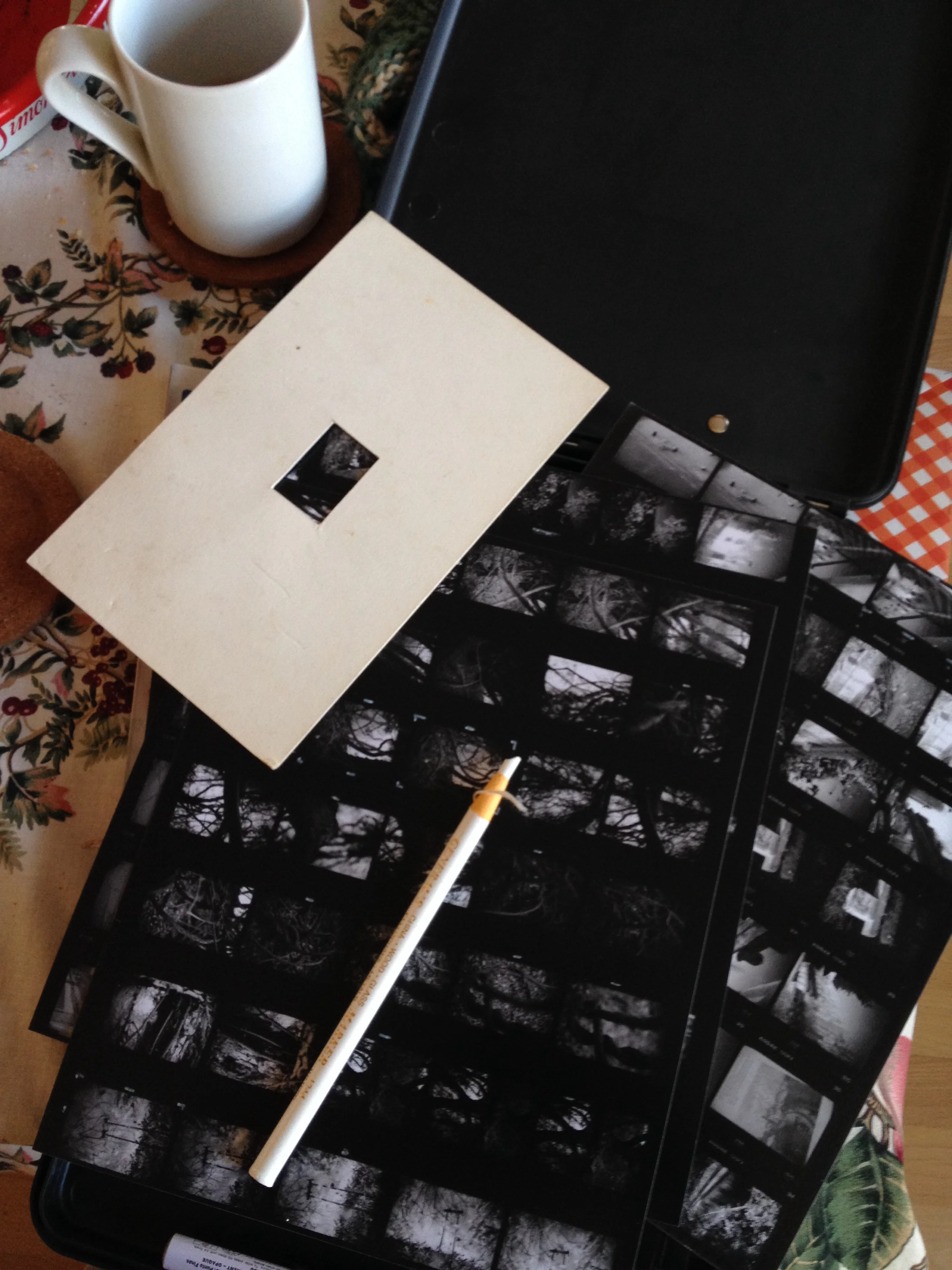
The ghosts of edits past
Editing a project for a show or a book has it's stages, from shooting, which may continue well into the editing stage, to the initial selection from contact sheets, printing, sequencing, more printing and then on to book layout or exhibition hanging.
When it comes to sequencing, I've found no better way than working with actual prints, laid out on the table or the floor, shuffling and shifting until the rhythm is right. Digital or film, it doesn't matter, you need the space to see it all together flowing from one image to the next.
The hardest aspect of any edit is the cutting away of things you like and have become attached to. It starts out fairly easily but eventually you get to where it hurts, and you agonize over each choice. But choose you must and (hopefully) the sequence shows you what it needs most. The deadline looms, you convince yourself it's right and up it goes.
It begins...
Sequencing underway...
We have an edit...

On the wall for all to see.
You pack up the outtakes, hang the show, make the book and move on. Sometimes those outtakes linger with you, like ghosts popping in unexpectedly until finally you go back to that box and have a visit. Some, you admit you still like. Some give you ideas for new work. Thanks to the miracle of modern digital media you can put them up and excise your ghosts. And so I shall. These are outtakes from Canonicus' Bow.




This is not a pipewrench | Dada Sounds

“An original is a creation motivated by desire. Any reproduction of an originals motivated be necessity. It is marvelous that we are the only species that creates gratuitous forms. To create is divine, to reproduce is human.” - Man Ray
I contributed a piece to the Cities and Memory Dada Sounds project.
February 5, 2016 marks 100 years since the founding of the Cabaret Voltaire in Zurich, and thus the beginning of Dada.
To mark the occasion, Cities and Memory: Dada Sounds marks a century of Dadaism by applying the techniques and practices of Dada to field recordings from around the world, bringing a Dadaist approach to the concepts of sound, place and memory and creating a new, Dada-inspired sound world.
The whole amazing collection is here.
My contribution: Swiss MLK
My process as thus: I chose a recording from the Cities and Memory sounds that was made inSwitzerland because Dada. As I was working on it over the Martin Luther King holiday I worked in units of 1.18. I laid a grid over the source recording breaking it up in 1.18 second segments. I used a random number generator to rearrange the clips until I had a length of 1min, 18 seconds. I decided I wanted to collage in sound that related to the moment in time that I was working on this so I randomly recorded a German language news radio station coming out of Switzerland at the same time I was editing the first piece. I took that recording and applied the same method to chop it up. On both recordings I used a second set of randomly generated numbers to apply a small set of effects (backwards, reverb) to a few clips. As an homage to Man Ray I wanted to suggest an aural layer of dust, so I stretched out the edited version of the first track and then I mixed all three together in a very un-Dada deliberate way.
Viva la chance.
Gorham photographs going digital
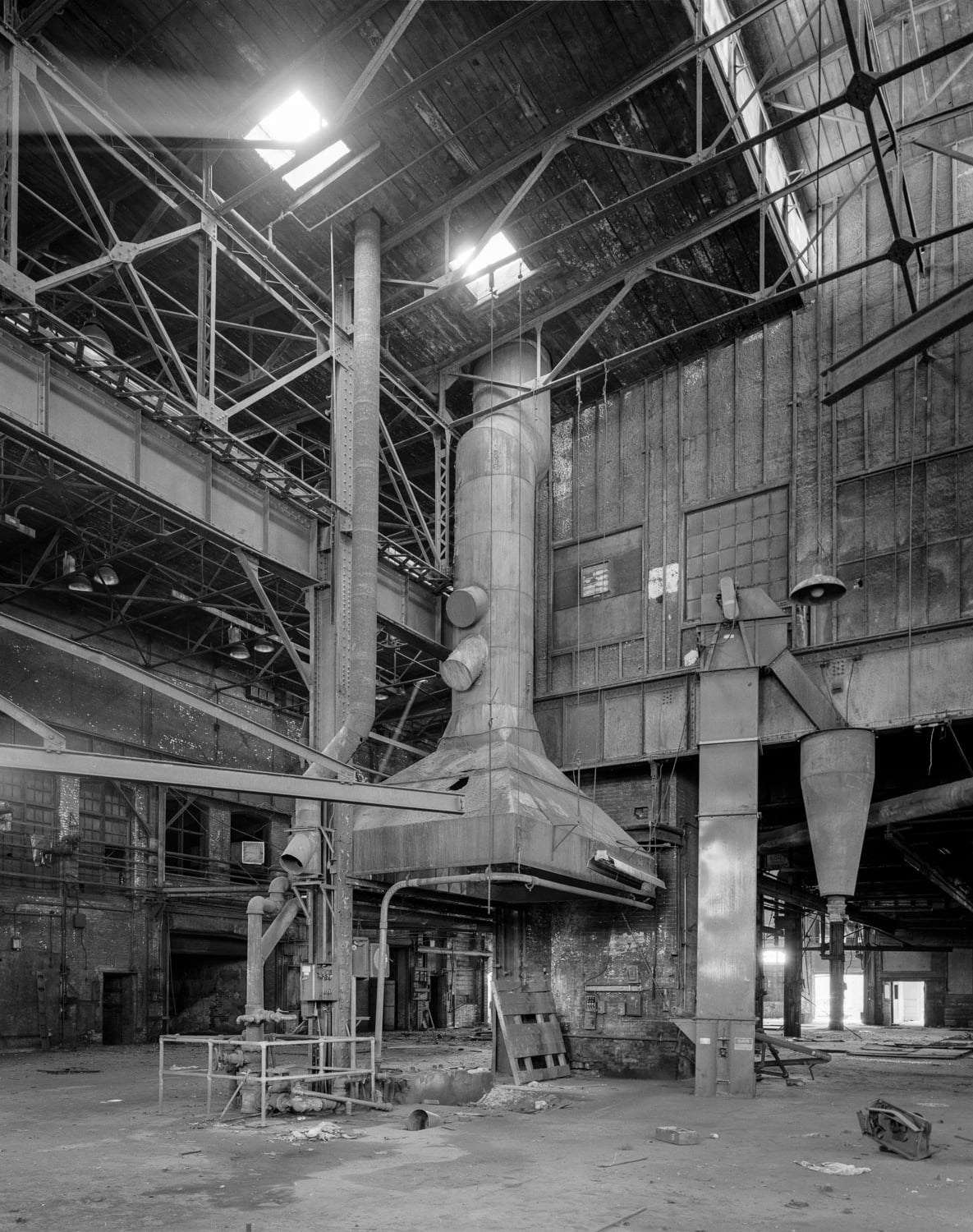
Bronze casting foundry, Summer 1997. Where the 'Independent Man" was born!
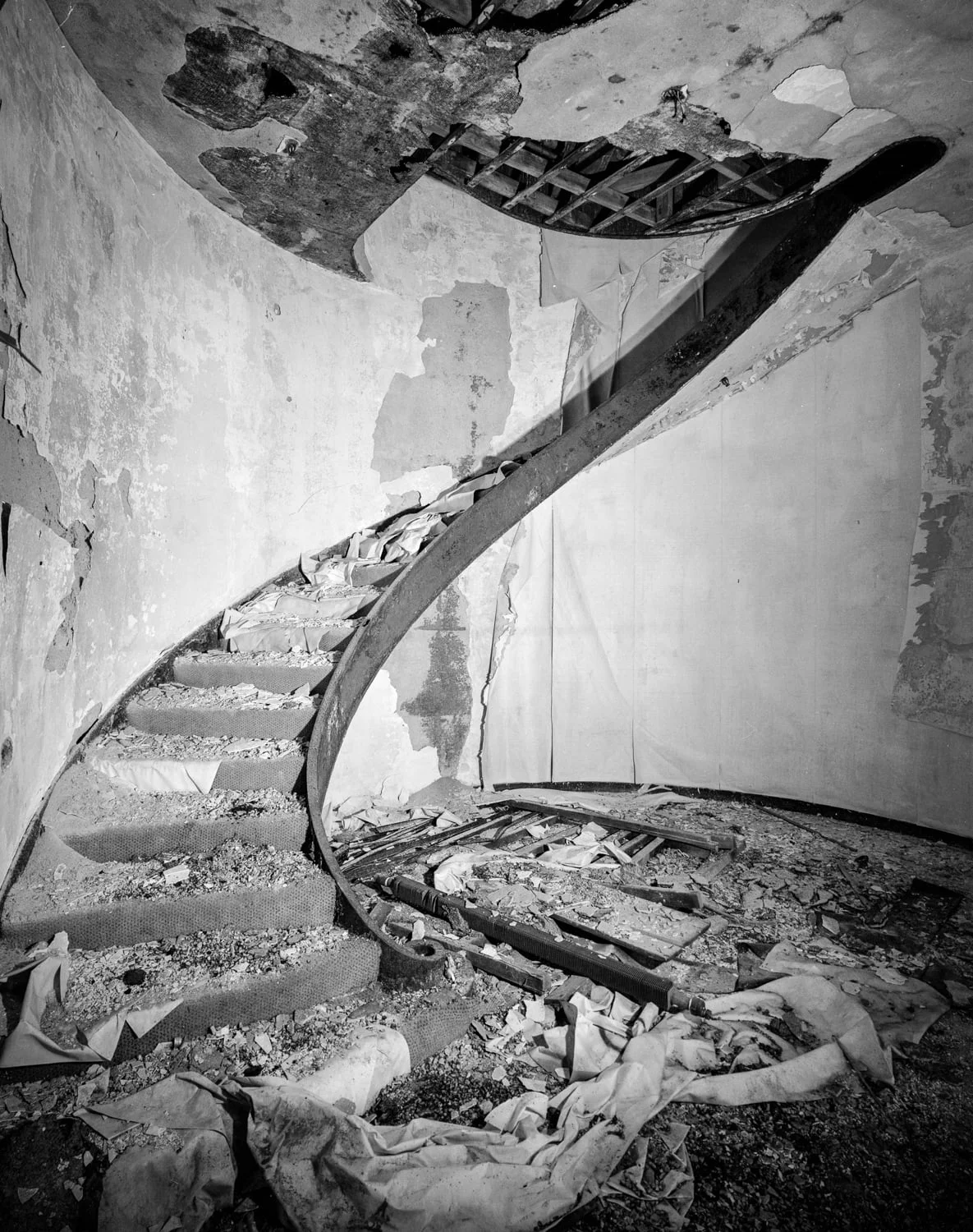
I will have more to say on this over the coming months but I'm excited to share this news. Erik Carlson and I have been awarded a Rhode Island Council for the Humanities grant to create a performance piece about our 1997 Gorham Manufacturing Co. complex documentation. This is in partnership with UPP Arts and Holly Ewald who first envisioned the project.
This means the photogaphs I made will get scanned and made available digitally. I'm thrilled about this, Gorham had such a central role in the growth and reputation of Providence as a manufacturing and design center. The work Gorham produced, especially the fine silver, occupies a prominent place in the collection of the RISD Museum, my employer. I will be very busy making new photographs of that silver collection for the major book and show the museum is planning for 2019. My photographic career seems to be intertwined with Gorham and I'm excited about this latest chapter.
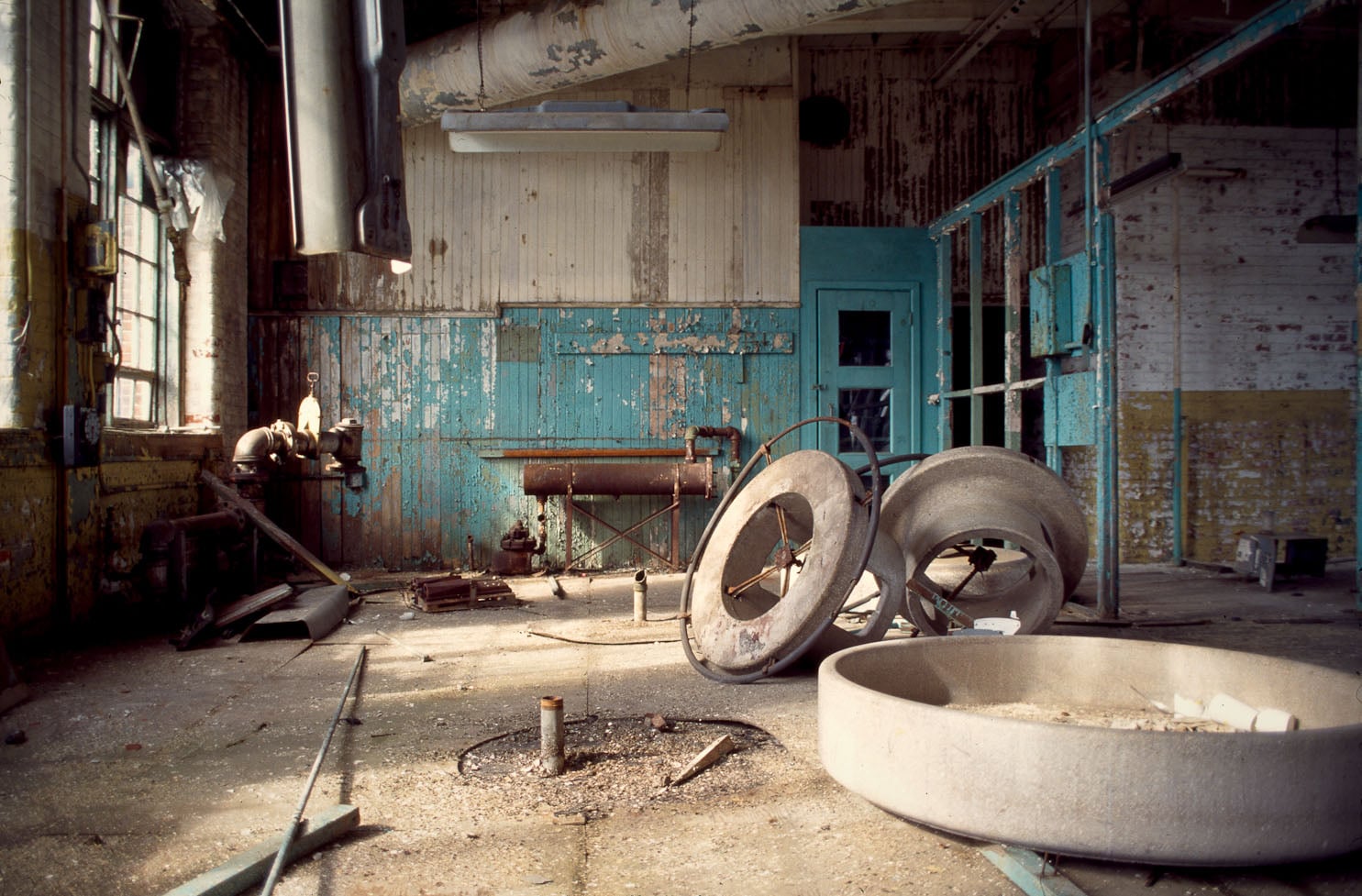
Wash basins near the silver work benches. Summer 1997.
Closing the Loop
On work and practice.
I don't make New Year resolutions but the end of year break seems to be as good a time as any to reflect and to think about what I'd like to work on in the coming months. Specifically I've been thinking about how I go about what I do and how I can be more effective in doing it.
Taking apart the term creative practice I'll consider both halves in order. Looking back at 2015 I find that i have a number of interesting projects going, I have ideas that I'm excited about and I'm curious enough to want to continue the pursuit. I have been shooting as the stack of negatives (and digital files) testifies. So far so good. However I know myself well enough to know that I'm very fond of keeping projects somewhere between 20-80% complete. Not completely vapor but still ripe with potential, still able to keep me happily busy pursuing leads and reaching dead ends free from the final nail and critical assessment that comes with being done. There are a couple of projects that I wish to see in a finished state by this time next year. I can visualize that, so it remains to move them there. Ideas, actions (in the form of taking photographs and recording sounds) words written, the creative half looks healthy enough.

How about the other word, practice? I like the sense of that word that describes what musicians do prior to performance. Few people are so gifted as to be able to perform at a high level without dedicated practice, and beyond that there are positive aspects that come only through repetition. There is a physical fluidity that comes from what's described sometimes as muscle memory, you just know where and how to move without having to think about it. There is confidence that comes from that and from a deepening insight into what the materials are capable of. Therein lies the catch within my own recent process. Insight and knowledge requires seeing the thing through every stage. For me that would mean from shooting or recording, to negative or file, to print or to screen to whatever the finished state should be. Then looping back through the process over and over again. I have plenty of practice in shooting and handling the camera, I earn my living shooting after all, but to get better I need to see finished prints and edited files, and I need to have others see that too. I need to close the loop. That is something I didn't do often enough in 2015. That is what I will endeavor to do this year. We'll see how it goes.

Cities and Memory Utopia Sounds Project

I created this sound piece for the Cities and Memory Utopia project. Inspired by the map above, or more specifically grid area A2.
I was drawn to this section by it's suggestion of a rocky coast and what may be a church or monastery clinging to a rugged cliff. I imagined the sounds of the sea and then I recalled an aural image of another mythological place, the sunken cathedral in the evocative prelude by Claude Debussy. In this piece, La cathédrale engloutie, Debussy creates an impression of the mythic cathedral as it rises momentarily from a clear morning sea, suggesting the peal of bells and the singing of the choir carried on the wind. This work is based on an ancient Breton legend of the Island of Ys.
In my piece I have taken up the thought that the church depicted in my corner of Utopia would someday suffer the same fate, and may perhaps be the very same place. I imagined it not yet sunken into the ocean, but still standing precariously high above the waves, alive with the sounds of religious service. The bells follow Debussy’s tonal progression, suggesting the future fate of the church.I imagine the listener standing outside, perhaps on the rocks below with the smell and the sound of the surf close by. In my own Utopia the most profound religious experience happens out of doors.This sound was constructed with my own field recordings of the Rhode Island coast and from recordings from the London Sound Survey. The snippet of the Debussy prelude is from a recording by Ruben Yessayan.

LITERATURE AND SOUND ART COMBINE AS ARTISTS IMAGINE THE SOUNDS OF THOMAS MORE’S UTOPIA
51 sound artists and musicians from across the world reimagine one of the greatest works of English literature, using sound.
The Cities and Memory: Utopia project creates something new from the words of Thomas More and the collective imagination of artists around the world – an entirely new Utopia of sound.
Using a woodcut map from the second edition of Utopia from 1518, sound artists each took a small section of More’s imagined country of Utopia, and created a new soundscape imagining how that place (and the society living in it) might sound.
The result is a collaborative sonic imagination of what More’s Utopia might have sounded like, and deals with issues including slavery, religion, freedom and even the current refugee crisis in Europe.
The project is housed on an interactive sound map at www.citiesandmemory.com/utopia, featuring:
- More’s Utopia divided into 30 different regions
- 51 sound artists, musicians and field recordists taking part from across the world, each bringing their own interpretation to the project.
The sounds range from musical tracks built out of field recordings from Italy, France, USA, Australia and many other locations; drone and ambient pieces; pieces constructed from readings of the original text and other works; imagined conversations on the island; and even full-scale electronica tracks.
Contributing sound artists come from locations all over the world, including the UK, USA, Canada, Greece, Germany, Spain, Portugal, Australia, Mexico and Sweden.
A free album of highlights from the project, entitled Utopia, will be released via http://citiesandmemory.bandcamp.com at the end of October to mark the end of the project.
The project is one part of a global field recording & sound art work called Cities and Memory, which aims to present and remix the sounds of the world through a global sound map in which every location has two sounds: a documentary field recording and a reimagining of that sound.
The project, which has had 220,000 listens in the past 18 months, records both the current reality of a place, and also present its imagined, alternative counterpart – in effect remixing the world, one sound at at time. Every faithful field recording is accompanied by a reworking, a processing or an interpretation that imagines that place and time as somewhere else, somewhere new. The listener can choose to explore locations through their actual sounds, or explore interpretations of what those places could be – or to flip between the two different sound worlds at leisure.
There are currently almost 900 sounds featured on the sound map at www.citiesandmemory.com, spread over 40 countries.
Cities and Memory has grown rapidly over the past year, with features on The Atlantic, Vice, Slate.com, CBC national radio in Canada, Resonance FM in the UK and specialist sound sites such as Creative Field Recording and the London Sound Survey.
The project is completely open to submissions from field recorders, musicians or anyone with an interest in exploring sound worldwide. The field recording and sound art communities have embraced the concept: more than 170 field recordists and sound artists from as far afield as Calcutta, Los Angeles and Cape Town have taken part, providing field recordings and radical reimaginings of global sounds.
More’s Utopia explores the society, behaviour, law, customs and culture of the inhabitants of Utopia – a coinage that can be seen to mean both ‘good/ideal place’ and ‘nowhere’.
However, despite the space given over to the topography of the country and the appearance of its cities and people, there are only a scattered handful of references to sound.
The most notable reference to sound is simple: ““[The Utopians] entertain themselves with the delights let in at their eyes, their ears, and their nostrils as the pleasant relishes and seasoning of life, which Nature seems to have marked out peculiarly for man, since no other sort of animals contemplates the figure and beauty of the universe… nor do they apprehend the concords or discords of sound.”
What were those concords and discords of sound that so delighted or repulsed the Utopians?
An alternative approach to contrast control with HC-110
When developing film, vary dilution with HC-110, not time and get the contrast you want.

There is more than one way to skin an onion and this take on film processing is a good example. Kodak's HC-110 is a very versatile liquid developer that gives excellent results with many films and is known for long shelf life. It works well in small tanks and in rotary systems. It was my standard developer for many years and although I no longer use it regularly I still recommend it to anyone looking for a good all-rounder.
The approach described below is one where different contrast ranges are achieved by using developer dilution as the variable, instead of the usual change in time. Here time, temperature and agitation are kept at a constant. I didn't create this but I have used this myself, probably because I enjoy the way it gets me thinking about film development controls in a new way.
What follows is transcribed from The Handbook for Contemporary Photography, 4th Edition by Arnold Gassan. 1977. Arnold was a professor of mine at Ohio University and I don't think he would mind me sharing this. I think it interesting and still useful.
Contrast Control through Developer Dilution
Another way of controlling contrast...is through varying the dilution of the developer. This is a very useful control with some of the liquid concentrate stock solutions, and of these Kodak HC-110 developer offers exceptional qualities.
Contrast control through developer dilution uses the high energy HC-110 with its almost unique ability to provide very clean separations of shadow densities and also offer linear separations of all equal exposures into the high densities, even though diluted to a very great degree.
The effects of varying developer dilution for HC-110 and Tri-X rather than developing time can be seen by examining figure 4-31.
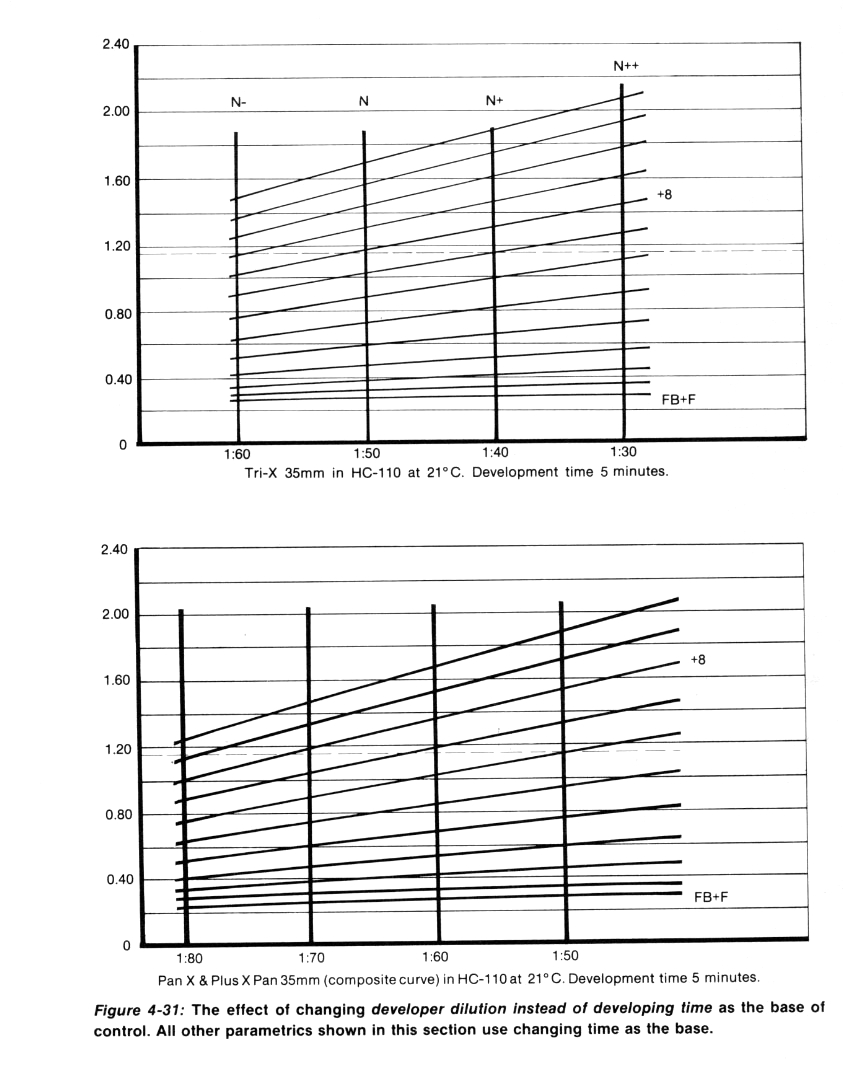
These curves show the equal separation in the shadows and also the contrast variations possible by merely varying the concentration of the HC-110 while keeping time, temperature and agitation constant.
The advantage of this system is that a widely distributed, very stable, highly concentrated commercially available developer of known quality is used only at a standard time-- one which is physically long enough to avoid problems inherent in short developing time. The concentrated syrup can be measured accurately with pipettes, or this simple two step dilution schedule can be employed:
Make a working stock of 1 part developer and 9 parts water.
Do not mix more than what will be used in a few days.
Distilled water is recommended.
From there dilute the working stock in dilutions as follows to make dilutions of approximately:

*Total=450 ml for a two reel tank.
In my own approach to HC-110 I have always skipped the stock solution step and mixed my developer directly from the syrup. I also abandon Kodak's letter system (dilution A, B, C etc) and use a ratio that is easy for me to remember and to mix. I used that with this system and when I use HC-110 in the more conventional way.
Gassan provides some recommended dilutions for a variety of films, but keep in mind a few things:
- These dilutions are from the 1:9 stock solution to approximate dilutions from the syrup (ratios in the left hand column).
- This data is from 1977 and films have changed
- He finds that a "decade change of dilution e.g. a change of 1:50 to 1:60 approximates a paper contrast grade". (for Kodak films, see below)
- The system works for Ilford films as well, but that they exhibit greater sensitivity to developer strength variations.
- There is almost no loss of shadow detail with this developer, even at the extreme dilutions.
All film is developed in HC-110 at 21C / 70F for five minutes with standard agitation.
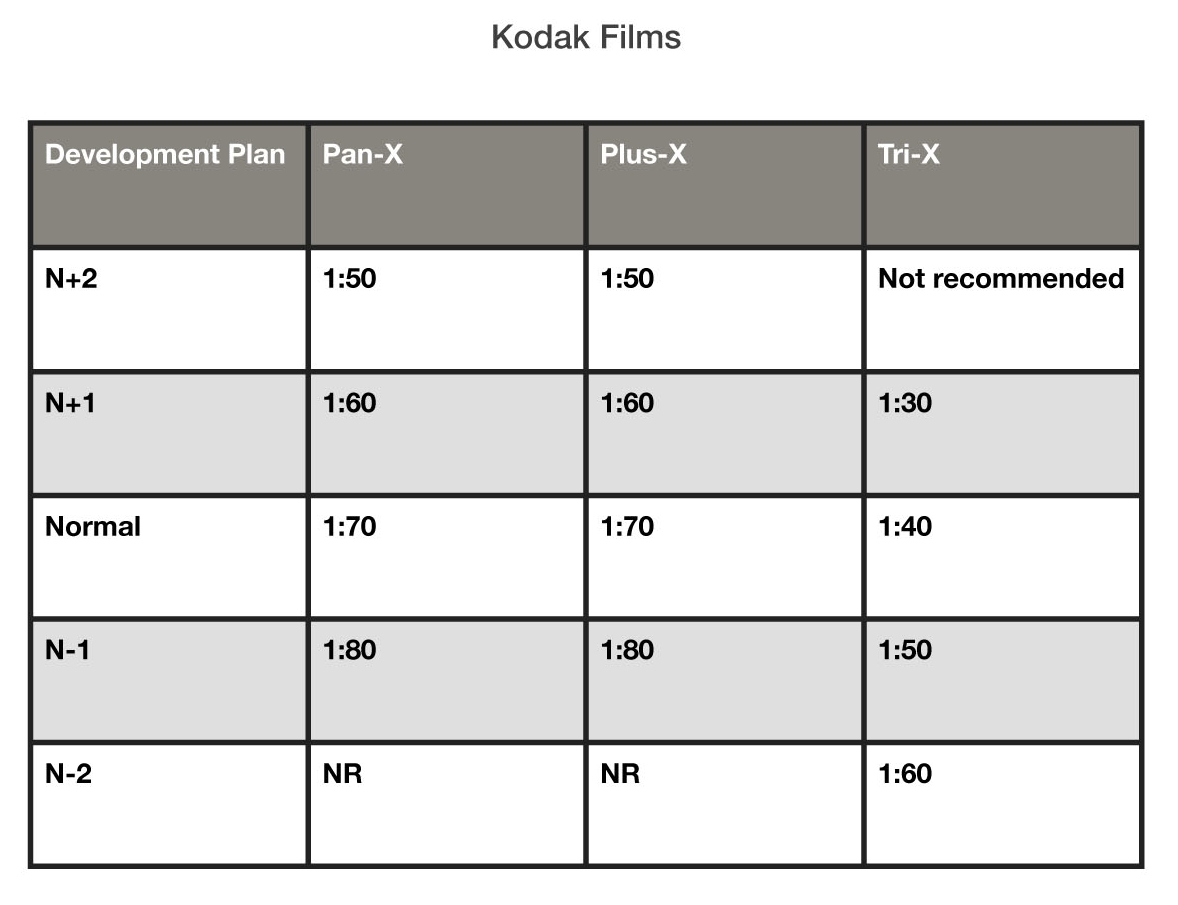
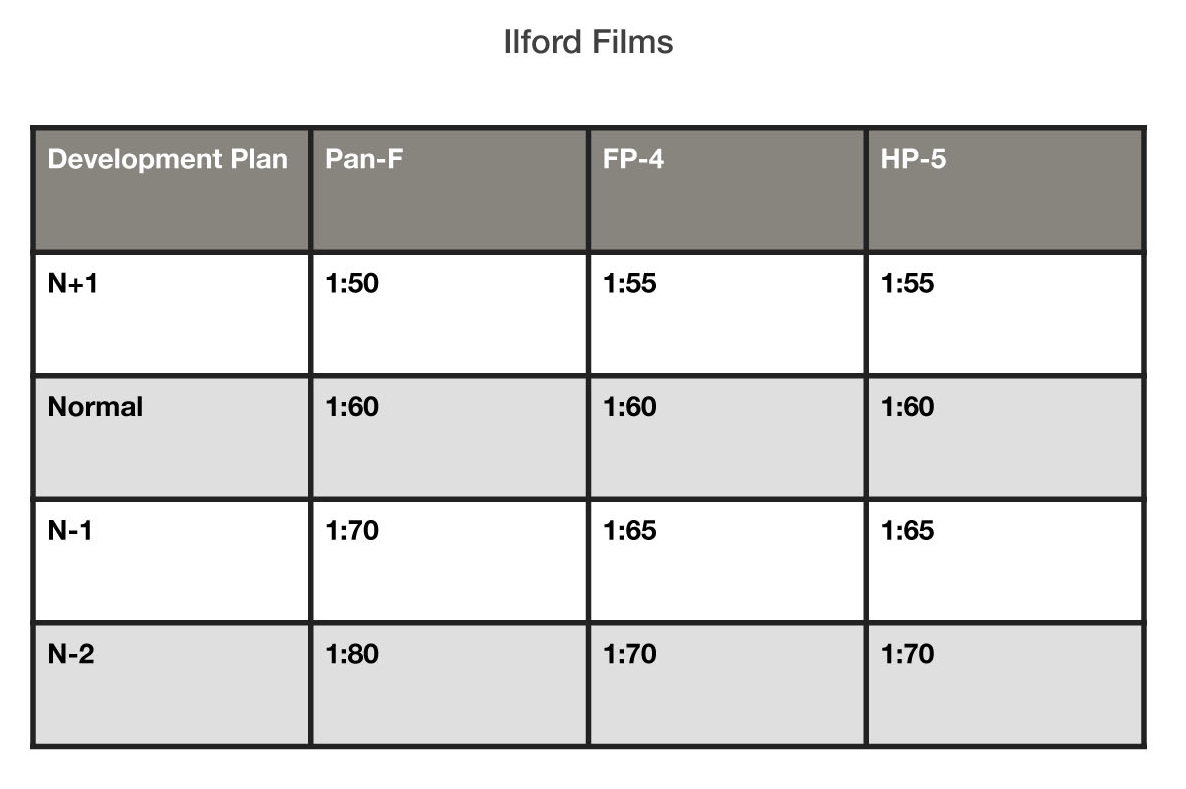
"N" meaning Normal contrast in zone system terminology
Gassan based these dilutions on a goal of developing a highlight density [zone VIII], to a density of 1.15 above FB+F.
He concludes with this insight into his approach to 35mm photography:
The whole purpose of this control system is to produce high quality, low density negatives that will print easily and well, rather than to "push" film. High energy developers produce high densities under extreme low light levels. And they also produce negatives that are more graphic and less tonal -- that are not so much translations of colors into the grey scale of the photographs as they are graphic simplifications of the world.
The sense of graininess in 35mm is affected by exposure far more than most photogaphers are willing to admit. A correctly exposed minimum density negative is "filmy"; this means that the page of a book can be read easily while looking trough the negative. The least overexposure will mar otherwise excellent negatives that would enlarge well and have maximum resolution of detail. Two stops overexposure will enlarge the grain so much that the maximum degree of enlargement with out obvious grain is about 6 diameters.
I've no doubt that many of his former students remember him saying "make a negative that prints easily and well..."
I've used this system myself and found that it worked quite well with Ilford HP-5. My "normal" was 1:55 for 5 minutes at 70˚F. That was over 20 years ago, so please take that, and all of this as starting point for your own testing.
Mohawk Valley on The American Guide
ICYMI

Some of my Mohawk Valley images and words got a feature on The American Guide blog. Such an honor to be there.
http://blog.theamericanguide.org/tagged/erik+gould
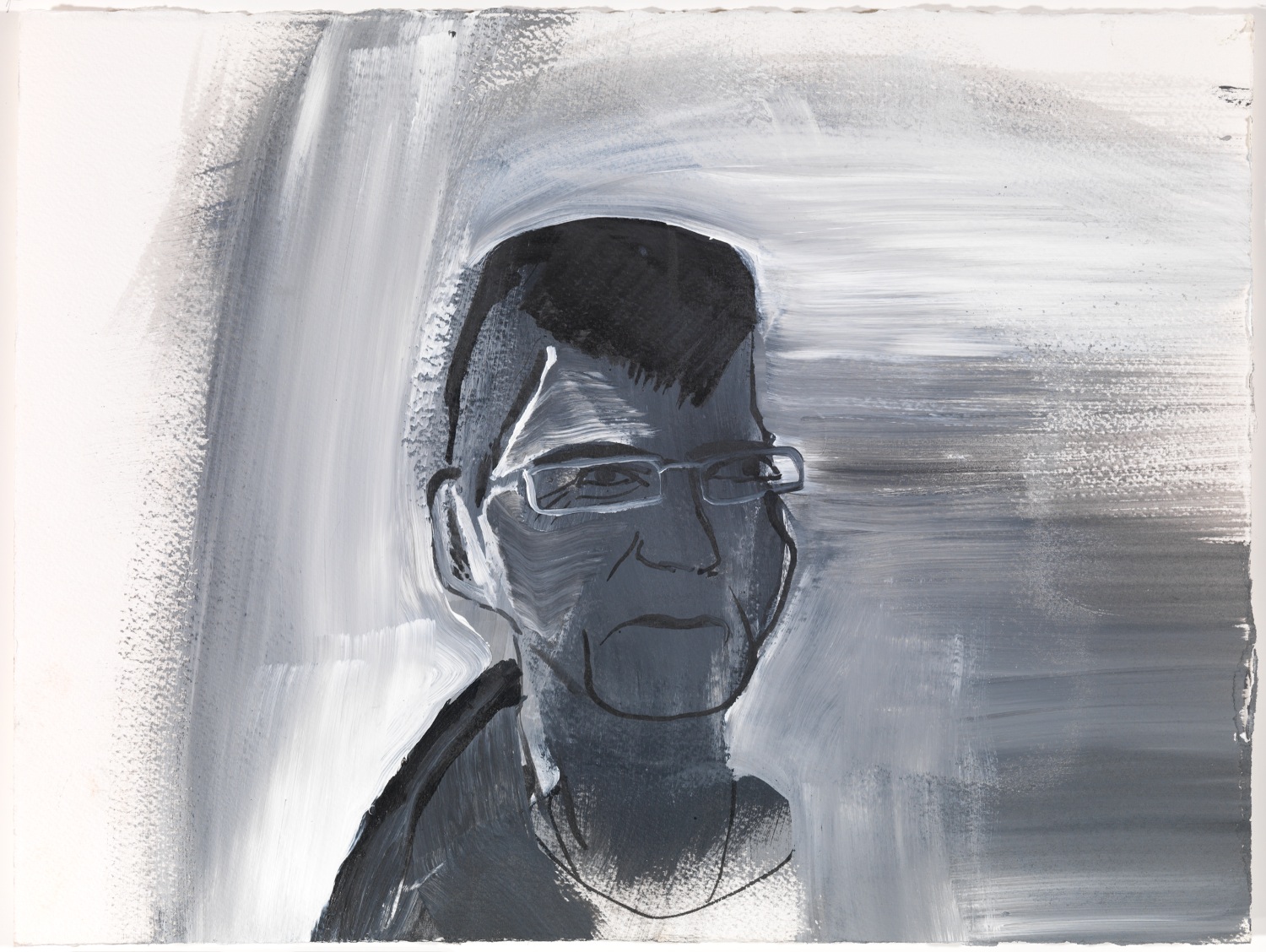
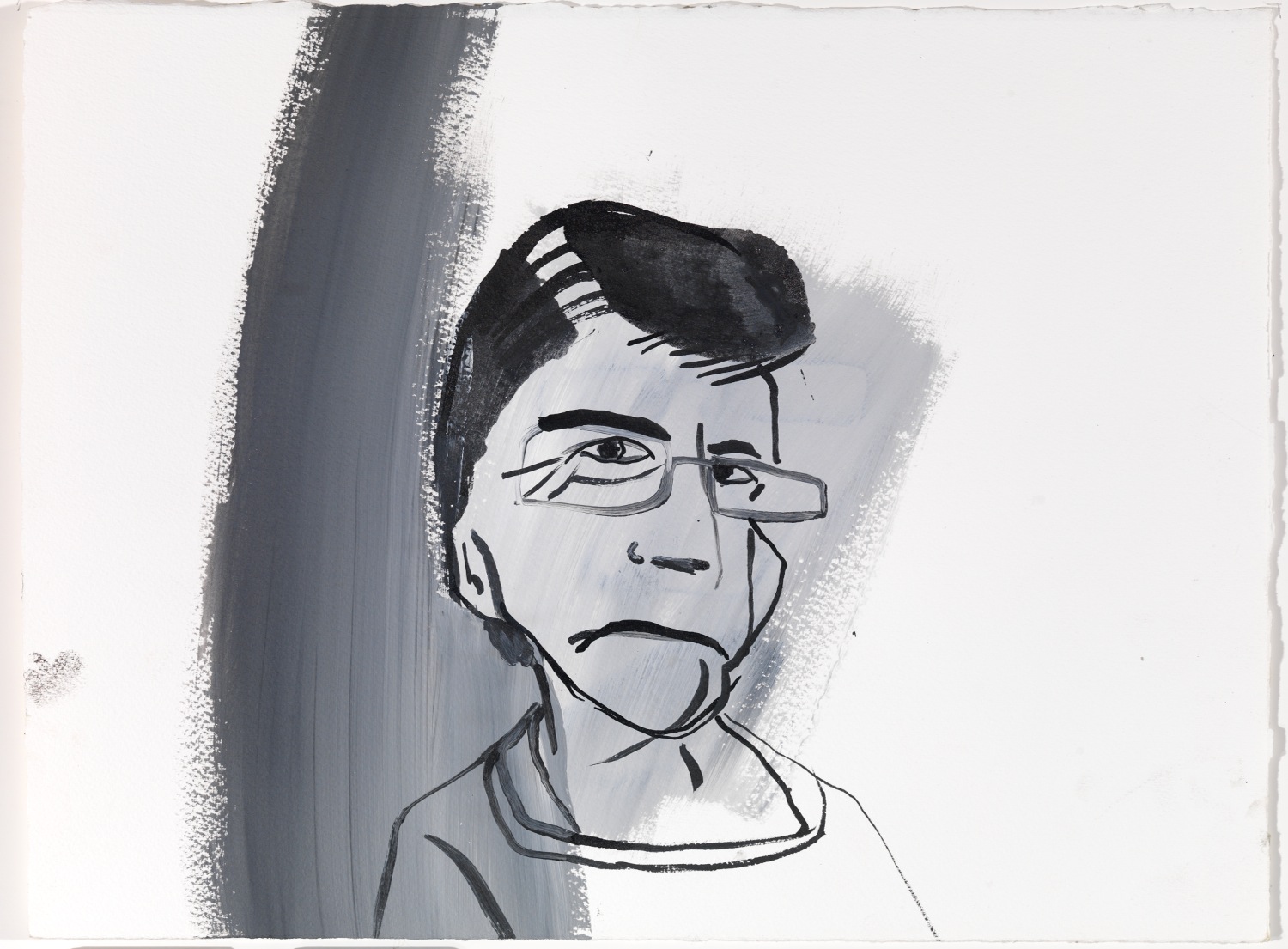
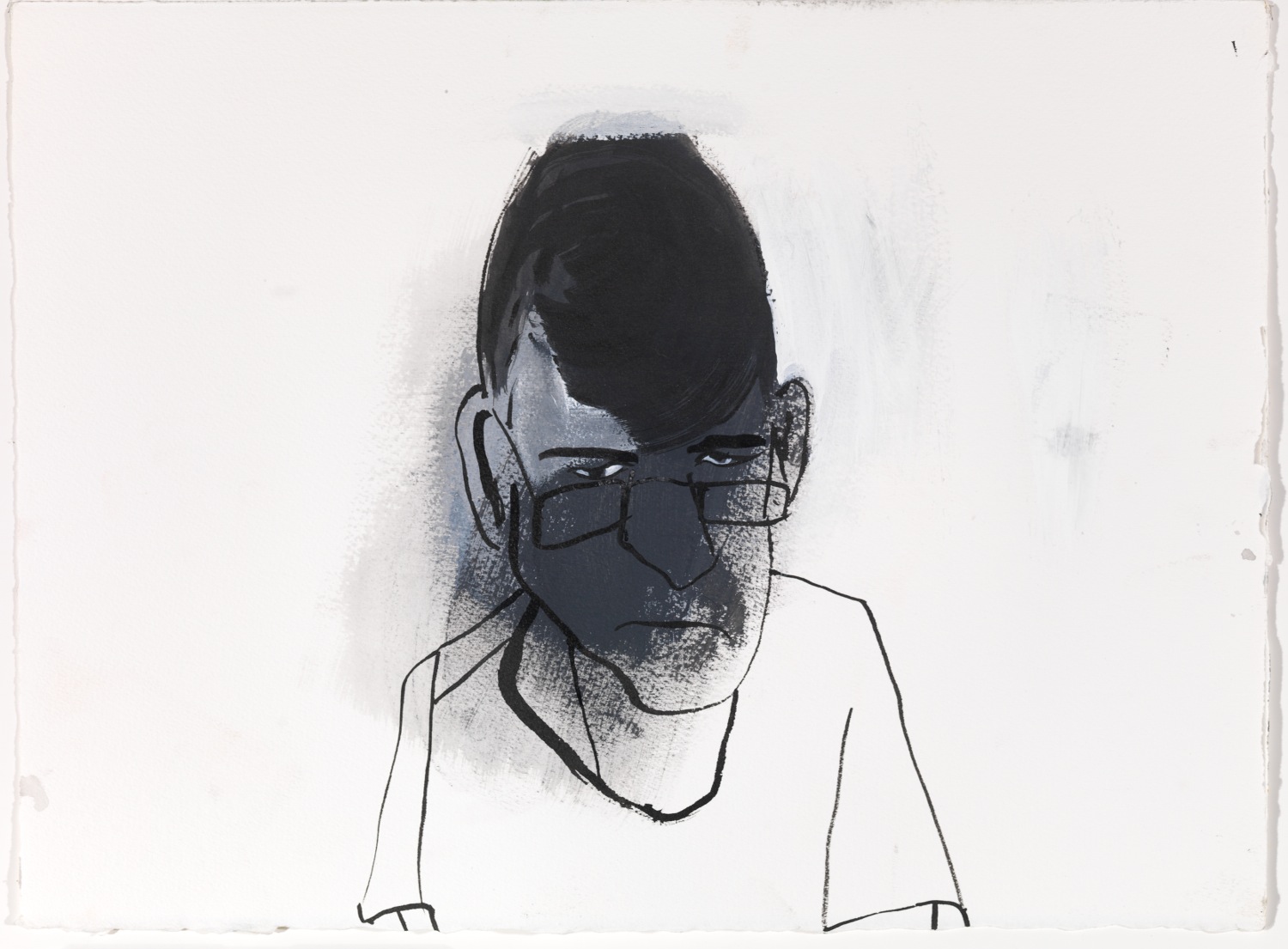
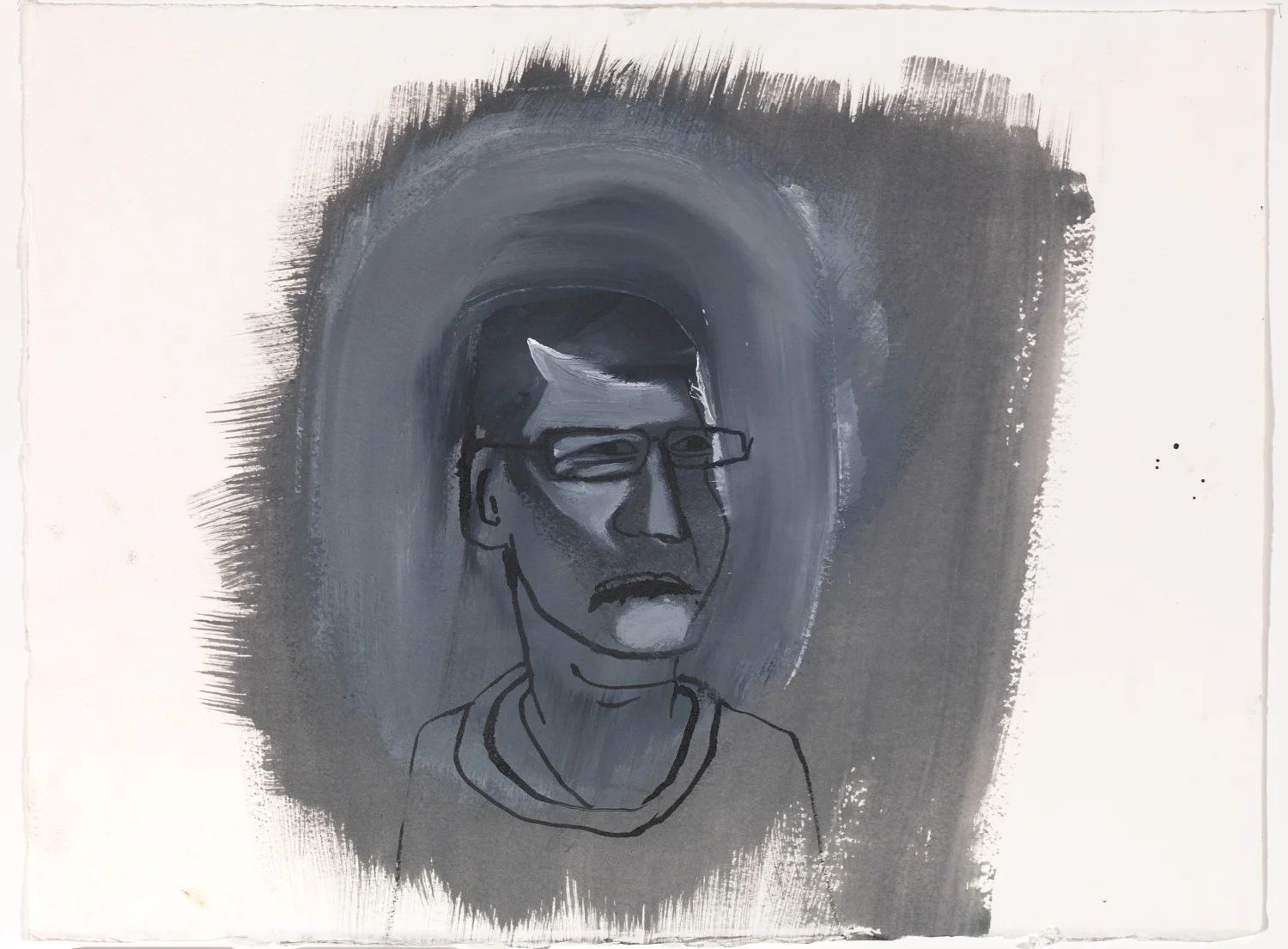
I had my portrait done.

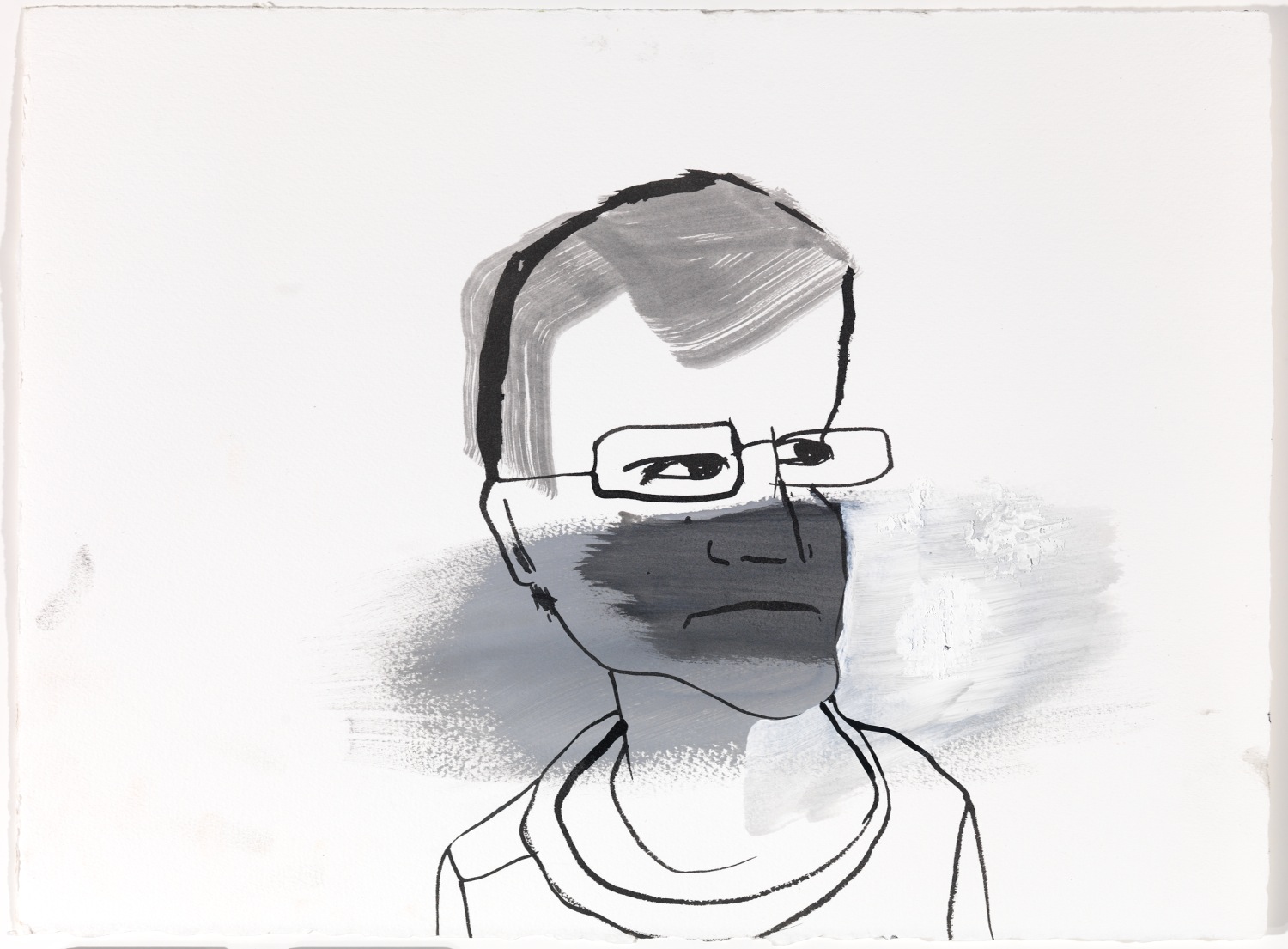
I work at an art museum where I photograph art. One of the many perks of the job is that I get to meet lots of amazing artists who ask me to photograph their work. Such was the case when I met the artist Sue McNally. Sue is a great painter and among the works that I photographed for her was this series of portraits (mostly self portraits) that I was really taken with.
I asked her if we could do a trade for a portrait of me in that style, because it would be cool and like many photographers I hate to have my picture taken. Sue agreed and we did it! It was an interesting process to watch. I found it interesting that although our methods are obviously different, it seemed to me that our aims are very similar when I attempt to do a portrait with a camera.
Check out Sue's work here: http://suemcnally.com
What's underneath
East Portal in 1998
A walk through the East Side railroad tunnel
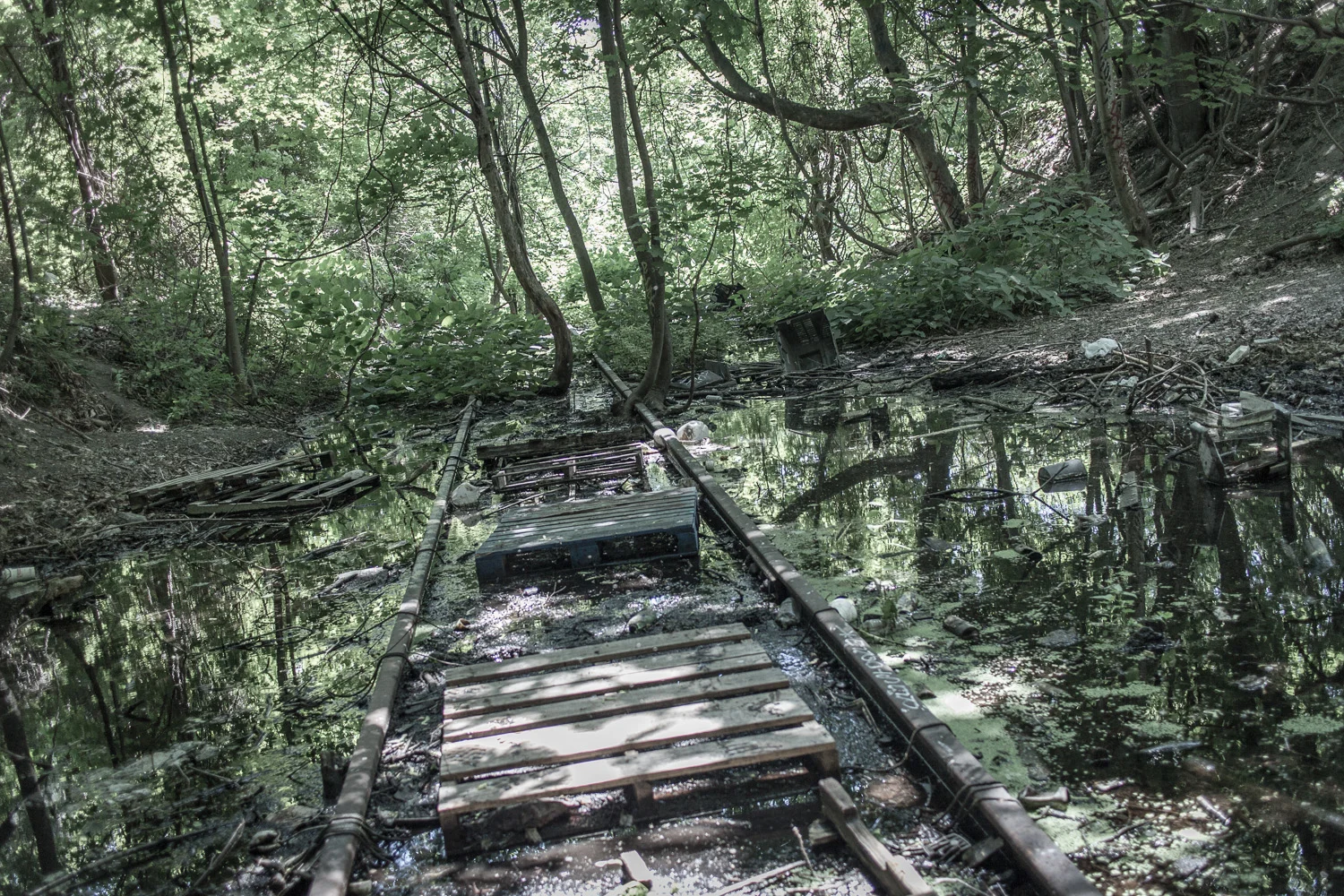
A few weeks ago I had the chance to walk the length (and record sound) of the former New Haven Railroad tunnel that lies beneath the historic streets of Providence's east side. It is a very interesting walking experience. The only entrance is from the east portal, just below Gano Street. There is a good amount of standing water there both outside the portal and within, probably close to a foot deep. The portals have been blocked up with steel panels but attempts to keep the tunnel totally closed are regularly thwarted, in fact it looks as though someone with a torch cut a small door in one side. Aside from what light comes through the door and the gaps in the steel it is very dark and very cool. Although it was built for two tracks only one remains and the roof is very high, probably to accommodate the electric catenary that once was strung above one of the tracks.
The water recedes some as you travel west, the ballasted road bed is mostly dry with small streams along both walls. The line is very straight, and only hooks near the western end. The walls are decorated with graffiti and there are the scattered remains of many adventures and parties, and the rusted hulk of one abandoned car. Near the western portal sunlight streams through gaps in the steel panels and again there is deep standing water on the tracks.
Water drips constantly and reverberates throughout the tunnel. There is a sulfur smell in the air and in places it seems very cave like with stalactites hanging from the roof and partnered stalagmites forming on the rail bed and in one spot on the top of the rail. There is no way out on the western side down below Benefit street so it's a there and back walk. The distance one way is a little more than a mile. Bring rubber boots and flashlights and don't go alone. It is state property and technically it is trespassing so take care.
A number of years ago I put this research together for an exhibition. East Side Monthly thought so much of it that they lifted it whole and published it without credit as part of a story they did on the tunnel, just in case it seems familiar.
The East Side railroad tunnel opened with much fanfare on November 15th, 1908. Tunnel laborers held a small demonstration and the story headlined that Sunday's Providence Journal. On that day the emperor of China died, Governor Higgins issued the annual Thanksgiving proclamation and a somber ceremony marking the closing of the Fox Point railroad station followed the last "transfer car" downtown. The Fox Point station had served the city for 73 years but had been made obsolete by the tunnel which would bring trains directly in to Union Station on Exchange Terrace.
The tunnel project had begun two years before, on the 20th of April, 1906. Also on that day a streetcar jumped track on Plainfield Street and a massive fire following an earthquake destroyed most of the city of San Francisco. Crews working east from Benefit Street. and west from Gano Street met below Cooke Street on April 7, 1908, a day earlier than expected. The night shift of the westerly section won the honors for digging the farthest in one shift, and every one was given the next day off. On that day the New York Conference of Methodists rescinded a long standing ban on dancing.
Originally the tunnel had two tracks, one of which was electrified, as the line to Bristol and Fall River was served by electric interurban cars until 1934. The tunnel also provided a route to Boston for trains that did not need to stop at Pawtucket. Traffic patterns changed, the second track was removed in the 1950's and the tunnel became a route for freight trains only. The line to Bristol was abandoned in 1976. In 1981 ownership of the tunnel itself was transferred to the State of Rhode Island and the last train traveled through it shortly after that. No ceremony was noted.
On May 1st. 1993, a group of students gathered at the western portal below Benefit Street for a May Day party. They lit fires, put on animal masks, pounded on drums until early the next morning, when police arrived. Fearing the activities in the tunnel were unsafe, they attempted to get the students to leave. The situation escalated quickly as some students refused to go, the police responded with pepper spray and the students answered with rocks and bricks. The ensuing melee ended with many injuries and a badly damaged police car, and the police charge in the next day's paper that they had encountered "satanic rituals". As a result the portals on both ends were sealed up with steel doors, which soon were forced open.
Other items:
The Benefit St. Armory was moved to its present location to make way for the tunnel. The building was leased by the state to the Providence Marine Corps of Artillery, an organized military company, for a term of one thousand years from June 23, 1852, at a yearly rental of six and a quarter cents. The military company wished to maintain this lease arrangement rather than have a new building built, so the New Haven Railroad made the necessary land purchases and moved the armory building with mule teams and logs.
The cost of the project, which included the bridge over the Seekonk river and the approach to Union station was two million dollars. No casualties were reported during construction. The area surrounding the west portal, the scene of the "student riot" is now a parking lot.
Field Notes: Photographing what's not there.
Making the photographs for the 2015 Most Endangered Properities show.
Former site of Fruit Hill School. 2015
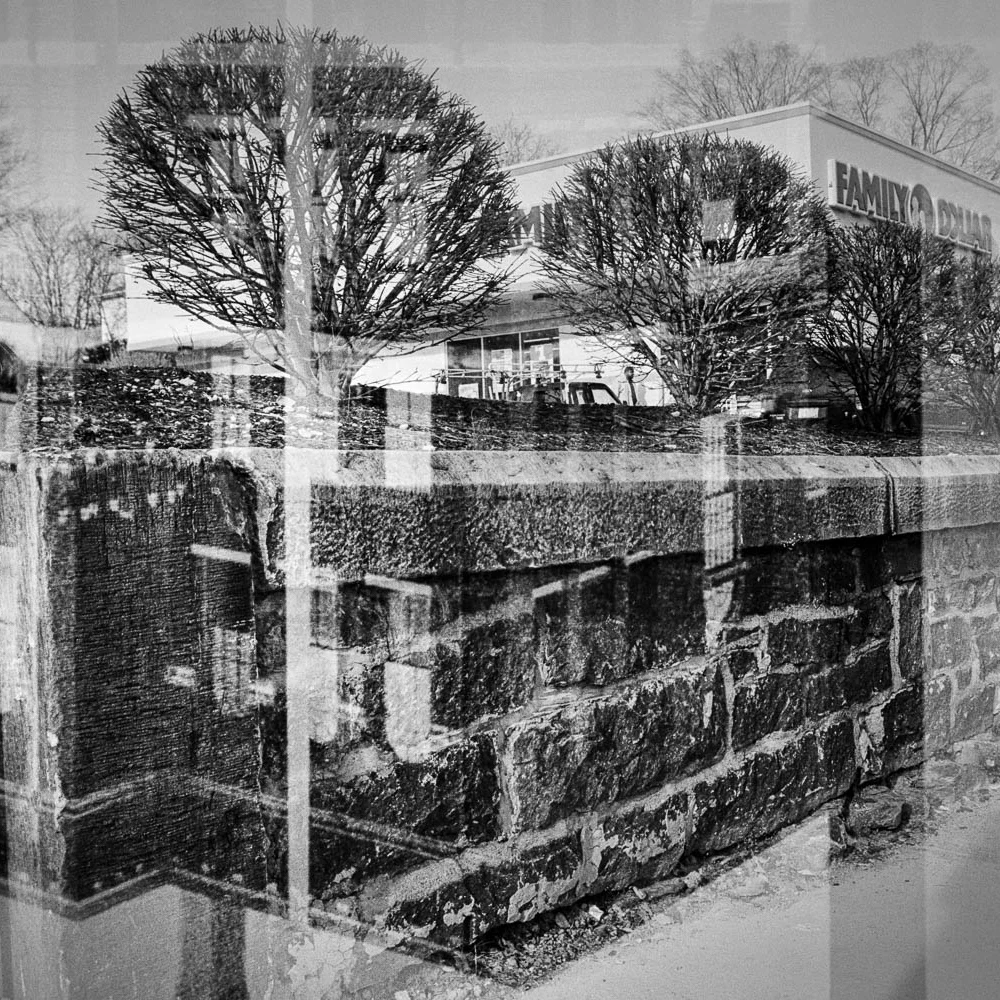
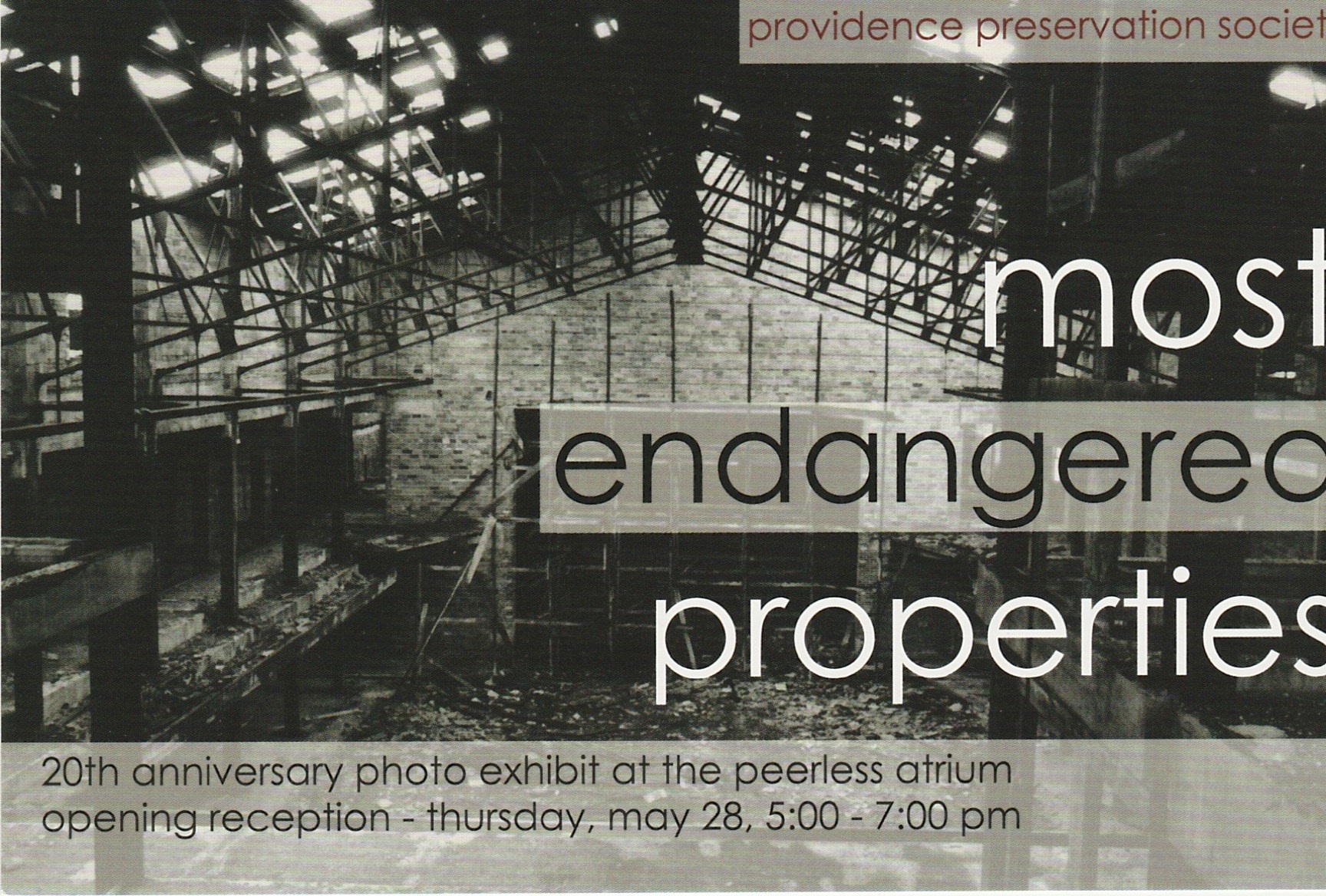
Now that the Most Endangered Properties 20th Anniversary Photography Exhibit is now open I can share my contribution and how it was done. This year I took on the task of photographing three sites where the endangered property could not be saved. These are the former sites of the Grove Street school, Fruit Hill school and Providence Fruit and Produce warehouse. Two locations are currently empty lots and the third has some new commercial development. A full history of each site can be found here.
Former site of Grove Street school. 2015
Former site of Fruit and Produce Warehouse. 2015
I took an approach with these locations to layer the current state with what was lost using in camera montage. Each space was photographed on a roll (two rolls) of 35mm film. I chose not to go with just one set point of view, rather I walked the site and recorded what saw and what interested me as I explored the space. I moved from wide views to details, looking for good coverage and nice juxtapositions. The film was then rewound, leaving just the leader exposed and identified by site.
Back in the studio I set up for basic copy photography, mounting the camera on a vertical stand and swapping in a macro lens. I had previously collected vintage images of each site, in the case of the Produce Warehouse I used my own images from the 1990s. I used archive images of the two schools including some vintage postcards. On each site I had about a half dozen different archival images to choose from. I used 5x7 prints of each. I then reloaded the film and cycled through the various images, sometimes altering cropping and exposure.
I then crossed my fingers and processed the film in the darkroom. I easily could have done this digitally but one of the wonderful aspects of shooting film is to open your work up to an element of chance. I always look for ways that I can introduce the "happy accident" or employ a chance operation. There is risk, but in risk their can be reward. Happily I felt I was rewarded here.

HARRY CALLAHAN Providence, ca. 1966 (Shepards)
Astute photo history people no doubt notice that I was inspired in this by the work of the master photographer Harry Callahan. In the 1960s during his tenure as the head of the photo program at RISD he did an amazing series of in camera montages, photographing, most appropriately. in downtown Providence among other places. The image above features the storefront windows of Shepards department store. The Shepards building was one of the very first properties on the MEP list and happily has been saved.
As I was working on deadline, I hedged my bets and shot each site in a more conventional way. It never hurts to have a backup plan. These were also shot on film, this time on 120 format using a Graflex SLR. This type of camera lends itself to a low point of view which seemed appropriate to me for these vacant sites, especially the former school locations.
Former site of Fruit and Produce Warehouse. 2015
Former site of Fruit Hill School. 2015
Former site of Grove Street school. 2015
PPS Most Endangered Show
PPS MEP20 Exhibit Opening.
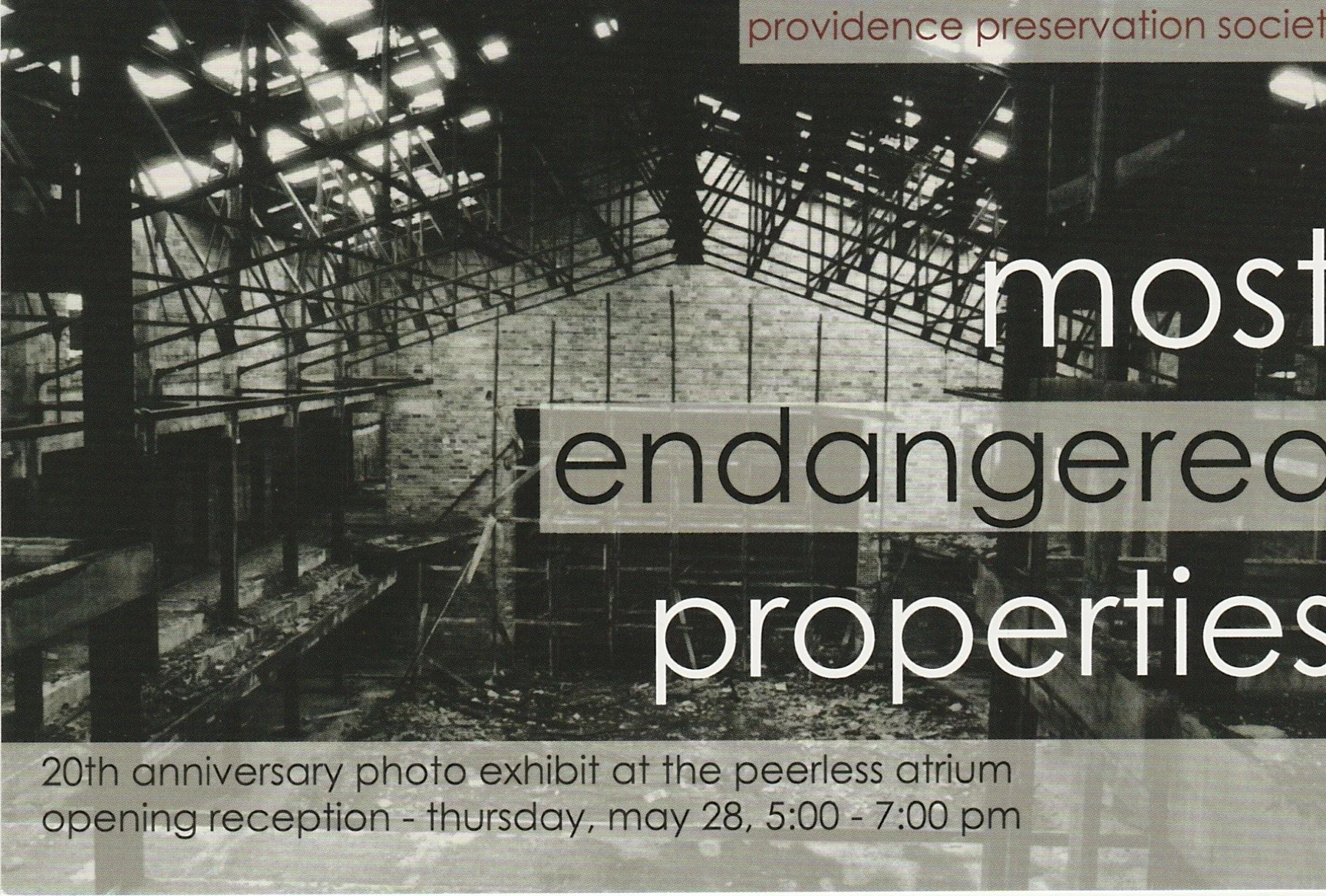
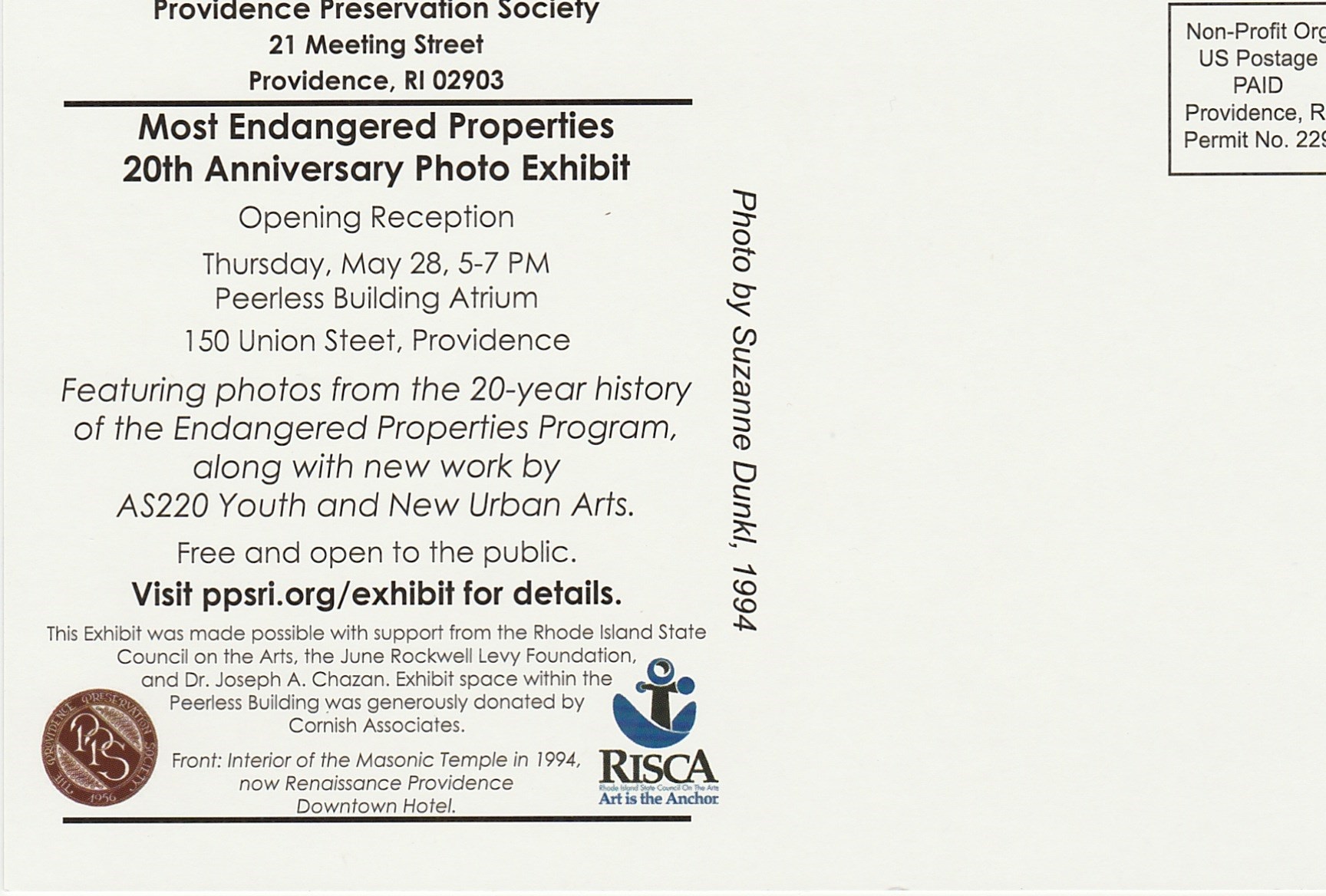
Providence Preservation Society MEP20 show opens tomorrow / Thursday May 28 !
Where: Peerless Atrium, 150 Union Street downtown Providence
When: 5:00 to 8:00 PM
Need more?: ppsri.org/exhibit
To the streetcar and beyond

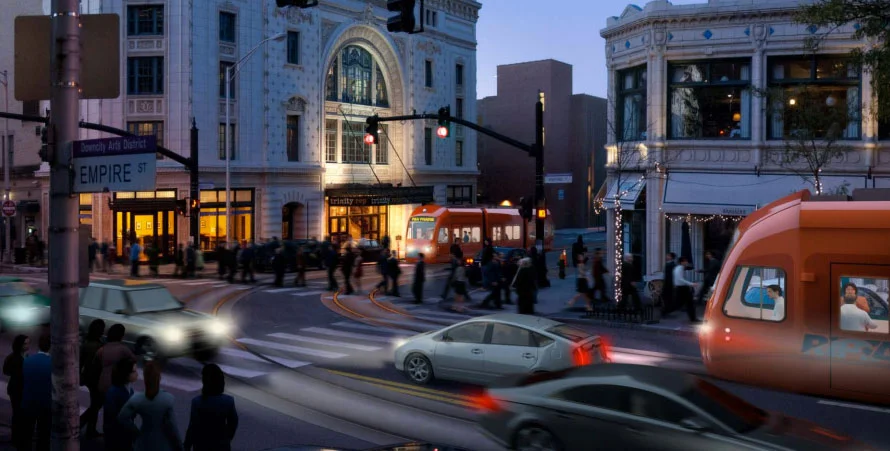
I have a number of questions about the proposed Providence streetcar line as many people do, most of which can be summed up as "what the hell?". The route is an interesting choice. It seems like a nice gift to Brown to tie together their two growing campuses or campii if I may. That gets me thinking that we shouldn't stop and there and I've come up with a few other ideas along those lines. Johnson and Wales could have a water taxi to bring together their downtown home at the Hall of Justice with the ever expanding Harborside campus. Providence College doesn't seem to need much more than better late night food delivery so each student can be given a four year Foodler account. RISD can have a mag-lev elevated line. It wouldn't actually go anywhere as each stop would be self-referential but it would look really cool and the wayfinding graphics would be elegantly incomprehensible. Finally, I propose a high speed rail link for URI from downtown to Kingston. As no one in Rhode Island would ever consider a trip of such distance, that one can remain theoretical, with only a modest perpetual taxpayer investment. I'm ready to jump on this band wagon before it leaves the station to get my ticket punched to cross the bridge to the future, how about you?